












Structure and Li+ dynamics of Sb-doped Li7La3Zr2O12 fast lithium ion conductors
Literature Information
Publication Date
2013-05-15
DOI
10.1039/C3CP50991E
Impact Factor
3.676
Authors
S. Ramakumar, L. Satyanarayana, Sunkara V. Manorama, Ramaswamy Murugan
View Original
Abstract
Antimony-doped lithium stuffed garnets Li7−xLa3Zr2−xSbxO12 (x = 0.2–1.0) prepared using a conventional solid state reaction method are characterized using Powder X-ray Diffraction (PXRD), Scanning Electron Microscopy (SEM), Energy Dispersive Analysis by X-ray (EDAX), AC Impedance spectroscopy, Magic Angle Spinning Nuclear Magnetic Resonance (MAS NMR) and Raman spectroscopic techniques. PXRD confirms the formation of a garnet-like structure with cubic symmetry for the entire selected compositional range. Among the investigated compounds, the compound with an Sb content corresponding to x = 0.4, i.e. Li6.6La3Zr1.6Sb0.4O12 exhibits the maximum total (bulk + grain boundary) ionic conductivity of 7.7 × 10⁻⁴ S cm−1 at 30 °C. The shape of the imaginary part of the modulus spectra suggests that the relaxation processes are non-Debye in nature. The full width at half maximum (FWHM) for the master modulus curve of Li6.6La3Zr1.6Sb0.4O12 is found to be the smallest among the investigated lithium garnets. The full width at half maximum (FWHM) of the 7Li MAS NMR spectrum for the composition Li6.6La3Zr1.6Sb0.4O12 is the smallest among the investigated compounds. Raman data collected for the compounds in this series indicates an increase of Li+ occupancy in the tetrahedrally coordinated site with an associated decrease of Li+ occupancy in the octahedrally coordinated site during an increase of x in Li7−xLa3Zr2−xSbxO12. The present investigation reveals that the optimal Li+ concentration required to achieve the maximum room-temperature Li+ conductivity in Li7−xLa3Zr2−xSbxO12 lithium stuffed garnet is around x = 0.4.
Related Literature
Epoxidation of olefins with homogeneous catalysts – quo vadis?
Simone A. Hauser, Mirza Cokoja, Fritz E. Kühn
2012-10-24
Perspective
DOI: 10.1039/C2CY20595E
Mesoionic thiazol-5-ylidenes as ligands for transition metal complexes
Daniel Mendoza-Espinosa, Gaël Ung, Bruno Donnadieu, Guy Bertrand
2011-08-30
Communication
DOI: 10.1039/C1CC14165A
Silicananoparticles functionalised with cation coordination sites and fluorophores for the differential sensing of anions in a quencher displacement assay (QDA)
Mandy Hecht, Knut Rurack
2011-09-05
Communication
DOI: 10.1039/C1CC13039K
A synthetic approach to kingianin A based on biosynthetic speculation
Pallavi Sharma, Dougal J. Ritson, James Burnley, John E. Moses
2011-08-24
Communication
DOI: 10.1039/C1CC13949E
A straightforward zinc-catalysed reduction of sulfoxides to sulfides
Stephan Enthaler
2011-02-08
Paper
DOI: 10.1039/C0CY00039F
An energy efficient and facile synthesis of high molecular weight polyesters using ketenes
Martin Wolffs
2011-08-30
Communication
DOI: 10.1039/C1CC14055H
A highly efficient silver niobium alumina catalyst for the selective catalytic reduction of NO by n-decane
Hubert P. Mutin, Gérard Delahay
2011-08-24
Communication
DOI: 10.1039/C1CC12792F
Simple methods for tuning the pore diameter of mesoporous carbon
Ulka B. Suryavanshi, Toru Ijima, Yasuhiko Hayashi, Masaki Tanemura
2011-08-26
Communication
DOI: 10.1039/C1CC13471J
You might also like
Compound Q&A
What industries use (1R,3S)-1,3-Cyclopentanediol (CAS: 16326-97-9)?
(1R,3S)-1,3-Cyclopentanediol finds applications in various industries. In the ph...
16326-97-9(1R,3S)-1,3-Cyclopen...
Compound Q&A
What precautions should be taken when handling N'-[4-(Dimethylamino)phenyl]-N,N-dimethyl-1,4-benzenediamine (CAS: 637-31-0)?
When handling N'-[4-(Dimethylamino)phenyl]-N,N-dimethyl-1,4-benzenediamine, it i...
637-31-0N'-[4-(Dimethylamino...
Compound Q&A
Are there alternatives to 5-(2,4-Difluorophenyl)-2-methoxypyrimidine (CAS: 1352318-16-1) in synthesis?
There are several alternatives to 5-(2,4-Difluorophenyl)-2-methoxypyrimidine in ...
1352318-16-15-(2,4-Difluoropheny...
Compound Q&A
What regulatory guidelines apply to 1-(3-Methoxyphenoxy)propan-2-ol (CAS: 382141-68-6)?
1-(3-Methoxyphenoxy)propan-2-ol (CAS: 382141-68-6) must comply with the Globally...
382141-68-61-(3-Methoxyphenoxy)...
Compound Q&A
Is Tetrodotoxin Citrate (CAS: 18660-81-6) safe?
Tetrodotoxin Citrate is extremely dangerous and should be handled with extreme c...
18660-81-6Tetrodotoxin Citrate
Compound Q&A
What are the main uses of 2-Methyl-2-propanyl [(1R,3S)-3-hydroxycyclopentyl]carbamate (CAS: 225641-84-9)?
2-Methyl-2-propanyl [(1R,3S)-3-hydroxycyclopentyl]carbamate (CAS: 225641-84-9) i...
225641-84-92-Methyl-2-propanyl ...
Compound Q&A
How should waste containing 4-(2-Hydroxyhexafluoroisopropyl)Benzoic Acid (CAS: 16261-80-6) be handled?
Waste containing 4-(2-Hydroxyhexafluoroisopropyl)Benzoic Acid (CAS: 16261-80-6) ...
16261-80-64-(2-Hydroxyhexafluo...
Compound Q&A
How is 2-Methyl-2-proanyl {(2S)-1-[(benzyloxy)amino]-3-hydroxy-3-methyl-1-oxo-2-butanyl}carbamate (CAS: 102507-19-7) typically synthesized?
2-Methyl-2-proanyl {(2S)-1-[(benzyloxy)amino]-3-hydroxy-3-methyl-1-oxo-2-butanyl...
102507-19-72-Methyl-2-propanyl ...
Compound Q&A
What is Benzeneethanamine, α-ethyl-, hydrochloride (1:1) (CAS: 20735-15-3)?
Benzeneethanamine, α-ethyl-, hydrochloride (1:1) is an organic compound with the...
20735-15-3Benzeneethanamine, α...
Compound Q&A
Are there alternatives to 3-{(E)-[4-(Dimethylamino)phenyl]diazenyl}benzoic acid (CAS: 20691-84-3) in synthesis?
In the synthesis of compounds similar to 3-{(E)-[4-(Dimethylamino)phenyl]diazeny...
20691-84-33-{(E)-[4-(Dimethyla...
Source Journal
Physical Chemistry Chemical Physics

CiteScore:
5.5
Self-citation Rate:
10.3%
Articles per Year:
3036
Physical Chemistry Chemical Physics (PCCP) is an international journal co-owned by 19 physical chemistry and physics societies from around the world. This journal publishes original, cutting-edge research in physical chemistry, chemical physics and biophysical chemistry. To be suitable for publication in PCCP, articles must include significant innovation and/or insight into physical chemistry; this is the most important criterion that reviewers and Editors will judge against when evaluating submissions. The journal has a broad scope and welcomes contributions spanning experiment, theory, computation and data science. Topical coverage includes spectroscopy, dynamics, kinetics, statistical mechanics, thermodynamics, electrochemistry, catalysis, surface science, quantum mechanics, quantum computing and machine learning. Interdisciplinary research areas such as polymers and soft matter, materials, nanoscience, energy, surfaces/interfaces, and biophysical chemistry are welcomed if they demonstrate significant innovation and/or insight into physical chemistry. Joined experimental/theoretical studies are particularly appreciated when complementary and based on up-to-date approaches.
Recommended Compounds
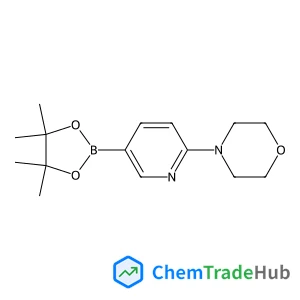
4-(5-(4,4,5,5-tetramethyl-1,3,2-dioxaborolan-2-yl)pyridin-2-yl)morpholine
CAS Number:
485799-04-0
Molecular Formula:
C15H23BN2O3
Recommended Suppliers





Disclaimer
This page provides academic journal information for reference and research purposes only. We are not affiliated with any journal publishers and do not handle publication submissions. For publication-related inquiries, please contact the respective journal publishers directly.
If you notice any inaccuracies in the information displayed, please contact us at support@chemtradehub.com. We will promptly review and address your concerns.