













Efficient algorithms for the simulation of non-adiabatic electron transfer in complex molecular systems: application to DNA
Literature Information
Publication Date
2013-03-01
DOI
10.1039/C3CP44619K
Impact Factor
3.676
Authors
Tomáš Kubař, Marcus Elstner
View Original
Abstract
In this work, a fragment-orbital density functional theory-based method is combined with two different non-adiabatic schemes for the propagation of the electronic degrees of freedom. This allows us to perform unbiased simulations of electron transfer processes in complex media, and the computational scheme is applied to the transfer of a hole in solvated DNA. It turns out that the mean-field approach, where the wave function of the hole is driven into a superposition of adiabatic states, leads to over-delocalization of the hole charge. This problem is avoided using a surface hopping scheme, resulting in a smaller rate of hole transfer. The method is highly efficient due to the on-the-fly computation of the coarse-grained DFT Hamiltonian for the nucleobases, which is coupled to the environment using a QM/MM approach. The computational efficiency and partial parallel character of the methodology make it possible to simulate electron transfer in systems of relevant biochemical size on a nanosecond time scale. Since standard non-polarizable force fields are applied in the molecular-mechanics part of the calculation, a simple scaling scheme was introduced into the electrostatic potential in order to simulate the effect of electronic polarization. It is shown that electronic polarization has an important effect on the features of charge transfer. The methodology is applied to two kinds of DNA sequences, illustrating the features of transfer along a flat energy landscape as well as over an energy barrier. The performance and relative merit of the mean-field scheme and the surface hopping for this application are discussed.
Recommended Journals
Related Literature
Raman spectroscopy – a potential platform for the rapid measurement of carbon nanotube-induced cytotoxicity
Peter Knief, Colin Clarke, Eva Herzog, Maria Davoren, Fiona M. Lyng, Aidan D. Meade, Hugh J. Byrne
2009-03-03
Paper
DOI: 10.1039/B821393C
Impact of fixation on in vitro cell culture lines monitored with Raman spectroscopy
Melissa M. Mariani, Peter Lampen, Bayden R. Wood
2009-04-28
Paper
DOI: 10.1039/B822408K
Selective UV-filter detection with sensors based on stainless steel electrodes modified with polyaniline doped with metal tetrasulfonated phthalocyanine films
Luiz Fernando Moreira, Marcos Roberto de Vasconcelos Lanza, Auro Atsushi Tanaka, Maria Del Pilar Taboada Sotomayor
2009-04-28
Paper
DOI: 10.1039/B902273B
Adenosine detection by using gold nanoparticles and designed aptamer sequences
Fan Li, Juan Zhang, Xuni Cao, Lihua Wang, Di Li, Shiping Song, Bangce Ye, Chunhai Fan
2009-04-02
Paper
DOI: 10.1039/B900900K
A colorimetric aptasensor based on a hemin/EpCAM aptamer DNAzyme for sensitive exosome detection
Jingjing Kuang, Zhibo Fu, Xuezhi Sun, Chuhui Lin, Shenglong Yang, Jiayao Xu, Min Zhang, Hongyang Zhang, Fanghong Ning, Ping Hu
2022-10-05
Paper
DOI: 10.1039/D2AN01410F
Combining multidimensional chromatography-mass spectrometry and feature-based molecular networking methods for the systematic characterization of compounds in the supercritical fluid extract of Tripterygium wilfordii Hook F
Dian Liu, Feifei Huang, Ting Peng
2022-11-28
Paper
DOI: 10.1039/D2AN01471H
Ultrasensitive therapeutic drug monitoring of methotrexate by a structure-switching aptamer with cascade primer exchange reaction
Junqing He, Junyan Wang, Min Zhang, Guoyue Shi
2022-12-06
Communication
DOI: 10.1039/D2AN01658C
Fabrication of an amperometric bienzyme biosensing system with neutral red functionalized carbon nanotubes
D. R. Shobha Jeykumari, S. Sriman Narayanan
2009-05-19
Paper
DOI: 10.1039/B820040H
Detection ofdrug-induced cellular changes using confocal Raman spectroscopy on patterned single-cell biosensors
Ryan Buckmaster, Fareid Asphahani, Myo Thein, Jian Xu, Miqin Zhang
2009-04-30
Paper
DOI: 10.1039/B900420C
High temperature liquid chromatography with monolithic capillary columns and pure watereluent
Tim J. Causon, Robert A. Shellie, Emily F. Hilder
2008-12-24
Communication
DOI: 10.1039/B815886J
You might also like
Compound Q&A
What precautions should be taken when handling 4-(2-Furylmethyl)thiomorpholine 1,1-dioxide (CAS: 79206-94-3)?
When handling 4-(2-Furylmethyl)thiomorpholine 1,1-dioxide (CAS: 79206-94-3), it ...
79206-94-34-(2-Furylmethyl)thi...
Compound Q&A
What precautions should be taken when handling 4-Chloro-N-[2-(4-morpholinyl)ethyl]benzamide (CAS: 71320-77-9)?
When handling 4-Chloro-N-[2-(4-morpholinyl)ethyl]benzamide (CAS: 71320-77-9), it...
71320-77-94-Chloro-N-[2-(4-mor...
Compound Q&A
How should waste containing 2-[2-(2-Methoxyethoxy)ethoxy]ethyl 4-methylbenzenesulfonate (CAS: 62921-74-8) be handled?
Waste containing this compound (CAS: 62921-74-8) should be handled according to ...
62921-74-82-[2-(2-Methoxyethox...
Compound Q&A
How should waste containing (S)-Methyl 2-amino-3-cyclohexylpropanoate be handled?
Waste containing (S)-Methyl 2-amino-3-cyclohexylpropanoate should be collected i...
40056-18-6(S)-Methyl 2-amino-3...
Compound Q&A
How is 5-({4-[(2S,4R)-4-Hydroxy-2-methyltetrahydro-2H-pyran-4-yl]-2-thienyl}sulfanyl)-1-methyl-1,3-dihydro-2H-indol-2-one (CAS: 166882-70-8) typically synthesized?
This compound can be synthesized using a multi-step process involving the conjug...
166882-70-85-({4-[(2S,4R)-4-Hyd...
Compound Q&A
Are there alternatives to (2E)-3-(3,4-Dichlorophenyl)acrylic acid (CAS: 7312-27-8) in synthesis?
There are several alternatives to (2E)-3-(3,4-Dichlorophenyl)acrylic acid in syn...
7312-27-8(2E)-3-(3,4-Dichloro...
Compound Q&A
How should Ethyl 6-(2-nitrophenyl)imidazo[2,1-b][1,3]thiazole-3-carboxylate (CAS: 925437-84-9) be stored?
Ethyl 6-(2-nitrophenyl)imidazo[2,1-b][1,3]thiazole-3-carboxylate (CAS: 925437-84...
925437-84-9Ethyl 6-(2-nitrophen...
Compound Q&A
How should waste containing 2-(1,3-Thiazol-2-yl)ethanamine (CAS: 18453-07-1) be handled?
Waste containing 2-(1,3-Thiazol-2-yl)ethanamine (CAS: 18453-07-1) should be coll...
18453-07-12-(1,3-Thiazol-2-yl)...
Compound Q&A
How is Methyl 5-iodo-2-methylbenzoate (CAS: 103440-54-6) typically synthesized?
Methyl 5-iodo-2-methylbenzoate can be synthesized through the iodination of meth...
103440-54-6Methyl 5-iodo-2-meth...
Compound Q&A
How is 5-Chloro[1,2,4]triazolo[1,5-a]pyridine (CAS: 1427399-34-5) typically synthesized?
5-Chloro[1,2,4]triazolo[1,5-a]pyridine is commonly synthesized via the condensat...
1427399-34-55-Chloro[1,2,4]triaz...
Source Journal
Physical Chemistry Chemical Physics

CiteScore:
5.5
Self-citation Rate:
10.3%
Articles per Year:
3036
Physical Chemistry Chemical Physics (PCCP) is an international journal co-owned by 19 physical chemistry and physics societies from around the world. This journal publishes original, cutting-edge research in physical chemistry, chemical physics and biophysical chemistry. To be suitable for publication in PCCP, articles must include significant innovation and/or insight into physical chemistry; this is the most important criterion that reviewers and Editors will judge against when evaluating submissions. The journal has a broad scope and welcomes contributions spanning experiment, theory, computation and data science. Topical coverage includes spectroscopy, dynamics, kinetics, statistical mechanics, thermodynamics, electrochemistry, catalysis, surface science, quantum mechanics, quantum computing and machine learning. Interdisciplinary research areas such as polymers and soft matter, materials, nanoscience, energy, surfaces/interfaces, and biophysical chemistry are welcomed if they demonstrate significant innovation and/or insight into physical chemistry. Joined experimental/theoretical studies are particularly appreciated when complementary and based on up-to-date approaches.
Recommended Compounds
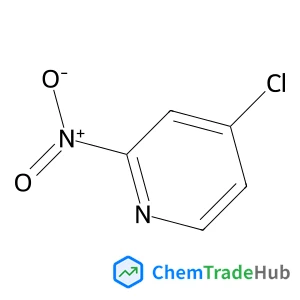

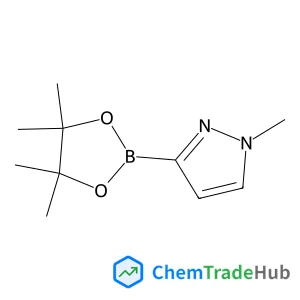
1-Methyl-3-(4,4,5,5-tetramethyl-1,3,2-dioxaborolan-2-yl)-1H-pyrazole
CAS Number:
1020174-04-2
Molecular Formula:
C10H17BN2O2
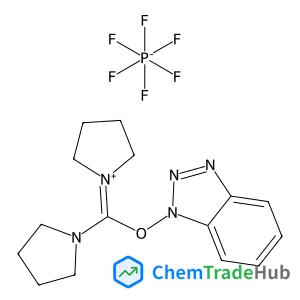
(1H-Benzotriazol-1-yloxy)(di-1-pyrrolidinyl)methylium hexafluorophosphate
CAS Number:
105379-24-6
Molecular Formula:
C15H21F6N5OP
Recommended Suppliers





Disclaimer
This page provides academic journal information for reference and research purposes only. We are not affiliated with any journal publishers and do not handle publication submissions. For publication-related inquiries, please contact the respective journal publishers directly.
If you notice any inaccuracies in the information displayed, please contact us at support@chemtradehub.com. We will promptly review and address your concerns.