












Different crystal morphologies lead to slightly different conformations of light-harvesting complex II as monitored by variations of the intrinsic fluorescence lifetime
Literature Information
Publication Date
2011-06-14
DOI
10.1039/C1CP20331B
Impact Factor
3.676
Authors
Amandine Maréchal, Alexander V. Ruban, Bruno Robert, Andrew A. Pascal, Norbert C. A. de Ruijter, Rienk van Grondelle
View Original
Abstract
In 2005, it was found that the fluorescence of crystals of the major light-harvesting complex LHCII of green plants is significantly quenched when compared to the fluorescence of isolated LHCII (A. A. Pascal et al., Nature, 2005, 436, 134–137). The Raman spectrum of crystallized LHCII was also found to be different from that of isolated LHCII but very similar to that of aggregated LHCII, which has often been considered a good model system for studying nonphotochemical quenching (NPQ), the major protection mechanism of plants against photodamage in high light. It was proposed that in the crystal LHCII adopts a similar (quenching) conformation as during NPQ and indeed similar changes in the Raman spectrum were observed during NPQ in vivo (A. V. Ruban et al., Nature, 2007, 450, 575–579). We now compared the fluorescence of various types of crystals, differing in morphology and age. Each type gave rise to its own characteristic mono-exponential fluorescence lifetime, which was 5 to 10 times shorter than that of isolated LHCII. This indicates that fluorescence is not quenched by random impurities and packing defects (as proposed recently by T. Barros et al., EMBO Journal, 2009, 28, 298–306), but that LHCII adopts a particular structure in each crystal type, that leads to fluorescence quenching. Most interestingly, the extent of quenching appears to depend on the crystal morphology, indicating that also the crystal structure depends on this crystal morphology but at the moment no data are available to correlate the crystals' structural changes to changes in fluorescence lifetime.
Related Literature
Combined transparency and optical nonlinearity enhancement in flexible covalent multimers by operating through-space interactions between dipolar chromophores
Ravindra Pandey, Francesca Terenziani, Puspendu K. Das
2014-03-17
Paper
DOI: 10.1039/C4CP00715H
Packing and mobility of hydrocarbon chains in phospholipid lyotropic liquid crystalline lamellar phases and liposomes: characterisation by positron annihilation lifetime spectroscopy (PALS)
Celesta Fong, Lynne J. Waddington, Anita J. Hill
2014-11-20
Paper
DOI: 10.1039/C4CP03822C
IR spectroscopy of pyridine–water structures in helium nanodroplets
Melanie Letzner, Torsten Endres, Gerhard Schwaab, Martina Havenith
2014-03-10
Paper
DOI: 10.1039/C3CP55284E
Density functional tight binding: values of semi-empirical methods in an ab initio era
Qiang Cui, Marcus Elstner
2014-05-13
Perspective
DOI: 10.1039/C4CP00908H
Tuning the singlet–triplet energy gap of AIE luminogens: crystallization-induced room temperature phosphorescence and delay fluorescence, tunable temperature response, highly efficient non-doped organic light-emitting diodes
Jie Li, Yibin Jiang, Juan Cheng, Yilin Zhang, Huimin Su, Jacky W. Y. Lam, Herman H. Y. Sung, Kam Sing Wong, Hoi Sing Kwok
2014-11-14
Paper
DOI: 10.1039/C4CP04052J
Water-mediated interactions between trimethylamine-N-oxide and urea
Johannes Hunger, Niklas Ottosson, Kamila Mazur, Mischa Bonn, Huib J. Bakker
2014-08-12
Paper
DOI: 10.1039/C4CP02709D
Observation of nondispersing classical-like molecular rotation
Aleksey Korobenko, Valery Milner
2014-11-14
Paper
DOI: 10.1039/C4CP04434G
DPT tautomerisation of the G·Asyn and A*·G*syn DNA mismatches: a QM/QTAIM combined atomistic investigation
2014-03-06
Paper
DOI: 10.1039/C4CP00488D
You might also like
Compound Q&A
What are the main uses of 1H-Indazole-6-carbonitrile (CAS: 141290-59-7)?
1H-Indazole-6-carbonitrile finds applications in pharmaceuticals, where it serve...
141290-59-71H-Indazole-6-carbon...
Compound Q&A
How should waste containing Dioctyl (2E)-2-butenedioate (CAS: 2997-85-5) be handled?
Waste containing Dioctyl (2E)-2-butenedioate (CAS: 2997-85-5) should be collecte...
2997-85-5Dioctyl (2E)-2-buten...
Compound Q&A
What industries use Sodium [(1,2-benzoxazol-3-ylmethyl)sulfonyl]azanide (CAS: 68291-98-5)?
Sodium [(1,2-benzoxazol-3-ylmethyl)sulfonyl]azanide is primarily used in pharmac...
68291-98-5Sodium [(1,2-benzoxa...
Compound Q&A
Are there alternatives to Dimethyl 4-(4,4,5,5-tetramethyl-1,3,2-dioxaborolan-2-yl)-2,6-pyridinedicarboxylate (CAS: 741709-66-0) in synthesis?
Dimethyl 4-(4,4,5,5-tetramethyl-1,3,2-dioxaborolan-2-yl)-2,6-pyridinedicarboxyla...
741709-66-0Dimethyl 4-(4,4,5,5-...
Compound Q&A
How should waste containing 2-Fluoro-6-hydrazinopyridine (CAS: 80714-39-2) be handled?
Waste containing 2-Fluoro-6-hydrazinopyridine (CAS: 80714-39-2) should be manage...
80714-39-22-Fluoro-6-hydrazino...
Compound Q&A
What is 6-Formyl-2-pyridinecarboxylic acid (CAS: 499214-11-8)?
6-Formyl-2-pyridinecarboxylic acid is an organic compound with the molecular for...
499214-11-86-Formyl-2-pyridinec...
Compound Q&A
What is the market or research trend for 3-(3,4-dimethoxyphenyl)-2,5-dimethyl-N-(2-morpholin-4-ylethyl)pyrazolo[1,5-a]pyrimidin-7-amine (CAS: 900874-91-1)?
Research trends for this compound indicate a focus on its potential applications...
900874-91-13-(3,4-dimethoxyphen...
Compound Q&A
How is 9H-Tribenzo[b,d,f]azepine (CAS: 29875-73-8) typically synthesized?
9H-Tribenzo[b,d,f]azepine is typically synthesized via a multi-step process invo...
29875-73-89H-Tribenzo[b,d,f]az...
Compound Q&A
How is 1-Cyclopropyl-7-ethoxy-6-fluoro-8-methoxy-4-oxo-1,4-dihydro-3-quinolinecarboxylic acid (CAS: 1797982-51-4) typically synthesized?
1-Cyclopropyl-7-ethoxy-6-fluoro-8-methoxy-4-oxo-1,4-dihydro-3-quinolinecarboxyli...
1797982-51-41-Cyclopropyl-7-etho...
Compound Q&A
How should waste containing Methyl 3-oxo-1,2,3,4-tetrahydro-6-quinoxalinecarboxylate (CAS: 671820-52-3) be handled?
Waste containing Methyl 3-oxo-1,2,3,4-tetrahydro-6-quinoxalinecarboxylate (CAS: ...
671820-52-3Methyl 3-oxo-1,2,3,4...
Source Journal
Physical Chemistry Chemical Physics

CiteScore:
5.5
Self-citation Rate:
10.3%
Articles per Year:
3036
Physical Chemistry Chemical Physics (PCCP) is an international journal co-owned by 19 physical chemistry and physics societies from around the world. This journal publishes original, cutting-edge research in physical chemistry, chemical physics and biophysical chemistry. To be suitable for publication in PCCP, articles must include significant innovation and/or insight into physical chemistry; this is the most important criterion that reviewers and Editors will judge against when evaluating submissions. The journal has a broad scope and welcomes contributions spanning experiment, theory, computation and data science. Topical coverage includes spectroscopy, dynamics, kinetics, statistical mechanics, thermodynamics, electrochemistry, catalysis, surface science, quantum mechanics, quantum computing and machine learning. Interdisciplinary research areas such as polymers and soft matter, materials, nanoscience, energy, surfaces/interfaces, and biophysical chemistry are welcomed if they demonstrate significant innovation and/or insight into physical chemistry. Joined experimental/theoretical studies are particularly appreciated when complementary and based on up-to-date approaches.
Recommended Compounds
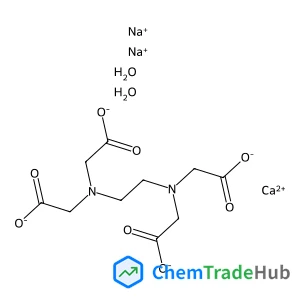
EthylenediaminetetraaceticacidcalciumDisodiumsalthydrate
CAS Number:
23411-34-9
Molecular Formula:
C10H16CaN2Na2O10

Trichloro(3,3,4,4,5,5,6,6,7,7,8,8,8-tridecafluorooctyl)silane
CAS Number:
78560-45-9
Molecular Formula:
C8H4Cl3F13Si

Recommended Suppliers






Disclaimer
This page provides academic journal information for reference and research purposes only. We are not affiliated with any journal publishers and do not handle publication submissions. For publication-related inquiries, please contact the respective journal publishers directly.
If you notice any inaccuracies in the information displayed, please contact us at support@chemtradehub.com. We will promptly review and address your concerns.