


![(3R,4aR,7aS,9aR,10S,11R,13aR,13bS,15aS,15bR)-3,11-Dihydroxy-10-(hydroxymethyl)-4,4,7a,10,13a,15b-hexamethyl-1,2,3,4,4a,7,7a,8,9,9a,10,11,12,13,13a,13b,14,15,15a,15b-icosahydro-5H-naphtho[2',1':4,5]cyc
lohepta[1,2-a]naphthalen-5-one structure](https://static.chemtradehub.com/structs/538/53800-21-8-9f18.webp "(3R,4aR,7aS,9aR,10S,11R,13aR,13bS,15aS,15bR)-3,11-Dihydroxy-10-(hydroxymethyl)-4,4,7a,10,13a,15b-hexamethyl-1,2,3,4,4a,7,7a,8,9,9a,10,11,12,13,13a,13b,14,15,15a,15b-icosahydro-5H-naphtho[2',1':4,5]cyc
lohepta[1,2-a]naphthalen-5-one structure")
Controlled transition dipole alignment of energy donor and energy acceptor molecules in doped organic crystals, and the effect on intermolecular Förster energy transfer
Literature Information
Publication Date
2013-01-08
DOI
10.1039/C3CP43800G
Impact Factor
3.676
Authors
Bailing Yue, Zengqi Xie, Bingrong Gao, Yuanxiang Xu, Linlin Liu, Hongbo Sun
View Original
Abstract
The orientation factor κ2 ranging from 0 to 4, which depends on the relative orientation of the transition dipoles of the energy donor (D) and the energy acceptor (A) in space, is one of the pivotal factors deciding the efficiency and directionality of resonance energy transfer (RET) in a D–A molecular system. In this work, tetracene (Tc) and pentacene (Pc) are successfully doped in a trans-1,4-distyrylbenzene (DSB) crystalline lattice to form definite D–A mutually perpendicular transition dipole orientations. The cross D–A dipole arrangement results in an extremely small orientation factor, which is about two orders smaller than that in the disordered films. The energy transfer properties from the host (DSB) to the guest (Tc/Pc) were investigated in detail by steady-state as well as time-resolved fluorescence spectroscopy. Our experimental research results show that the small value of κ2 allows less or partial energy transfer from the host (DSB) to the guest (Tc) in a wide range of guest concentration, with the Förster distance of around 1.5 nm. By controlling the doping concentrations in the Tc and Pc doubly doped DSB crystals, we demonstrate, as an example, for the first time the application of the restricted energy transfer by D–A cross transition dipole arrangement for preparation of a large-size, white-emissive organic crystal with the CIE coordinates of (0.36, 0.37) approaching an ideal white light. In contrast, Tc is also doped in an anthracene crystalline lattice to form head-to-tail D–A transition dipole alignment, which is proved to be highly effective to promote the intermolecular energy transfer. In this doped system, the orientation factor is relatively large and the Förster distance is around 7 nm.
Recommended Journals

Medicinal Chemistry Research

Critical Reviews in Solid State and Materials Sciences

Journal of Asian Natural Products Research

Bioorganic & Medicinal Chemistry Letters

Colloid Journal

Biocatalysis and Biotransformation

Heteroatom Chemistry

Chinese Journal of Chemistry

Atomization and Sprays

Journal of Chemical Sciences
Related Literature
Simultaneous photocatalytic degradation of methylene blue and methyl orange using a green synthesized Zn0.98Mn0.02O/BiOCl nanocomposite
Muhammad Asim Farid, Ahmad Raza Ashraf, Rida Sarfaraz, Sadaf ul Hassan, Nimra Naeem, Hamza Naeem
2023-12-01
Paper
DOI: 10.1039/D3NJ05085H
Novel solar-light-driven Z-scheme BiOCl@WS2 nanocomposite photocatalysts for the photocatalytic removal of organic pollutants
Chang-Mou Wu, Kebena Gebeyehu Motora, Pankaj Koinkar, Akihiro Furube
2023-11-06
Paper
DOI: 10.1039/D3NJ04410F
Bromination of organic spacer impacts on the structural arrangement, phase transitions, and optical and electrical properties of a hybrid halide compound:[(CH3)3N(CH2)3Br]2PdBr4
Mohamed Saadi, Imen Dakhlaoui, Fadhel Hajlaoui, Nidhal Drissi, Mustapha Zighrioui, Fethi Jomni, Nathalie Audebrand, Marie Cordier
2023-11-24
Paper
DOI: 10.1039/D3NJ04819E
Smart stimuli-responsive polysaccharide nanohydrogels for drug delivery: a review
Ahmed Fatimi, Rajender S. Varma, Mohammed Berrada
2023-11-01
Review Article
DOI: 10.1039/D3TB01712E
Aza-BODIPY with two efficacious fragments for NIR light-driven photothermal therapy by triggering cancer cell apoptosis
Chunyu Shao, Xiuyan Gong, Dongxiang Zhang, Xin-Dong Jiang, Jianjun Du, Guiling Wang
2023-10-23
Paper
DOI: 10.1039/D3TB02132G
Plasmonic nanoprobes on single AuNTs for evaluating and monitoring the dynamic release of 2D drug carriers
Zejie Yu, Yi Wang, Miaomiao Cai, Jiachang Chen, Qirong Zou, Quli Fan, Lei Zhang
2023-11-20
Paper
DOI: 10.1039/D3TB02255B
Revealing charge-shift bonds in H3+ and their metallic analogs M3+ (M = Li, Na, K) through electron density topology
2023-08-29
Paper
DOI: 10.1039/D3NJ03674J
Optimization of iron oxide nanoparticles for MRI-guided magnetic hyperthermia tumor therapy: reassessing the role of shape in their magnetocaloric effect
Francisco Gámez, Roberto Gallardo, Manuel Pernia Leal
2023-11-03
Paper
DOI: 10.1039/D3TB01821K
Preparation and characterisation of wheat starch-based aerogels for procyanidin encapsulation to enhance stability
Yu Gao, Hong-Ning Lv, Sheng-Hua Zha, Xiao-Li Sun
2023-11-21
Paper
DOI: 10.1039/D3NJ03311B
You might also like
Compound Q&A
Is 6-(3-Fluorophenyl)picolinic acid (CAS: 887982-40-3) safe?
6-(3-Fluorophenyl)picolinic acid is generally considered safe for laboratory use...
887982-40-36-(3-Fluorophenyl)pi...
Compound Q&A
What industries use (3R)-3-Pyrrolidinol (CAS: 2799-21-5)?
(3R)-3-Pyrrolidinol is used in the pharmaceutical industry as a precursor for dr...
2799-21-5(3R)-3-Pyrrolidinol
Compound Q&A
What precautions should be taken when handling (4R,5R)-4,5-Diethoxycarbonyl-2,2-dimethyldioxolane (CAS: 59779-75-8)?
When handling (4R,5R)-4,5-Diethoxycarbonyl-2,2-dimethyldioxolane (CAS: 59779-75-...
59779-75-8(4R,5R)-4,5-Diethoxy...
Compound Q&A
How is 1-(6-Chloroimidazo[1,2-b]pyridazin-3-yl)ethanone (CAS: 90734-71-7) typically synthesized?
1-(6-Chloroimidazo[1,2-b]pyridazin-3-yl)ethanone is often synthesized via a mult...
90734-71-71-(6-Chloroimidazo[1...
Compound Q&A
What is the market or research trend for N-Ethyl-3,4-dimethylbenzylamine (CAS: 39180-83-1)?
The market for N-Ethyl-3,4-dimethylbenzylamine (CAS: 39180-83-1) remains steady,...
39180-83-1N-Ethyl-3,4-dimethyl...
Compound Q&A
What is Tert-butyl 3-(pyrrolidin-1-yl)azetidine-1-carboxylate (CAS: 1019008-21-9)?
Tert-butyl 3-(pyrrolidin-1-yl)azetidine-1-carboxylate is a chemical compound wit...
1019008-21-9Tert-butyl 3-(pyrrol...
Compound Q&A
What regulatory guidelines apply to 1-Bromo-3-chloro-2,4-dimethoxybenzene (CAS: 1228956-93-1)?
1-Bromo-3-chloro-2,4-dimethoxybenzene (CAS: 1228956-93-1) falls under the classi...
1228956-93-11-Bromo-3-chloro-2,4...
Compound Q&A
Is 8-Bromo-2-methyl-3,4-dihydroisoquinolin-1(2H)-one (CAS: 1368622-07-4) safe?
The safety of 8-Bromo-2-methyl-3,4-dihydroisoquinolin-1(2H)-one (CAS: 1368622-07...
1368622-07-48-Bromo-2-methyl-3,4...
Compound Q&A
Is Benzyl [(3S)-2,6-dioxo-3-piperidinyl]carbamate (CAS: 22785-43-9) safe?
Benzyl [(3S)-2,6-dioxo-3-piperidinyl]carbamate is generally safe when handled wi...
22785-43-9Benzyl [(3S)-2,6-dio...
Compound Q&A
How should 1-{[4-(4,4,5,5-Tetramethyl-1,3,2-dioxaborolan-2-yl)phenyl]sulfonyl}pyrrolidine (CAS: 928657-21-0) be stored?
1-{[4-(4,4,5,5-Tetramethyl-1,3,2-dioxaborolan-2-yl)phenyl]sulfonyl}pyrrolidine s...
928657-21-01-{[4-(4,4,5,5-Tetra...
Source Journal
Physical Chemistry Chemical Physics

CiteScore:
5.5
Self-citation Rate:
10.3%
Articles per Year:
3036
Physical Chemistry Chemical Physics (PCCP) is an international journal co-owned by 19 physical chemistry and physics societies from around the world. This journal publishes original, cutting-edge research in physical chemistry, chemical physics and biophysical chemistry. To be suitable for publication in PCCP, articles must include significant innovation and/or insight into physical chemistry; this is the most important criterion that reviewers and Editors will judge against when evaluating submissions. The journal has a broad scope and welcomes contributions spanning experiment, theory, computation and data science. Topical coverage includes spectroscopy, dynamics, kinetics, statistical mechanics, thermodynamics, electrochemistry, catalysis, surface science, quantum mechanics, quantum computing and machine learning. Interdisciplinary research areas such as polymers and soft matter, materials, nanoscience, energy, surfaces/interfaces, and biophysical chemistry are welcomed if they demonstrate significant innovation and/or insight into physical chemistry. Joined experimental/theoretical studies are particularly appreciated when complementary and based on up-to-date approaches.
Recommended Compounds
![[1-(5-Methyl-2-pyridinyl)-1H-pyrazol-4-yl]methanol structure](https://static.chemtradehub.com/structs/143/1439822-99-7-6cc9.webp "[1-(5-Methyl-2-pyridinyl)-1H-pyrazol-4-yl]methanol structure")
[1-(5-Methyl-2-pyridinyl)-1H-pyrazol-4-yl]methanol
CAS Number:
1439822-99-7
Molecular Formula:
C10H11N3O
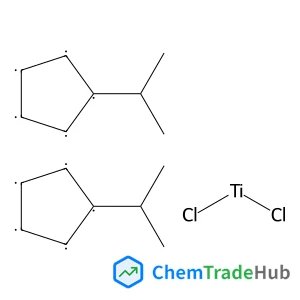
BIS(I-PROPYLCYCLOPENTADIENYL)TITANIUM DICHLORIDE
CAS Number:
12130-65-3
Molecular Formula:
C16H22Cl2Ti

Methyl 2-amino-4-(4-chlorophenyl)-5-pyrimidinecarboxylate
CAS Number:
1133115-56-6
Molecular Formula:
C12H10ClN3O2
Recommended Suppliers





Disclaimer
This page provides academic journal information for reference and research purposes only. We are not affiliated with any journal publishers and do not handle publication submissions. For publication-related inquiries, please contact the respective journal publishers directly.
If you notice any inaccuracies in the information displayed, please contact us at support@chemtradehub.com. We will promptly review and address your concerns.