












The primary photo-dissociation dynamics of carboxylate anions in aqueous solution: decarboxylation
Literature Information
Publication Date
2019-03-18
DOI
10.1039/C8CP07621A
Impact Factor
3.676
Authors
Marlene Møller Madsen, Frank Jensen, Svend J. Knak Jensen, Jan Thøgersen
View Original
Abstract
We study the primary photo-dissociation of aqueous anions of formic, acetic and propionic acids induced by photo-excitation at 200 nm. The photo-dissociation dynamics are recorded with sub-picosecond time resolution by UV pump–IR probe transient absorption spectroscopy. Hundred picoseconds after the excitation, 47 ± 5% of the excited formate anions, 35 ± 5% of the excited acetate anions and 27 ± 5% of the excited propionate anions are dissociated, while the rest of the excited molecules return to the electronic ground state of the parent anion. Photo-dissociation of the three anions produces CO2(aq) through a precursor with a lifetime of approximately 20 ps. The precursor is assigned to the excited state of the parent anion based on comparison with calculated IR spectra and isotope shifts. Of the molecules that remain dissociated after 100 ps, the percentage leading to the production of CO2(aq) is 7 ± 3%, 48 ± 20% and 92 ± 30% for formate, acetate and propionate, respectively, while photo-dissociation of formate in addition leads to formation of CO2−. Decarboxylation is thus the dominating reaction channel in acetate and propionate, and this suggests formation of CH4 and C2H6 when the initially formed anions are protonated by water.
Related Literature
Sample preparation method for analysis of swipe samples by inductively coupled plasma mass spectrometry
Éva Széles, Zsolt Varga, Zsolt Stefánka
2010-03-09
Technical Note
DOI: 10.1039/B926332B
Exceptional TcO4− sorption capacity and highly efficient ReO4− luminescence sensing by Zr4+ MOFs
Sofia Rapti, Stavros A. Diamantis, Argyro Dafnomili, Anastasia Pournara, Euaggelia Skliri, Gerasimos S. Armatas, Athanassios C. Tsipis, Ioannis Spanopoulos, Christos D. Malliakas, Mercouri G. Kanatzidis, John C. Plakatouras, Fotini Noli, Theodore Lazarides, Manolis J. Manos
2018-10-01
Paper
DOI: 10.1039/C8TA07901C
Probing nucleus-enriched proteins in single living cells via a subcellular-resolved plasmonic immunosandwich assay‡
Jia Liu, Dan Xie, Zhen Liu
2021-02-16
Paper
DOI: 10.1039/D1AN00003A
The synthesis and electrochemical applications of core–shell MOFs and their derivatives
Zhimin Zhao, Jiawei Ding, Rongmei Zhu, Huan Pang
2019-06-18
Review Article
DOI: 10.1039/C9TA03833G
Ionogel-based sodium ion micro-batteries with a 3D Na-ion diffusion mechanism enable ultrahigh rate capability
Huijuan Huang, Yanfeng Dong, Feng Zhou, Chenglin Sun, Zhong-Shuai Wu
2020-01-21
Communication
DOI: 10.1039/C9EE03219C
A novel chlorine-containing borophosphate based on (4,3)-connected 3-D borophosphate anion [B6P11O42(OH)2]13− with unique B : P ratio and 22-tetrahedral cages
Yuquan Feng, Min Li, Hengzhen Shi, Qunzeng Huang, Dongfang Qiu
2013-01-16
Communication
DOI: 10.1039/C3CE26918C
Syntheses, crystal structures of a series of novel alkali metal or alkaline earth metal phosphites
Jian-Han Zhang, Jun-Ling Song, Fang Kong, Jiang-Gao Mao
2013-01-14
Paper
DOI: 10.1039/C3CE26885C
An antibody-based amperometric biosensor for 20S proteasome activity and inhibitor screening
Madalina M. Barsan, Victor C. Diculescu
2021-03-16
Paper
DOI: 10.1039/D0AN02426K
The transfer and persistence of metals in latent fingermarks
Rhiannon E. Boseley, Daryl L. Howard, Mark J. Hackett, Simon W. Lewis
2021-12-21
Paper
DOI: 10.1039/D1AN01951A
Photoresponsive smart template for reversible cell micropatterning
Yu-Hui Gong, Juan Yang, Feng-Yi Cao, Jing Zhang, Han Cheng, Ren-Xi Zhuo, Xian-Zheng Zhang
2013-02-26
Communication
DOI: 10.1039/C3TB20073F
You might also like
Compound Q&A
How is Ethyl 4-chlorothieno[2,3-b]pyridine-5-carboxylate (CAS: 59713-58-5) typically synthesized?
Ethyl 4-chlorothieno[2,3-b]pyridine-5-carboxylate (CAS: 59713-58-5) can be synth...
59713-58-5Ethyl 4-chlorothieno...
Compound Q&A
What regulatory guidelines apply to 5-Methyl-1H-indole-3-carbaldehyde (CAS: 52562-50-2)?
5-Methyl-1H-indole-3-carbaldehyde (CAS: 52562-50-2) is subject to various regula...
52562-50-25-Methyl-1H-indole-3...
Compound Q&A
What are the physical and chemical properties of (1,3-Dimethyl-2,4-dioxo-1,2,3,4-tetrahydro-5-pyrimidinyl)boronic acid (CAS: 223418-73-3)?
(1,3-Dimethyl-2,4-dioxo-1,2,3,4-tetrahydro-5-pyrimidinyl)boronic acid is a white...
223418-73-3(1,3-Dimethyl-2,4-di...
Compound Q&A
How should waste containing Sulfocostunolide A (CAS: 1016983-51-9) be handled?
Waste containing Sulfocostunolide A (CAS: 1016983-51-9) should be handled with c...
1016983-51-9Sulfocostunolide A
Compound Q&A
What precautions should be taken when handling Murraxocin (CAS: 88478-44-8)?
When handling Murraxocin (CAS: 88478-44-8), ensure proper personal protective eq...
88478-44-8Murraxocin
Compound Q&A
What are the physical and chemical properties of Formvar (CAS: 63148-64-1)?
Formvar (CAS: 63148-64-1) is an alkyd resin characterized by a high molecular we...
63148-64-1Formvar(R)
Compound Q&A
Is (S)-4-benzyl-2-((benzyloxy)methyl)morpholine (CAS: 205242-66-6) safe?
(S)-4-benzyl-2-((benzyloxy)methyl)morpholine is generally safe when handled with...
205242-66-6(S)-4-benzyl-2-((ben...
Compound Q&A
What industries use Methyl 1-(5-bromo-2-pyrimidinyl)cyclopropanecarboxylate (CAS: 1447607-69-3)?
Methyl 1-(5-bromo-2-pyrimidinyl)cyclopropanecarboxylate (CAS: 1447607-69-3) is p...
1447607-69-3Methyl 1-(5-bromo-2-...
Compound Q&A
Is 2-Methyl-1-phenyl-1-propanamine hydrochloride (CAS: 24290-47-9) safe?
2-Methyl-1-phenyl-1-propanamine hydrochloride (CAS: 24290-47-9) is generally con...
24290-47-92-Methyl-1-phenyl-1-...
Compound Q&A
How is 3-(4-Bromophenyl)-2-methylpropanoic acid (CAS: 66735-01-1) typically synthesized?
3-(4-Bromophenyl)-2-methylpropanoic acid is synthesized through a multi-step pro...
66735-01-13-(4-Bromophenyl)-2-...
Source Journal
Physical Chemistry Chemical Physics

CiteScore:
5.5
Self-citation Rate:
10.3%
Articles per Year:
3036
Physical Chemistry Chemical Physics (PCCP) is an international journal co-owned by 19 physical chemistry and physics societies from around the world. This journal publishes original, cutting-edge research in physical chemistry, chemical physics and biophysical chemistry. To be suitable for publication in PCCP, articles must include significant innovation and/or insight into physical chemistry; this is the most important criterion that reviewers and Editors will judge against when evaluating submissions. The journal has a broad scope and welcomes contributions spanning experiment, theory, computation and data science. Topical coverage includes spectroscopy, dynamics, kinetics, statistical mechanics, thermodynamics, electrochemistry, catalysis, surface science, quantum mechanics, quantum computing and machine learning. Interdisciplinary research areas such as polymers and soft matter, materials, nanoscience, energy, surfaces/interfaces, and biophysical chemistry are welcomed if they demonstrate significant innovation and/or insight into physical chemistry. Joined experimental/theoretical studies are particularly appreciated when complementary and based on up-to-date approaches.
Recommended Compounds
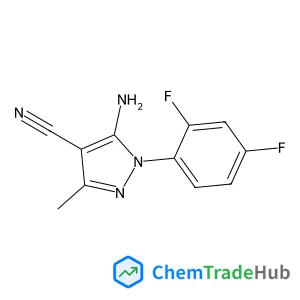
5-Amino-1-(2,4-difluorophenyl)-3-methyl-1H-pyrazole-4-carbonitrile
CAS Number:
1020057-92-4
Molecular Formula:
C11H8F2N4
![2-(Methylsulfonyl)-2,4,5,6-tetrahydropyrrolo[3,4-c]pyrazole structure](https://static.chemtradehub.com/structs/122/1226781-80-1-09d5.webp "2-(Methylsulfonyl)-2,4,5,6-tetrahydropyrrolo[3,4-c]pyrazole structure")
2-(Methylsulfonyl)-2,4,5,6-tetrahydropyrrolo[3,4-c]pyrazole
CAS Number:
1226781-80-1
Molecular Formula:
C6H9N3O2S
Recommended Suppliers






Disclaimer
This page provides academic journal information for reference and research purposes only. We are not affiliated with any journal publishers and do not handle publication submissions. For publication-related inquiries, please contact the respective journal publishers directly.
If you notice any inaccuracies in the information displayed, please contact us at support@chemtradehub.com. We will promptly review and address your concerns.