












Simple and disposable potentiometric sensors based on graphene or multi-walled carbon nanotubes – carbon–plastic potentiometric sensors
Literature Information
Publication Date
2013-01-31
DOI
10.1039/C3AN36741J
Impact Factor
4.616
Authors
Ewa Jaworska, Wiktor Lewandowski, Józef Mieczkowski, Krzysztof Maksymiuk, Agata Michalska
View Original
Abstract
A simple procedure leading to disposable potentiometric sensors using as a supporting electrode – electrical lead and transducer – a layer of carbon nanostructured material, either graphene or multi-walled nanotubes, is proposed, and the effect of the material used on the properties of the sensor is discussed. The obtained layers were partially covered with a conventional poly(vinyl chloride) (PVC) based ion-selective membrane to result in simple, planar, and disposable potentiometric sensors. The analytical performance of the thus obtained electrodes was compared with that of classical macroscopic all-solid-state ion-selective electrodes (e.g. employing poly(octylthiophene) as a solid contact and a similar ion-selective membrane). It was superior (taking into account detection limits or selectivity towards Na+ ions) compared to that of other disposable sensors proposed recently. The observed excellent analytical performance was attributed to the applied method of preparation of carbon nanostructured materials, which does not require addition of a surfactant to obtain a stable suspension (ink) used to prepare the electrical lead and the transducer of the sensor. Although the proposed sensors are predominantly intended for disposable use, pronounced stability of potential readings was obtained in within-day experiments. Moreover, due to their high conductivity carbon–plastic electrodes can be also applied in polarized potentiometric measurements.
Related Literature
Ab initio study of the O4H+ novel species: spectroscopic fingerprints to aid its observation
F. George D. Xavier, Rámon Hernández-Lamoneda
2015-05-12
Paper
DOI: 10.1039/C5CP01822F
Phonon-assisted energy back transfer-induced multicolor upconversion emission of Gd2O3:Yb3+/Er3+ nanoparticles under near-infrared excitation
Jun Liu, Huawei Deng, Zhanyun Huang, Yueli Zhang, Dihu Chen, Yuanzhi Shao
2015-05-05
Paper
DOI: 10.1039/C5CP01632K
Surface oxygen-vacancy induced photocatalytic activity of La(OH)3 nanorods prepared by a fast and scalable method
Xiang Xiao, Guangming Jiang, Yuxin Zhang, Wen Cui, Jinzhu Ma
2015-05-22
Paper
DOI: 10.1039/C5CP02460A
Gold atomic clusters extracting the valence electrons to shield the carbon monoxide passivation on near-monolayer core–shell nanocatalysts in methanol oxidation reactions
Hong Dao Li, Guo-Wei Lee, Po-Chun Huang, Po-Wei Yang, Yu-Ting Liu, Yen-Fa Liao, Horng-Tay Jeng, Deng-Sung Lin, Tsang-Lang Lin
2015-05-07
Paper
DOI: 10.1039/C5CP01103E
Identification of intrinsic catalytic activity for electrochemical reduction of water molecules to generate hydrogen
Tatsuya Shinagawa, Kazuhiro Takanabe
2015-05-15
Communication
DOI: 10.1039/C5CP02330K
Carrier concentration dependent optical and electrical properties of Ga doped ZnO hexagonal nanocrystals
Manas Saha, Sirshendu Ghosh, Vishal Dev Ashok, S. K. De
2015-05-22
Paper
DOI: 10.1039/C4CP05480F
To what extent can charge localization influence electron injection efficiency at graphene–porphyrin interfaces?
Manas R. Parida, Shawkat M. Aly, Erkki Alarousu, Aravindan Sridharan, Doddahalli H. Nagaraju, Husam N. Alshareef, Omar F. Mohammed
2015-04-28
Paper
DOI: 10.1039/C5CP02362A
Co-electrodeposition of RuO2–MnO2 nanowires and the contribution of RuO2 to the capacitance increase
Zhe Gui, Eleanor Gillette, Jonathon Duay, Junkai Hu, Nam Kim, Sang Bok Lee
2015-05-05
Paper
DOI: 10.1039/C5CP01814E
You might also like
Compound Q&A
What are the main uses of (5-Sulfamoyl-3-pyridinyl)boronic acid (CAS: 951233-61-7)?
(5-Sulfamoyl-3-pyridinyl)boronic acid is primarily used in chemical synthesis, p...
951233-61-7(5-Sulfamoyl-3-pyrid...
Compound Q&A
How is Benzyl 2-methyl-2-(methylsulfonyl)-4-pentenoate (CAS: 1942858-50-5) typically synthesized?
Benzyl 2-methyl-2-(methylsulfonyl)-4-pentenoate is typically synthesized via est...
1942858-50-5Benzyl 2-methyl-2-(m...
Compound Q&A
What precautions should be taken when handling 8-Fluoroquinolin-6-ol (CAS: 209353-22-0)?
When handling 8-Fluoroquinolin-6-ol (CAS: 209353-22-0), it is important to use p...
209353-22-08-Fluoroquinolin-6-o...
Compound Q&A
What are the physical and chemical properties of 1,3-Dibromo-5-(2-methyl-2-propanyl)benzene (CAS: 129316-09-2)?
1,3-Dibromo-5-(2-methyl-2-propanyl)benzene (CAS: 129316-09-2) is a crystalline c...
129316-09-21,3-Dibromo-5-(2-met...
Compound Q&A
What industries use Ethyl 7-chloro-4-oxo-1-(1,3-thiazol-2-yl)-1,4-dihydro-1,8-naphthyridine-3-carboxylate (CAS: 174726-87-5)?
Ethyl 7-chloro-4-oxo-1-(1,3-thiazol-2-yl)-1,4-dihydro-1,8-naphthyridine-3-carbox...
174726-87-5Ethyl 7-chloro-4-oxo...
Compound Q&A
What precautions should be taken when handling Delta-7-Avenasterol (CAS: 23290-26-8)?
When handling Delta-7-Avenasterol (CAS: 23290-26-8), it is important to wear app...
23290-26-8Delta-7-Avenasterol
Compound Q&A
What precautions should be taken when handling N-({(5R)-3-[3-Fluoro-4-(4-morpholinyl)phenyl]-2-oxo-1,3-oxazolidin-5-yl}methyl)acetamide (CAS: 872992-20-6)?
Proper handling involves the use of personal protective equipment such as gloves...
872992-20-6N-({(5R)-3-[3-Fluoro...
Compound Q&A
What precautions should be taken when handling 2-Methyl-2-proanyl 4-[(2-aminophenyl)amino]-1-piperidinecarboxylate (CAS: 79099-00-6)?
When handling 2-Methyl-2-proanyl 4-[(2-aminophenyl)amino]-1-piperidinecarboxylat...
79099-00-62-Methyl-2-propanyl ...
Compound Q&A
What is N-Methyl-4-chlorobenzylamine hydrochloride (CAS: 65542-24-7)?
N-Methyl-4-chlorobenzylamine hydrochloride (CAS: 65542-24-7) is a organic compou...
65542-24-7N-Methyl-4-chloroben...
Compound Q&A
Is [2-(Dodecyloxy)ethoxy]acetic acid (CAS: 27306-90-7) safe?
[2-(Dodecyloxy)ethoxy]acetic acid (CAS: 27306-90-7) is generally considered safe...
27306-90-7[2-(Dodecyloxy)ethox...
Source Journal
Analyst

CiteScore:
7.8
Self-citation Rate:
5.6%
Articles per Year:
653
Analyst publishes analytical and bioanalytical research that reports premier fundamental discoveries and inventions, and the applications of those discoveries, unconfined by traditional discipline barriers.
Recommended Compounds
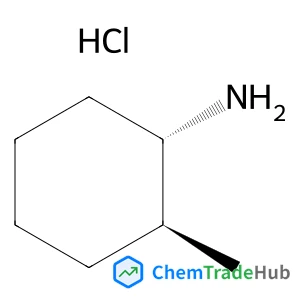
(1R,2R)-2-Methylcyclohexanamine hydrochloride (1:1)
CAS Number:
39558-31-1
Molecular Formula:
C7H16ClN
![[3-Fluoro-4-(1-pyrrolidinylcarbonyl)phenyl]boronic acid structure](https://static.chemtradehub.com/structs/874/874289-09-5-e3d4.webp "[3-Fluoro-4-(1-pyrrolidinylcarbonyl)phenyl]boronic acid structure")
[3-Fluoro-4-(1-pyrrolidinylcarbonyl)phenyl]boronic acid
CAS Number:
874289-09-5
Molecular Formula:
C11H13BFNO3
Recommended Suppliers





Disclaimer
This page provides academic journal information for reference and research purposes only. We are not affiliated with any journal publishers and do not handle publication submissions. For publication-related inquiries, please contact the respective journal publishers directly.
If you notice any inaccuracies in the information displayed, please contact us at support@chemtradehub.com. We will promptly review and address your concerns.