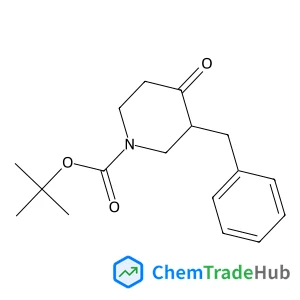
2-Methyl-2-propanyl 3-benzyl-4-oxo-1-piperidinecarboxylate
CAS Number:
193274-82-7
Molecular Formula:
C17H23NO3
Zhehong Shen, Youyou Yang, Fengzhu Lu, Binfu Bao, Bo You
This paper presents a novel and facile approach to fabricate robust structural color directly through the self-assembly of soft colloidal polymer spheres by the aid of nanosilica at ambient pressure and temperature without complicated equipment. In this approach, soft colloidal polymer spheres are synthesized by emulsion polymerization and then blended with colloidal silica to obtain a nanocomposite dispersion. When this dispersion is loaded onto the surface of composite materials, the colloidal polymer spheres and silica beads can directly self-assemble into robust crystal films with vivid structural colors. Neither soft matrix nor post-treatment are needed. The bright colors could be obtained and tuned easily by adjusting the size of the polymer spheres without any dyes or pigments. Compared with traditional substrates such as glass and polypropylene, the reflectivity and the attachment strength were much higher because the surfaces of the composite materials are more rich in polar OH-groups, which may help the self-assembly and attachment strength.
Duarte M. Cecílio, Auguste Fernandes, Timothy F. L. McKenna, M. Rosário Ribeiro
DOI: 10.1039/D1PY00453K
Lin Guo, Qunjian Huang, Xiao-yuan Li, Shihe Yang
DOI: 10.1039/B009951L
Craig A. Kelly, David R. Rosseinsky
DOI: 10.1039/B010092G
Cristina Martí, Santi Nonell, Xiaojun Zhang, Christopher S. Foote, Rafael González Moreno, José L. Bourdelande, Josep Font
DOI: 10.1039/B009484F
Shu-Ming Kang, Xun-Hui Xu, Lei Xu, Li Zhou, Na Liu, Zong-Quan Wu
DOI: 10.1039/D1PY00482D
Dmitry Nerukh, Trevor R. Griffiths
DOI: 10.1039/B009501J
Mengmeng Li, Lin Zhou, Ziqi Zhang, Qi Wang, Jiani Gao, Shiping Zhang, Lin Lei
DOI: 10.1039/D1PY00892G
H. Bertagnolli, D. Leicht, R. Merkle, E. Vilaseca
DOI: 10.1039/B101742J
DOI: 10.1039/B101191J
6-Bromo-2-methylimidazo[1,2-a]pyrimidine (CAS: 1111638-05-1) falls under various...
While there are no direct alternatives, similar compounds like 1-Pyrrolidineetha...
4-Methyl-2,6-bis(2-methyl-2-propanyl)phenyl methylcarbamate (CAS: 1918-11-2) is ...
2-(3-Bromo-4-fluorophenyl)-1,3-dioxolane (CAS: 77771-04-1) should be stored in a...
4,5,6,7-Tetrahydro-1H-indazole hydrochloride is a white crystalline solid with a...
(2R)-1-Methoxy-3-phenyl-2-propanamine is a chiral organic compound with the CAS ...
Ethyl 1-(1-phenylethyl)-1H-imidazole-5-carboxylate is used in various industries...
4-[(1E,3S)-1-(4-Hydroxyphenyl)-1,4-pentadien-3-yl]phenol (CAS: 17676-24-3) falls...
(S)-3-Amino-5-phenylpentanoic acid hydrochloride is primarily used in the pharma...
7-Methoxy-1-benzothiophene-2-carboxylic acid is typically synthesized by reactin...

Polymer Chemistry welcomes submissions in all areas of polymer science that have a strong focus on macromolecular chemistry. Manuscripts may cover a broad range of fields, yet no direct application focus is required.