![(2S)-2-{[(9H-Fluoren-9-ylmethoxy)carbonyl]amino}-4-(methylselanyl)butanoic acid structure](https://static.chemtradehub.com/structs/121/1217852-49-7-f252.webp "(2S)-2-{[(9H-Fluoren-9-ylmethoxy)carbonyl]amino}-4-(methylselanyl)butanoic acid structure")
(2S)-2-{[(9H-Fluoren-9-ylmethoxy)carbonyl]amino}-4-(methylselanyl)butanoic acid
CAS Number:
1217852-49-7
Molecular Formula:
C20H21NO4Se
To introduce optical imaging among methods available to follow nanoparticle biodistribution, we have evaluated the concept of covalently labeling poly(lactide-co-glycolide) (PLGA) with a near-infrared (NIR) dye to obtain stable NIR fluorescent nanoparticles. PLGA was coupled with the NIR dye (DY-700, Dyomics) by an amide bond with 38% efficiency. Incorporating 1% of this conjugate into PLGA nanoparticles stabilised by polyvinyl alcohol (PVA) leads to stable nanoparticles (NPs) without affecting their colloidal characteristics (average diameter, polydispersity and zeta potential). In addition, nanoparticles remain strongly fluorescent and display good storage stability for 4 weeks at 4 °C or over one week at 37 °C. Nanoparticle cytotoxicity evaluated using HUVEC, NIH/3T3 and J774.A1 cell lines was similar for unlabeled or labeled NPs. Fluorescent nanoparticles and free dye were injected intravenously into mice and their biodistribution was followed for 24 h by NIR imaging, in vivo and ex vivo. Nanoparticles were found mainly in the liver whereas the free dye was not accumulating preferentially in this organ. The DY-700 NIR conjugate incorporated into PLGA NPs shows good performance both in vitro and in vivo, thus paving the way to finely traceable PLGA nanosystems for in vivo administration.
Anna Isakova, Christian Burton, Daniel J. Nowakowski, Paul D. Topham
DOI: 10.1039/C7PY00394C
Jirong Wang, Jianyu Han, Mohd Yusuf Khan, Dan He, Haiyan Peng, Dianyu Chen, Xiaolin Xie, Zhigang Xue
DOI: 10.1039/C6PY02066F
Laura Etchenausia, Abdel Khoukh, Elise Deniau Lejeune, Maud Save
DOI: 10.1039/C7PY00221A
Lucie Malosse, Etienne Duguet, Muriel Lansalot, Elodie Bourgeat-Lami, Serge Ravaine
DOI: 10.1039/C4PY00370E
Yu Liu, Xiaochuan Shui, Meng Wang, Chenguang Zhang, Yuechuan Wang
DOI: 10.1039/C6PY02104B
Chih-Chia Cheng, Jyun-Jie Huang, Zhi-Sheng Liao, Shan-You Huang, Zhong Xin
DOI: 10.1039/C7PY00182G
Qun Luo, Junkai Wang, Yi Lin, Changquan Tang, Junyan Dou, Hongwei Tan, Qingdong Zheng, Chang-Qi Ma, Zheng Cui
DOI: 10.1039/C6PY02161A
Scott C. Radzinski, Jeffrey C. Foster, Sally E. Lewis, Eric V. French, John B. Matson
DOI: 10.1039/C6PY01982J
Chao Yin, Wenli Song, Rongcui Jiang, Wenbo Hu, Qingming Shen, Xiang Li, Jie Li, Quli Fan
DOI: 10.1039/C4PY00376D
When considering alternatives to 1-(4-Chlorophenyl)-N-hydroxymethanimine (CAS: 3...
This compound should be stored in a cool, dry place away from direct sunlight. I...
3-(4-Bromophenyl)-5-(2-fluorophenyl)-1,2,4-oxadiazole is synthesized through a m...
5-Chloro-2-(4-chlorophenyl)-4-methyl-6-[3-(1-piperidinyl)propoxy]pyrimidine (CAS...
2-Chloro-4-(difluoromethoxy)pyridine is used in the pharmaceutical industry for ...
3-Chloro-6-methylpyridazine (CAS: 1121-79-5) is classified under the Globally Ha...
Several alternatives can be used in the synthesis of Methyl 4,5-dimethyl-2-nitro...
Alternatives to (2E,2'E)-3,3'-(1,4-Phenylene)bisacrylaldehyde include other acry...
3-Amino-5-chloropyridin-2-ol hydrochloride is an organic compound with the CAS n...
When handling 6,7-Difluoro-2,3-dihydro-4H-chromen-4-one, it is essential to wear...

Polymer Chemistry welcomes submissions in all areas of polymer science that have a strong focus on macromolecular chemistry. Manuscripts may cover a broad range of fields, yet no direct application focus is required.
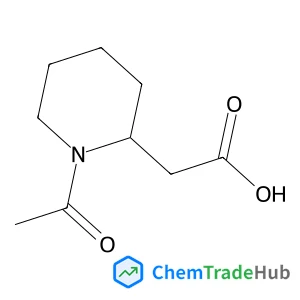
![[4-(Isobutyrylamino)phenyl]boronic acid structure](https://static.chemtradehub.com/structs/874/874219-50-8-6ab5.webp "[4-(Isobutyrylamino)phenyl]boronic acid structure")