












![Bis[(1,2,3,4,5-eta)-1-(diphenylphosphino)cyclopentadienyl]iron structure](https://static.chemtradehub.com/structs/121/12150-46-8-ecd2.webp "Bis[(1,2,3,4,5-eta)-1-(diphenylphosphino)cyclopentadienyl]iron structure")
Bis[(1,2,3,4,5-eta)-1-(diphenylphosphino)cyclopentadienyl]iron
CAS Number:
12150-46-8
Molecular Formula:
C34H28FeP2
Xinghao Wang, Hongyan Li, Hongzhe Sun
Copper transporter 1 (CTR1) is a transmembrane protein that imports copper(I) into yeast and mammalian cells. Surprisingly, the protein also mediates the uptake of platinum anticancer drugs, e.g. cisplatin and carboplatin. To study the effects of several metal-binding residues/motifs of hCTR1 on the transport of both Cu+ and cisplatin, we have constructed Hela cells that stably express a series of hCTR1 variant proteins including H22-24A, NHA, C189S, hCTR1ΔC, H139R and Y156A, and compared their abilities to regulate the accumulation and cytotoxicity of these metal compounds. Our results demonstrated that the cells expressing the hCTR1 mutants of histidine-rich motifs in the N-terminus (H22-24A, NHA) resulted in a higher basal copper level in the steady state compared to those expressing wild-type protein. However, the cellular accumulation of both copper and cisplatin in these variants was found at a similar level to that of wild type when incubated with an excess of metal compounds (100 μM). The cells expressing hCTR1 variants of H139R and Y156A exhibit lower capacities towards accumulation of copper but not cisplatin. Significantly, cells with the C189S variant partially retained the ability of the wild-type hCTR1 protein to accumulate both copper and cisplatin, while for cells expressing the C-terminus truncated variant of hCTR1 (hCTR1ΔC) this ability was absolutely abolished, suggesting that this motif is crucial for the function of the transporter.
DOI: 10.1039/AN938630775A
DOI: 10.1039/AN940650229A
Ethyl 3-cyclohexylpropanoate is a clear, colorless to light yellow liquid with a...
Waste containing 2-(Hydroxymethyl)-5-(methoxycarbonyl)-6-methyl-4-(2-nitrophenyl...
Waste containing 2,4,6-Tris(pentafluoroethyl)-1,3,5-triazine (CAS: 858-46-8) sho...
When handling Chloroac-nle-oh (CAS: 56787-36-1), it is essential to wear appropr...
Ethyl 6-phenylimidazo[2,1-b][1,3]thiazole-3-carboxylate is primarily used in the...
Alternatives to alpha-(2-Bromophenyl)benzylamine (CAS: 55095-15-3) in synthesis ...
Waste containing 2-Chloro-5-methoxypyridine (CAS: 139585-48-1) should be managed...
1-(4-Methoxyphenyl)-2,5-dimethyl-1H-pyrrole (CAS: 5044-27-9) is used in various ...
There are alternative reagents and compounds that can be used in the synthesis o...
Tungsten(IV) oxide, also known as tungsten dioxide, is a chemical compound with ...
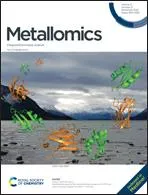
Metallomics publishes cutting-edge investigations aimed at elucidating the identification, distribution, dynamics, role and impact of metals and metalloids in biological systems. Studies that address the “what, where, when, how and why” of these inorganic elements in cells, tissues, organisms, and various environmental niches are welcome, especially those employing multidisciplinary approaches drawn from the analytical, bioinorganic, medicinal, environmental, biophysical, cell biology, plant biology and chemical biology communities. We are particularly interested in articles that enhance our chemical and/or physical understanding of the molecular mechanisms of metal-dependent life processes, and those that probe the common space between metallomics and other ‘omics approaches to uncover new insights into biological processes. Metallomics seeks to position itself at the forefront of those advances in analytical chemistry destined to clarify the enormous complexity of biological systems. As such, we particularly welcome those papers that outline cutting-edge analytical technologies, e.g., in the development and application of powerful new imaging, spectroscopic and mass spectrometric modalities. Work that describes new insights into metal speciation, trafficking and dynamics in complex systems or as a function of microenvironment are also strongly encouraged. Studies that examine the interconnectivity of metal-dependent processes with systems level responses relevant to organismal health or disease are also strongly encouraged, for example those that probe the effect of chemical exposure on metal homeostasis or the impact of metal-based drugs on cellular processes.








