


Solventless selective phosgene-free N-carbonylation of N-heteroaromatics (pyrrole, indole, carbazole) under mild conditions
Literature Information
Publication Date
2012-10-15
DOI
10.1039/C2GC36103E
Impact Factor
10.182
Authors
Marianna Carafa, Francesco Iannone, Valentina Mele, Eugenio Quaranta
View Original
Abstract
N-Heteroaromatics HetNH, such as pyrrole (1), indole (2) and carbazole (3), have been selectively N-carbonylated by a direct reaction with diphenyl carbonate (DPC), used as an environmental friendly carbonyl active species in place of toxic and hazardous phosgene. The carbonylation reaction can be effectively catalyzed by 1,8-diazabicyclo[5.4.0]undec-7-ene (DBU), which can act as a base catalyst by activating the HetNH substrate, and as a nucleophile catalyst by activating the organic carbonate. The influence of reaction parameters (temperature, reaction time, DBU load, DPC/HetNH molar ratio) on the productivity of the process has been also investigated. The synthetic methodology does not require severe temperature conditions, is solventless, simple (only one step), efficient and selective, and offers a new solution to the synthesis of synthetically versatile HetNCO2Ph derivatives through a route alternative to the current traditional phosgenation methods.
Recommended Journals

Physical Chemistry Chemical Physics

Journal of Enzyme inhibition and Medicinal Chemistry

Photochemical & Photobiological Sciences

Molecular Diversity

Contact Lens & Anterior Eye

Mini-Reviews in Medicinal Chemistry

Foundations of Chemistry

Lab on a Chip

Nature Reviews Drug Discovery

European Journal of Organic Chemistry
Related Literature
Highly-oriented molecular arrangements and enhanced magnetic interactions in thin films of CoTTDPz using PTCDA templates
Keitaro Eguchi, Chihiro Nanjo
2016-05-09
Paper
DOI: 10.1039/C6CP01932C
Effect of extended strain fields on point defect phonon scattering in thermoelectric materials
Brenden R. Ortiz, Haowei Peng, Armando Lopez, Philip A. Parilla, Stephan Lany, Eric S. Toberer
2015-07-06
Paper
DOI: 10.1039/C5CP02174J
Enhanced photoelectrochemical performance of quantum dot-sensitized TiO2 nanotube arrays with Al2O3 overcoating by atomic layer deposition
Min Zeng, Xiange Peng, Jianjun Liao, Guizhen Wang, Yanfang Li, Jianbao Li, Yong Qin, Joshua Wilson, Aimin Song
2016-04-15
Paper
DOI: 10.1039/C6CP01299J
Spectroscopic investigation into the design of solid–acid catalysts for the low temperature dehydration of ethanol
Matthew E. Potter, Sivan V. Aswegen, Emma K. Gibson, Robert Raja
2016-05-26
Paper
DOI: 10.1039/C6CP01209D
Dynamics of H2 adsorbed in porous materials as revealed by computational analysis of inelastic neutron scattering spectra
Tony Pham, Katherine A. Forrest, Brian Space, Juergen Eckert
2016-04-27
Perspective
DOI: 10.1039/C6CP01863G
Controlling charge separation and recombination by chemical design in donor–acceptor dyads
Li Liu, Pierre Eisenbrandt, Thomas Roland, Matthias Polkehn, Pierre-Olivier Schwartz, Kirsten Bruchlos, Beatrice Omiecienski, Sabine Ludwigs, Nicolas Leclerc, Elena Zaborova, Jérémie Léonard, Stéphane Méry, Irene Burghardt, Stefan Haacke
2016-05-17
Paper
DOI: 10.1039/C6CP00644B
Different routes to methanol: inelastic neutron scattering spectroscopy of adsorbates on supported copper catalysts
Timur Kandemir, Matthias Friedrich, Stewart F. Parker, Felix Studt, David Lennon, Robert Schlögl, Malte Behrens
2016-04-14
Paper
DOI: 10.1039/C6CP00967K
Roles of adsorption sites in electron transfer from CdS quantum dots to molecular catalyst cobaloxime studied by time-resolved spectroscopy
Lei Huang, Zhaochi Feng, Xiuli Wang, Can Li
2016-06-01
Paper
DOI: 10.1039/C6CP02808J
Formation and evolution of the unexpected PbI2 phase at the interface during the growth of evaporated perovskite films
Haitao Xu, Yanglin Wu, Jian Cui, Chaowei Ni, Fuzong Xu, Jiang Cai, Feng Hong, Zebo Fang, Wenzhen Wang, Linjun Wang, Run Xu
2016-06-16
Paper
DOI: 10.1039/C6CP02737G
You might also like
Compound Q&A
What regulatory guidelines apply to 4-Amino-3-bromophenol (CAS: 74440-80-5)?
4-Amino-3-bromophenol (CAS: 74440-80-5) falls under the classification of a haza...
74440-80-54-Amino-3-bromopheno...
Compound Q&A
How should (17beta)-3-Oxoestr-4-en-17-yl acetate (CAS: 1425-10-1) be stored?
(17beta)-3-Oxoestr-4-en-17-yl acetate should be stored in a cool, dry place away...
1425-10-1(17beta)-3-Oxoestr-4...
Compound Q&A
What are the physical and chemical properties of 2-[(2,2-Diethoxyethyl)disulfanyl]-1,1-diethoxyethane (CAS: 76505-71-0)?
2-[(2,2-Diethoxyethyl)disulfanyl]-1,1-diethoxyethane (CAS: 76505-71-0) is a colo...
76505-71-02-[(2,2-Diethoxyethy...
Compound Q&A
What is the market or research trend for 1-(β-D-ribofuranosyl)-1H-imidazo[4,5-c]pyridin-4-amine?
The market and research for 1-(β-D-ribofuranosyl)-1H-imidazo[4,5-c]pyridin-4-ami...
6736-58-91-(beta-D-Ribofurano...
Compound Q&A
How should waste containing Conjugated Estrogen (CAS: 12126-59-9) be handled?
Waste containing Conjugated Estrogen (CAS: 12126-59-9) should be collected and d...
12126-59-9Conjugated Estrogen
Compound Q&A
What is the market or research trend for Bis(2,2,2-trifluoroethyl) (methoxycarbonylmethyl)phosphonate?
The market for Bis(2,2,2-trifluoroethyl) (methoxycarbonylmethyl)phosphonate (CAS...
88738-78-7Bis(2,2,2-trifluoroe...
Compound Q&A
Are there alternatives to 3,4'-Di-O-methylellagic acid (CAS: 57499-59-9) in synthesis?
There are several alternatives to 3,4'-Di-O-methylellagic acid (CAS: 57499-59-9)...
57499-59-93,4'-Di-O-methylella...
Compound Q&A
What regulatory guidelines apply to 2-Chloro-N,N-dimethylpyridin-4-amine (CAS: 59047-70-0)?
2-Chloro-N,N-dimethylpyridin-4-amine (CAS: 59047-70-0) is regulated under the Gl...
59047-70-02-Chloro-N,N-dimethy...
Compound Q&A
What is cerium(3+);oxygen(2-);vanadium(5+) (CAS: 13597-19-8)?
Cerium(3+);oxygen(2-);vanadium(5+) (CAS: 13597-19-8) is a complex inorganic comp...
13597-19-8cerium(3+);oxygen(2-...
Compound Q&A
Is 7-Chloro-1-iodoisoquinoline (CAS: 1203579-27-4) safe?
7-Chloro-1-iodoisoquinoline (CAS: 1203579-27-4) is generally considered safe whe...
1203579-27-47-Chloro-1-iodoisoqu...
Source Journal
Green Chemistry

CiteScore:
16.1
Self-citation Rate:
7.5%
Articles per Year:
944
Green Chemistry provides a unique forum for the publication of innovative research on the development of alternative green and sustainable technologies. The scope of Green Chemistry is based on, but not limited to, the definition proposed by Anastas and Warner (Green Chemistry: Theory and Practice, P T Anastas and J C Warner, Oxford University Press, Oxford, 1998). Green chemistry is the utilisation of a set of principles that reduces or eliminates the use or generation of hazardous substances in the design, manufacture and application of chemical products. Green Chemistry is at the frontiers of this continuously-evolving interdisciplinary science and publishes research that attempts to reduce the environmental impact of the chemical enterprise by developing a technology base that is inherently non-toxic to living things and the environment. Submissions on all aspects of research relating to the endeavour are welcome. The journal publishes original and significant cutting-edge research that is likely to be of wide general appeal. To be published, work must present a significant advance in green chemistry. Papers must contain a comparison with existing methods and demonstrate advantages over those methods before publication can be considered. For more information please see this Editorial. Coverage includes the following, but is not limited to: Design (e.g. biomimicry, design for degradation/recycling/reduced toxicity…) Reagents & Feedstocks (e.g. renewables, CO2, solvents, auxiliary agents, waste utilization…) Synthesis (e.g. organic, inorganic, synthetic biology…) Catalysis (e.g. homogeneous, heterogeneous, enzyme, whole cell…) Process (e.g. process design, intensification, separations, recycling, efficiency…) Energy (e.g. renewable energy, fuels, photovoltaics, fuel cells, energy storage, energy carriers…) Applications (e.g. electronics, dyes, consumer products, coatings, pharmaceuticals, preservatives, building materials, chemicals for industry/agriculture/mining…) Impact (e.g. safety, metrics, LCA, sustainability, (eco)toxicology…) Green chemistry is, by definition, a continuously-evolving frontier. Therefore, the inclusion of a particular material or technology does not, of itself, guarantee that a paper is suitable for the journal. To be suitable, the novel advance should have the potential for reduced environmental impact relative to the state of the art. Green Chemistry does not normally deal with research associated with 'end-of-pipe' or remediation issues.
Recommended Compounds
![9-Ethyl-3-{(E)-[ethyl(2-methylphenyl)hydrazono]methyl}-9H-carbazole structure](https://static.chemtradehub.com/structs/127/1274948-12-7-301f.webp "9-Ethyl-3-{(E)-[ethyl(2-methylphenyl)hydrazono]methyl}-9H-carbazole structure")
9-Ethyl-3-{(E)-[ethyl(2-methylphenyl)hydrazono]methyl}-9H-carbazole
CAS Number:
1274948-12-7
Molecular Formula:
C24H25N3

![2-[1-(4-Chlorobenzyl)-1H-indol-3-yl]-2-oxo-N-(6-quinolinyl)acetamide structure](https://static.chemtradehub.com/structs/501/501921-61-5-756a.webp "2-[1-(4-Chlorobenzyl)-1H-indol-3-yl]-2-oxo-N-(6-quinolinyl)acetamide structure")
2-[1-(4-Chlorobenzyl)-1H-indol-3-yl]-2-oxo-N-(6-quinolinyl)acetamide
CAS Number:
501921-61-5
Molecular Formula:
C26H18ClN3O2
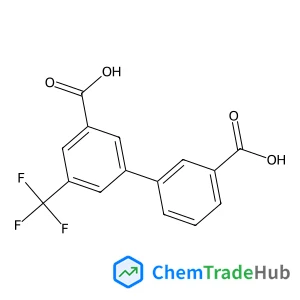
3-(3-Carboxyphenyl)-5-(trifluoromethyl)benzoic acid
CAS Number:
1261930-96-4
Molecular Formula:
C15H9F3O4
Recommended Suppliers






Disclaimer
This page provides academic journal information for reference and research purposes only. We are not affiliated with any journal publishers and do not handle publication submissions. For publication-related inquiries, please contact the respective journal publishers directly.
If you notice any inaccuracies in the information displayed, please contact us at support@chemtradehub.com. We will promptly review and address your concerns.