













Towards low-cost flexible substrates for nanoplasmonic sensing
Literature Information
Publication Date
2012-12-11
DOI
10.1039/C2CP43642F
Impact Factor
3.676
Authors
Lakshminarayana Polavarapu
View Original
Abstract
Plasmonic nanostructures have played a significant role in the field of nanotechnology due to their unprecedented ability to concentrate light at the nanometre scale, which renders them precious for various sensing applications. The adsorption of plasmonic nanoparticles and nanostructures onto solid substrates in a controlled manner is a crucial process for the fabrication of nanoplasmonic devices, in which the nanoparticles amplify the electromagnetic fields for enhanced device performance. In this perspective article we summarize recent developments in the fabrication of flexible nanoplasmonic devices for sensing applications based on surface enhanced Raman scattering (SERS) and localized surface plasmon resonance (LSPR) shifts. We introduce different types of flexible substrates such as filter paper, free-standing nanofibres, elastomers, plastics, carbon nanotubes and graphene, for the fabrication of low-cost flexible nanoplasmonic devices. Various techniques are described that allow impregnation of such flexible substrates with plasmonic nanoparticles, including solution processes, physical vapour deposition and lithographic techniques. From the discussion in this Perspective, it is clear that highly sensitive and reproducible flexible plasmonic devices can currently be fabricated on a large scale at relatively low-cost, toward real-world applications in diagnostics and detection.
Related Literature
Opto-fluidic micro-ring resonator for sensitive label-free viral detection
Hongying Zhu, Ian M. White, Jonathan D. Suter, Mohammed Zourob, Xudong Fan
2008-01-08
Paper
DOI: 10.1039/B716834A
Analytical performance characteristics of nanoelectrospray emitters as a function of conductive coating
Douglas R. Smith, Marie A. Moy, Anthony R. Dolan
2006-02-28
Paper
DOI: 10.1039/B516188F
Angular-dependent metal-enhanced fluorescence from silver colloid-deposited films: opportunity for angular-ratiometric surface assays‡
Kadir Aslan, Stuart N. Malyn, Chris D. Geddes
2007-08-23
Paper
DOI: 10.1039/B709170B
SERS detection of environmental pollutants in humic acid–gold nanoparticle composite materials
Ramon A. Alvarez-Puebla, David S. dos Santos, Jr., Ricardo F. Aroca
2007-09-24
Paper
DOI: 10.1039/B711361G
Stable isotope labelling and FPLC–ICP-SFMS for the accurate determination of clinical iron status parameters in human serum
M. Estela del Castillo Busto, Maria Montes-Bayón, Jörg Bettmer, Alfredo Sanz-Medel
2008-01-17
Paper
DOI: 10.1039/B715311B
Surface plasmon resonance as a time-resolved probe of structural changes in molecular films: considerations for correlating resonance shifts with adsorbate layer parameters
C. M. Pettit, D. Roy
2007-04-02
Paper
DOI: 10.1039/B615615K
Intrinsic charge ladders of a monoclonal antibody in hydroxypropylcellulose-coated capillaries
Rohan D. Sanzgiri, Tracy A. McKinnon, Brian T. Cooper
2006-07-06
Paper
DOI: 10.1039/B603441A
A fuzzy distance metric for measuring the dissimilarity of planar chromatographic profiles with application to denaturing gradient gel electrophoresis data from human skin microbes: demonstration of an individual and gender-based fingerprint
Yun Xu, Richard G. Brereton, Karlheinz Trebesius, Ingrid Bergmaier, Elisabeth Oberzaucher, Karl Grammer, Dustin J. Penn
2007-05-21
Paper
DOI: 10.1039/B702410J
You might also like
Compound Q&A
How should waste containing (6-Bromo-2-naphthyl)oxy](dimethyl)(2-methyl-2-propanyl)silane be handled?
Waste containing (6-Bromo-2-naphthyl)oxy](dimethyl)(2-methyl-2-propanyl)silane (...
100751-65-3[(6-Bromo-2-naphthyl...
Compound Q&A
How is 7-Fluoro-4-isoquinolinecarboxylic acid (CAS: 1841081-40-0) typically synthesized?
7-Fluoro-4-isoquinolinecarboxylic acid can be synthesized via a multi-step proce...
1841081-40-07-Fluoro-4-isoquinol...
Compound Q&A
What are the physical and chemical properties of 2,3,5,6-Tetrabromothieno[3,2-b]thiophene (CAS: 124638-53-5)?
2,3,5,6-Tetrabromothieno[3,2-b]thiophene is a crystalline compound with a high m...
124638-53-52,3,5,6-Tetrabromoth...
Compound Q&A
Is 1-[4-(Benzylamino)-7,8-dihydro-5H-pyrano[4,3-d]pyrimidin-2-yl]-2-methyl-1H-indole-4-carboxamide (CAS: 1542705-92-9) safe?
1-[4-(Benzylamino)-7,8-dihydro-5H-pyrano[4,3-d]pyrimidin-2-yl]-2-methyl-1H-indol...
1542705-92-91-[4-(Benzylamino)-7...
Compound Q&A
What is the market or research trend for imidazo[5,1-d]-1,2,3,5-tetrazine-8-carboxylic acid, 3,4-dihydro-3-methyl-4-oxo- (CAS: 113942-30-6)?
The market for imidazo[5,1-d]-1,2,3,5-tetrazine-8-carboxylic acid, 3,4-dihydro-3...
113942-30-6Imidazo[5,1-d]-1,2,3...
Compound Q&A
What is 3-(Triisopropylsilyl)propiolaldehyde (CAS: 163271-80-5)?
3-(Triisopropylsilyl)propiolaldehyde is a synthetic organic compound with the CA...
163271-80-53-(Triisopropylsilyl...
Compound Q&A
What regulatory guidelines apply to 6-Nitro-2H-1,4-benzoxazin-3(4H)-one (CAS: 81721-87-1)?
6-Nitro-2H-1,4-benzoxazin-3(4H)-one (CAS: 81721-87-1) is subject to various regu...
81721-87-16-Nitro-2H-1,4-benzo...
Compound Q&A
How should waste containing (3-Fluorophenyl)(4-{[(2-methyl-2-propanyl)oxy]carbonyl}-1-piperazinyl)acetic acid (CAS: 885272-91-3) be handled?
Waste containing (3-Fluorophenyl)(4-{[(2-methyl-2-propanyl)oxy]carbonyl}-1-piper...
885272-91-3(3-Fluorophenyl)(4-{...
Compound Q&A
What are the physical and chemical properties of N,N'-4,4'-Biphenyldiyldiisonicotinamide (CAS: 55119-40-9)?
N,N'-4,4'-Biphenyldiyldiisonicotinamide is a white crystalline solid with a mole...
55119-40-9N,N'-4,4'-Biphenyldi...
Compound Q&A
What industries use 6-Bromo-8-fluoro-2-quinazolinol (CAS: 1036756-15-6)?
6-Bromo-8-fluoro-2-quinazolinol is primarily used in the pharmaceutical industry...
1036756-15-66-Bromo-8-fluoro-2-q...
Source Journal
Physical Chemistry Chemical Physics

CiteScore:
5.5
Self-citation Rate:
10.3%
Articles per Year:
3036
Physical Chemistry Chemical Physics (PCCP) is an international journal co-owned by 19 physical chemistry and physics societies from around the world. This journal publishes original, cutting-edge research in physical chemistry, chemical physics and biophysical chemistry. To be suitable for publication in PCCP, articles must include significant innovation and/or insight into physical chemistry; this is the most important criterion that reviewers and Editors will judge against when evaluating submissions. The journal has a broad scope and welcomes contributions spanning experiment, theory, computation and data science. Topical coverage includes spectroscopy, dynamics, kinetics, statistical mechanics, thermodynamics, electrochemistry, catalysis, surface science, quantum mechanics, quantum computing and machine learning. Interdisciplinary research areas such as polymers and soft matter, materials, nanoscience, energy, surfaces/interfaces, and biophysical chemistry are welcomed if they demonstrate significant innovation and/or insight into physical chemistry. Joined experimental/theoretical studies are particularly appreciated when complementary and based on up-to-date approaches.
Recommended Compounds
![5-Bromoimidazo[1,2-a]pyridine structure](https://static.chemtradehub.com/structs/692/69214-09-1-d8e2.webp "5-Bromoimidazo[1,2-a]pyridine structure")
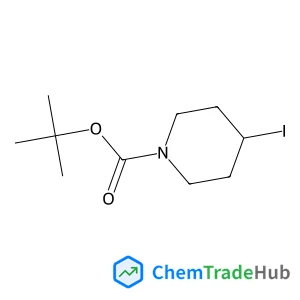
2-Methyl-2-propanyl 4-iodo-1-piperidinecarboxylate
CAS Number:
301673-14-3
Molecular Formula:
C10H18INO2


Recommended Suppliers



Disclaimer
This page provides academic journal information for reference and research purposes only. We are not affiliated with any journal publishers and do not handle publication submissions. For publication-related inquiries, please contact the respective journal publishers directly.
If you notice any inaccuracies in the information displayed, please contact us at support@chemtradehub.com. We will promptly review and address your concerns.