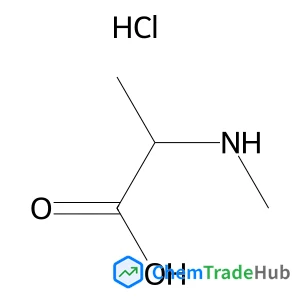
(R)-2-(Methylamino)propanoic acid hydrochloride
CAS Number:
1155878-14-0
Molecular Formula:
C4H10ClNO2
Eliane M. de Oliveira, Romarly F. da Costa, Sergio d'A. Sanchez, Alexandra P. P. Natalense, Márcio H. F. Bettega, Márcio T. do N. Varella
We report elastic integral, differential and momentum transfer cross sections for low-energy electron scattering by the cellulose components β-D-glucose and cellobiose (β(1 → 4) linked glucose dimer), and the hemicellulose component β-D-xylose. For comparison with the β forms, we also obtain results for the amylose subunits α-D-glucose and maltose (α(1 → 4) linked glucose dimer). The integral cross sections show double peaked broad structures between 8 eV and 20 eV similar to previously reported results for tetrahydrofuran and 2-deoxyribose, suggesting a general feature of molecules containing furanose and pyranose rings. These broad structures would reflect OH, CO and/or CC σ* resonances, where inspection of low-lying virtual orbitals suggests significant contribution from anion states. Though we do not examine dissociation pathways, these anion states could play a role in dissociative electron attachment mechanisms, in case they were coupled to the long-lived π* anions found in lignin subunits [de Oliveira et al., Phys. Rev. A, 2012, 86, 020701(R)]. Altogether, the resonance spectra of lignin, cellulose and hemicellulose components establish a physical–chemical basis for electron-induced biomass pretreatment that could be applied to biofuel production.
Qihua Wu, Wangping Qin, Suping Bao
DOI: 10.1039/C3PY00404J
Haibo Wang, Fangming Xu, Yin Wang, Xiangsheng Liu, Qiao Jin, Jian Ji
DOI: 10.1039/C3PY00139C
Cédric G. Jaffredo, Jean-François Carpentier, Sophie M. Guillaume
DOI: 10.1039/C3PY00401E
Venkata S. Pavan K. Neti, Xiaofei Wu, Shuguang Deng, Luis Echegoyen
DOI: 10.1039/C3PY00798G
Xiuyu Jiang, Guolin Lu, Chun Feng, Yongjun Li, Xiaoyu Huang
DOI: 10.1039/C3PY00415E
Yunxing Li, Yan Wu, Qingjie Xu, Yan Gao, Guangqun Cao, Zhen Meng, Cheng Yang
DOI: 10.1039/C3PY00281K
DOI: 10.1039/C3PY00216K
Xiaoyong Zhang, Junfeng Hui, Bin Yang, Yong Yang, Daidi Fan, Meiying Liu, Lei Tao, Yen Wei
DOI: 10.1039/C3PY00489A
6-(3-Fluorophenyl)picolinic acid is generally considered safe for laboratory use...
(3R)-3-Pyrrolidinol is used in the pharmaceutical industry as a precursor for dr...
When handling (4R,5R)-4,5-Diethoxycarbonyl-2,2-dimethyldioxolane (CAS: 59779-75-...
1-(6-Chloroimidazo[1,2-b]pyridazin-3-yl)ethanone is often synthesized via a mult...
The market for N-Ethyl-3,4-dimethylbenzylamine (CAS: 39180-83-1) remains steady,...
Tert-butyl 3-(pyrrolidin-1-yl)azetidine-1-carboxylate is a chemical compound wit...
1-Bromo-3-chloro-2,4-dimethoxybenzene (CAS: 1228956-93-1) falls under the classi...
The safety of 8-Bromo-2-methyl-3,4-dihydroisoquinolin-1(2H)-one (CAS: 1368622-07...
Benzyl [(3S)-2,6-dioxo-3-piperidinyl]carbamate is generally safe when handled wi...
1-{[4-(4,4,5,5-Tetramethyl-1,3,2-dioxaborolan-2-yl)phenyl]sulfonyl}pyrrolidine s...

Physical Chemistry Chemical Physics (PCCP) is an international journal co-owned by 19 physical chemistry and physics societies from around the world. This journal publishes original, cutting-edge research in physical chemistry, chemical physics and biophysical chemistry. To be suitable for publication in PCCP, articles must include significant innovation and/or insight into physical chemistry; this is the most important criterion that reviewers and Editors will judge against when evaluating submissions. The journal has a broad scope and welcomes contributions spanning experiment, theory, computation and data science. Topical coverage includes spectroscopy, dynamics, kinetics, statistical mechanics, thermodynamics, electrochemistry, catalysis, surface science, quantum mechanics, quantum computing and machine learning. Interdisciplinary research areas such as polymers and soft matter, materials, nanoscience, energy, surfaces/interfaces, and biophysical chemistry are welcomed if they demonstrate significant innovation and/or insight into physical chemistry. Joined experimental/theoretical studies are particularly appreciated when complementary and based on up-to-date approaches.