













Does the real ReN2 have the MoS2 structure?
Literature Information
Publication Date
2012-10-23
DOI
10.1039/C2CP43010J
Impact Factor
3.676
Authors
Yachun Wang, Tiankai Yao, Jin-Lei Yao, Jingwu Zhang, Huiyang Gou
View Original
Abstract
Rhenium nitride (ReN2) with the hexagonal MoS2 structure was recently synthesized by metathesis reaction under high pressure. Here the calculated elastic and thermodynamic stabilities and chemical bonding show that the MoS2 phase is unstable based on first-principles calculations. Meanwhile, the MoS2-type ReN2 compound may be stabilized by nitrogen-vacancies from X-ray diffraction and supercell calculations. Structure searches identify a monoclinic C2/m phase for ReN2, which is energetically more stable than previous predictions and MoS2 structure over a wide range of pressures. Above 130 GPa, a tetragonal P4/mbm phase becomes favorable from enthalpy calculations. Both phases have superior mechanical properties, and their syntheses would have important applications fundamentally and technologically.
Recommended Journals
Related Literature
Role of donor–acceptor macrocycles in sequence specific peptide recognition and their optoelectronic properties: a detailed computational insight
Arkamita Bandyopadhyay
2016-07-06
Paper
DOI: 10.1039/C6CP03181A
HP-β-cyclodextrin as an inhibitor of amyloid-β aggregation and toxicity
Rundong Hu, Mingzhen Zhang, Hong Chen, Yan Sun, Lingyun Jia, Jie Zheng
2016-06-28
Paper
DOI: 10.1039/C6CP03582E
How many enzyme molecules are needed for discrimination oriented applications?
Jerzy Gorecki, Joanna N. Gorecka, Hiroshi Ueno, Kenichi Yoshikawa
2016-06-27
Paper
DOI: 10.1039/C6CP03860C
Separation of thorium ions from wolframite and scandium concentrates using graphene oxide
Ondřej Jankovský, David Sedmidubský, Petr Šimek, Kateřina Klímová, Daniel Bouša, Chris Boothroyd, Zdeněk Sofer
2015-08-27
Paper
DOI: 10.1039/C5CP04384K
Chemical-shift tensors of heavy nuclei in network solids: a DFT/ZORA investigation of 207Pb chemical-shift tensors using the bond-valence method
Fahri Alkan, C. Dybowski
2015-09-02
Paper
DOI: 10.1039/C5CP03348A
Electronic properties of epitaxial cerium oxide films during controlled reduction and oxidation studied by resonant inelastic X-ray scattering
Lucia Amidani, Pieter Glatzel, Paola Luches
2016-06-29
Paper
DOI: 10.1039/C6CP04407G
Probing of molecular replication and accumulation in shallow heat gradients through numerical simulations
Lorenz Keil, Michael Hartmann, Simon Lanzmich, Dieter Braun
2016-05-06
Paper
DOI: 10.1039/C6CP00577B
A chemical chaperone induces inhomogeneous conformational changes in flexible proteins
Djemel Hamdane, Christophe Velours, David Cornu, Magali Nicaise, Murielle Lombard, Marc Fontecave
2016-07-01
Paper
DOI: 10.1039/C6CP03635J
Electrical impedance spectroscopy of a PET chip sandwiched between two disk electrodes: understanding the contribution of the polymer/electrode interface
L. Chaal, V. Vivier, B. Tribollet, J. Gamby
2016-06-29
Paper
DOI: 10.1039/C6CP03042D
Internal conversion and intersystem crossing pathways in UV excited, isolated uracils and their implications in prebiotic chemistry
Hui Yu, Jose A. Sanchez-Rodriguez, Marvin Pollum, Carlos E. Crespo-Hernández, Sebastian Mai, Philipp Marquetand, Leticia González, Susanne Ullrich
2016-05-10
Paper
DOI: 10.1039/C6CP01790H
You might also like
Compound Q&A
What precautions should be taken when handling 4-Methyl-6-(trifluoromethyl)quinoline (CAS: 40716-16-3)?
When handling 4-Methyl-6-(trifluoromethyl)quinoline (CAS: 40716-16-3), safety go...
40716-16-34-Methyl-6-(trifluor...
Compound Q&A
What is 4-(3,5-Difluorophenyl)aniline (CAS: 405058-00-6)?
4-(3,5-Difluorophenyl)aniline is an aromatic organic compound with the CAS numbe...
405058-00-64-(3,5-Difluoropheny...
Compound Q&A
How is 5-{[4-(Trifluoromethyl)phenyl]sulfanyl}-1,2,3-thiadiazole-4-carboxylic acid (CAS: 338982-07-3) typically synthesized?
5-{[4-(Trifluoromethyl)phenyl]sulfanyl}-1,2,3-thiadiazole-4-carboxylic acid can ...
338982-07-35-{[4-(Trifluorometh...
Compound Q&A
What is the market or research trend for 4-Benzylaniline hydrochloride (CAS: 6317-57-3)?
The market for 4-Benzylaniline hydrochloride (CAS: 6317-57-3) is steadily growin...
6317-57-34-Benzylaniline hydr...
Compound Q&A
Is [3-(Diethylsulfamoyl)phenyl]boronic acid (CAS: 871329-58-7) safe?
[3-(Diethylsulfamoyl)phenyl]boronic acid is generally considered safe when handl...
871329-58-7[3-(Diethylsulfamoyl...
Compound Q&A
What are the main uses of 3-Bromo-2,5-dimethoxyaniline (CAS: 115929-62-9)?
3-Bromo-2,5-dimethoxyaniline is mainly used in the pharmaceutical and chemical i...
115929-62-93-Bromo-2,5-dimethox...
Compound Q&A
What regulatory guidelines apply to N-Methyl-1-(5-methyl-1H-indol-3-yl)methanamine (CAS: 915922-67-7)?
N-Methyl-1-(5-methyl-1H-indol-3-yl)methanamine (CAS: 915922-67-7) is subject to ...
915922-67-7N-Methyl-1-(5-methyl...
Compound Q&A
What industries use Carbamic acid, N-[(5S)-5,6-diamino-6-oxohexyl]-, 1,1-dimethylethyl ester (CAS: 24828-96-4)?
This compound is primarily used in the pharmaceutical industry for the synthesis...
24828-96-4Carbamic acid, N-[(5...
Compound Q&A
How should 2-Methyl-2-propanyl [(1S,3R)-3-aminocyclohexyl]carbamate (CAS: 1298101-47-9) be stored?
2-Methyl-2-propanyl [(1S,3R)-3-aminocyclohexyl]carbamate (CAS: 1298101-47-9) sho...
1298101-47-92-Methyl-2-propanyl ...
Compound Q&A
What industries use Ethyl 2-bromo-4,4,4-trifluorobutanoate (CAS: 367-33-9)?
Ethyl 2-bromo-4,4,4-trifluorobutanoate (CAS: 367-33-9) is utilized in the pharma...
367-33-9Ethyl 2-bromo-4,4,4-...
Source Journal
Physical Chemistry Chemical Physics

CiteScore:
5.5
Self-citation Rate:
10.3%
Articles per Year:
3036
Physical Chemistry Chemical Physics (PCCP) is an international journal co-owned by 19 physical chemistry and physics societies from around the world. This journal publishes original, cutting-edge research in physical chemistry, chemical physics and biophysical chemistry. To be suitable for publication in PCCP, articles must include significant innovation and/or insight into physical chemistry; this is the most important criterion that reviewers and Editors will judge against when evaluating submissions. The journal has a broad scope and welcomes contributions spanning experiment, theory, computation and data science. Topical coverage includes spectroscopy, dynamics, kinetics, statistical mechanics, thermodynamics, electrochemistry, catalysis, surface science, quantum mechanics, quantum computing and machine learning. Interdisciplinary research areas such as polymers and soft matter, materials, nanoscience, energy, surfaces/interfaces, and biophysical chemistry are welcomed if they demonstrate significant innovation and/or insight into physical chemistry. Joined experimental/theoretical studies are particularly appreciated when complementary and based on up-to-date approaches.
Recommended Compounds
![N-{3-[Benzyl(methyl)amino]propyl}-9-chloro-5,6,7,8-tetrahydro-2-acridinecarboxamide structure](https://static.chemtradehub.com/structs/142/1426944-49-1-1e4c.webp "N-{3-[Benzyl(methyl)amino]propyl}-9-chloro-5,6,7,8-tetrahydro-2-acridinecarboxamide structure")
N-{3-[Benzyl(methyl)amino]propyl}-9-chloro-5,6,7,8-tetrahydro-2-acridinecarboxamide
CAS Number:
1426944-49-1
Molecular Formula:
C25H28ClN3O
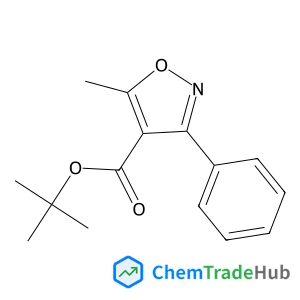
2-Methyl-2-propanyl 5-methyl-3-phenyl-1,2-oxazole-4-carboxylate
CAS Number:
211429-79-7
Molecular Formula:
C15H17NO3
Recommended Suppliers





Disclaimer
This page provides academic journal information for reference and research purposes only. We are not affiliated with any journal publishers and do not handle publication submissions. For publication-related inquiries, please contact the respective journal publishers directly.
If you notice any inaccuracies in the information displayed, please contact us at support@chemtradehub.com. We will promptly review and address your concerns.