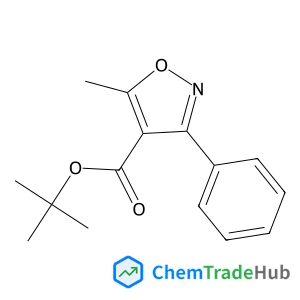
2-Methyl-2-propanyl 5-methyl-3-phenyl-1,2-oxazole-4-carboxylate
CAS Number:
211429-79-7
Molecular Formula:
C15H17NO3
Zhijie Xu, Kevin M. Rosso, Stephen Bruemmer
We report an investigation of growth kinetics and transition from thin to thick films during metal oxidation. In the thin film limit (<20 nm), Cabrera and Mott's theory is usually adopted by explicitly considering ionic drift through the oxide in response to electric fields, where the growth kinetics follow an inverse logarithmic law log(dl/dt) ∝ 1/l. It is generally accepted that Wagner's theory, involving self-diffusion, is valid only in the limit of thick film regime (>1 μm) and leads to parabolic growth kinetics dl/dt ∝ 1/l, where l is the oxide film thickness. Theory presented here unifies the two models and provides a complete description of oxidation including the transition from thin to thick film. The range of validity of Cabrera and Mott's theory and Wagner's theory can be well defined in terms of the Debye–Hückel screening length. The transition from drift-dominated ionic transport for thin film to diffusion-dominated transport for thick film is found to strictly follow the direct logarithmic law log(dl/dt) ∝ −l that is frequently observed in many experiments.
Nikita L. La Cruz, Danna Qasim, Heather Abbott-Lyon, Claire Pirim, Aaron D. McKee, Thomas Orlando, Maheen Gull, Danny Lindsay, Matthew A. Pasek
DOI: 10.1039/C6CP00836D
Chaitanya V. Mungi, Sachin Kumar Singh, Sudha Rajamani
DOI: 10.1039/C6CP00686H
Yasuaki Masumoto, Hikaru Umino, Jianhui Sun, Eri Suzumura
DOI: 10.1039/C5CP04256A
Rozan Mohamad Yunus, Hiroko Endo
DOI: 10.1039/C5CP03958D
YoungAh Kwon
DOI: 10.1039/C5CP02833G
Debabrata Sikdar, Shakeeb B. Hasan, Michael Urbakh, Joshua B. Edel, Alexei A. Kornyshev
DOI: 10.1039/C6CP04551K
Arkamita Bandyopadhyay
DOI: 10.1039/C6CP03181A
Pradyumna Mulpur, Sairam Yadavilli, Praharsha Mulpur, Neeharika Kondiparthi, Venkataramaniah Kamisetti
DOI: 10.1039/C5CP04268B
Rafał Szabla, Robert W. Góra
DOI: 10.1039/C6CP01391K
Joshua P. Martin, Natalie R. Fetto, Matthew J. Tucker
DOI: 10.1039/C6CP04154J
When handling 4-Methyl-6-(trifluoromethyl)quinoline (CAS: 40716-16-3), safety go...
4-(3,5-Difluorophenyl)aniline is an aromatic organic compound with the CAS numbe...
5-{[4-(Trifluoromethyl)phenyl]sulfanyl}-1,2,3-thiadiazole-4-carboxylic acid can ...
The market for 4-Benzylaniline hydrochloride (CAS: 6317-57-3) is steadily growin...
[3-(Diethylsulfamoyl)phenyl]boronic acid is generally considered safe when handl...
3-Bromo-2,5-dimethoxyaniline is mainly used in the pharmaceutical and chemical i...
N-Methyl-1-(5-methyl-1H-indol-3-yl)methanamine (CAS: 915922-67-7) is subject to ...
This compound is primarily used in the pharmaceutical industry for the synthesis...
2-Methyl-2-propanyl [(1S,3R)-3-aminocyclohexyl]carbamate (CAS: 1298101-47-9) sho...
Ethyl 2-bromo-4,4,4-trifluorobutanoate (CAS: 367-33-9) is utilized in the pharma...

Physical Chemistry Chemical Physics (PCCP) is an international journal co-owned by 19 physical chemistry and physics societies from around the world. This journal publishes original, cutting-edge research in physical chemistry, chemical physics and biophysical chemistry. To be suitable for publication in PCCP, articles must include significant innovation and/or insight into physical chemistry; this is the most important criterion that reviewers and Editors will judge against when evaluating submissions. The journal has a broad scope and welcomes contributions spanning experiment, theory, computation and data science. Topical coverage includes spectroscopy, dynamics, kinetics, statistical mechanics, thermodynamics, electrochemistry, catalysis, surface science, quantum mechanics, quantum computing and machine learning. Interdisciplinary research areas such as polymers and soft matter, materials, nanoscience, energy, surfaces/interfaces, and biophysical chemistry are welcomed if they demonstrate significant innovation and/or insight into physical chemistry. Joined experimental/theoretical studies are particularly appreciated when complementary and based on up-to-date approaches.

![6,7-Dihydro-5H-pyrrolo[1,2-a]imidazole-6-carboxylic acid structure](https://static.chemtradehub.com/structs/136/1369160-12-2-6524.webp "6,7-Dihydro-5H-pyrrolo[1,2-a]imidazole-6-carboxylic acid structure")