


Steady-state voltammetry at a microdisc electrode in the absence of excess supporting electrolyte for reversible, quasi-reversible and irreversible electrode kinetics
Literature Information
Publication Date
2012-09-07
DOI
10.1039/C2CP42533E
Impact Factor
3.676
Authors
Stephen R. Belding, Eduardo Laborda, Richard G. Compton
View Original
Abstract
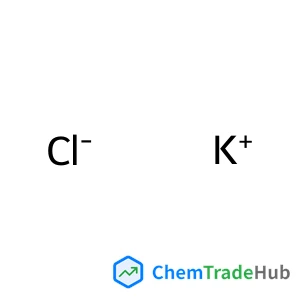
The steady-state voltammetry for a one electron reduction, A + e− ⇌ B, is studied at a microdisc electrode in the absence of excess supporting electrolyte. For the first time, the full voltammetric waveshape is numerically simulated. Using a combination of theory and experiment, the voltammetry is investigated as a function of two variables: the concentration of the supporting electrolyte and the electrochemical rate constant. The ‘hemispherical approximation’ (in which a microdisc is assumed to be a hemisphere of the radius) is shown to be valid under weakly supported conditions, for a range of electrochemical rate constants . The simulations were used, in conjunction with the Debye–Hückel theory, to rationalise the experimental steady-state voltammetry of two aqueous redox couples: hexaammineruthenium ([Ru(NH3)6]3+/[Ru(NH3)6]2+) and hexachloroiridate ([IrCl6]2−/[IrCl6]3−) (each with varying levels of KCl supporting electrolyte). This investigation provides evidence for ion pairing between [IrCl6]2−/[IrCl6]3− and K+ from the supporting electrolyte. No observable ion pairing occurs between [Ru(NH3)6]3+/[Ru(NH3)6]2+ and Cl−.
Recommended Journals

Russian Journal of Applied Chemistry

Crystallography Reports

Journal of Natural Medicines

Drug Discovery Today

Chemistry Education Research and Practice

Russian Journal of Bioorganic Chemistry

Current Opinion in Solid State & Materials Science

Chemical Communications

Russian Journal of General Chemistry

Journal of Saudi Chemical Society
Related Literature
New chromone based photoinitiators for polymerization reactions under visible light
Mohamad-Ali Tehfe, Frédéric Dumur, Pu Xiao, Bernadette Graff, Fabrice Morlet-Savary, Jean-Pierre Fouassier, Didier Gigmes, Jacques Lalevée
2013-05-23
Paper
DOI: 10.1039/C3PY00536D
Bioinspired phospholipid polymer prodrug as a pH-responsive drug delivery system for cancer therapy
Haibo Wang, Fangming Xu, Dandan Li, Xiangsheng Liu, Qiao Jin, Jian Ji
2013-01-07
Paper
DOI: 10.1039/C2PY20981K
Amphiphilic poly(alkylthiophene) block copolymers prepared via externally initiated GRIM and click coupling
Chloe N. Kempf, Kendall A. Smith, Stacy L. Pesek, Xianyu Li, Rafael Verduzco
2013-01-23
Paper
DOI: 10.1039/C3PY21098G
Facile synthesis of novel NH2-MIL-53(Fe)/AgSCN heterojunction composites as a highly efficient photocatalyst for ciprofloxacin degradation and H2 production under visible-light irradiation
Jungang Yi, Xianghui Wu, Huadong Wu, Jia Guo
2021-10-19
Paper
DOI: 10.1039/D1RE00349F
Selective preparation and reaction kinetics of dimethyl carbonate from alcoholysis of methyl carbamate with methanol over ZnAl-LDO
Bo Jia, Xiaoyu Sun, Ming Chen, Jian Jian, Kuiyi You, He'an Luo, Yangqiang Huang, Xiao Luo, Bo Jin, Nailiang Wang, Zhiwu Liang
2021-07-09
Paper
DOI: 10.1039/D1RE00158B
Insertion metathesis depolymerization
Michael D. Schulz, Rachel R. Ford, Kenneth B. Wagener
2013-05-22
Communication
DOI: 10.1039/C3PY00531C
Polysialic acid as a drug carrier: evaluation of a new polysialic acid–epirubicin conjugate and its comparison against established drug carriers
Francesca Greco, Inam Arif, Ruth Botting, Cristina Fante, Luigi Quintieri, Chiara Clementi, Oddone Schiavon, Gianfranco Pasut
2012-11-30
Paper
DOI: 10.1039/C2PY20876H
Furan and benzochalcogenodiazole based multichromic polymers via a donor–acceptor approach
Merve İçli-Özkut, Halil İpek, Baris Karabay, Atilla Cihaner, Ahmet M. Önal
2013-01-21
Paper
DOI: 10.1039/C3PY21061H
Isoindigo dye incorporated copolymers with naphthalene and anthracene: promising materials for stable organic field effect transistors
Prashant Sonar, Huei-Shuan Tan, Shuangyong Sun, Yeng Ming Lam
2013-01-07
Paper
DOI: 10.1039/C2PY20942J
You might also like
Compound Q&A
What are the main uses of 4-Nitrophenyl phosphate disodium salt hexahydrate (CAS: 333338-18-4)?
4-Nitrophenyl phosphate disodium salt hexahydrate is primarily used as a substra...
333338-18-44-Nitrophenyl phosph...
Compound Q&A
What are the main uses of 2-(Trifluoromethyl)-1,3-oxazole-4-carboxylic Acid (CAS: 1060816-01-4)?
2-(Trifluoromethyl)-1,3-oxazole-4-carboxylic Acid (CAS: 1060816-01-4) is widely ...
1060816-01-42-(Trifluoromethyl)-...
Compound Q&A
How should 2-Fluoro-4-biphenylcarboxylic acid (CAS: 137045-30-8) be stored?
2-Fluoro-4-biphenylcarboxylic acid should be stored in a cool, dry place at room...
137045-30-82-Fluoro-4-biphenylc...
Compound Q&A
What industries use Prednisolone-21-Carboxylic Acid (CAS: 61549-70-0)?
Prednisolone-21-Carboxylic Acid is primarily used in the pharmaceutical industry...
61549-70-0Prednisolone-21-Carb...
Compound Q&A
How should 4-(Hydrazinomethyl)-1,2,3-benzenetriol (CAS: 3614-72-0) be stored?
4-(Hydrazinomethyl)-1,2,3-benzenetriol (CAS: 3614-72-0) should be stored in a co...
3614-72-04-(Hydrazinomethyl)-...
Compound Q&A
What industries use 4-Amino-1-methyl-1H-pyrazole-5-carboxylic acid hydrochloride (CAS: 92534-70-8)?
4-Amino-1-methyl-1H-pyrazole-5-carboxylic acid hydrochloride (CAS: 92534-70-8) i...
92534-70-84-Amino-1-methyl-1H-...
Compound Q&A
What regulatory guidelines apply to dehydropachymic acid (CAS: 77012-31-8)?
Dehydropachymic acid (CAS: 77012-31-8) is regulated by various agencies. It fall...
77012-31-8Dehydropachymic acid
Compound Q&A
What is the market or research trend for 6-[(2,2-Dimethylpropanoyl)amino]nicotinic acid (CAS: 898561-66-5)?
The market and research trends for 6-[(2,2-Dimethylpropanoyl)amino]nicotinic aci...
898561-66-56-[(2,2-Dimethylprop...
Compound Q&A
How should 1,10-Phenanthroline-2,9-dicarbaldehyde (CAS: 57709-62-3) be stored?
1,10-Phenanthroline-2,9-dicarbaldehyde should be stored in a cool, dry place awa...
57709-62-31,10-Phenanthroline-...
Compound Q&A
How is 5-Carbamoyl-11-oxo-10,11-dihydro-5H-dibenzo[b,f]azepin-10-yl acetate (CAS: 113952-21-9) typically synthesized?
5-Carbamoyl-11-oxo-10,11-dihydro-5H-dibenzo[b,f]azepin-10-yl acetate can be synt...
113952-21-95-Carbamoyl-11-oxo-1...
Source Journal
Physical Chemistry Chemical Physics

CiteScore:
5.5
Self-citation Rate:
10.3%
Articles per Year:
3036
Physical Chemistry Chemical Physics (PCCP) is an international journal co-owned by 19 physical chemistry and physics societies from around the world. This journal publishes original, cutting-edge research in physical chemistry, chemical physics and biophysical chemistry. To be suitable for publication in PCCP, articles must include significant innovation and/or insight into physical chemistry; this is the most important criterion that reviewers and Editors will judge against when evaluating submissions. The journal has a broad scope and welcomes contributions spanning experiment, theory, computation and data science. Topical coverage includes spectroscopy, dynamics, kinetics, statistical mechanics, thermodynamics, electrochemistry, catalysis, surface science, quantum mechanics, quantum computing and machine learning. Interdisciplinary research areas such as polymers and soft matter, materials, nanoscience, energy, surfaces/interfaces, and biophysical chemistry are welcomed if they demonstrate significant innovation and/or insight into physical chemistry. Joined experimental/theoretical studies are particularly appreciated when complementary and based on up-to-date approaches.
Recommended Compounds
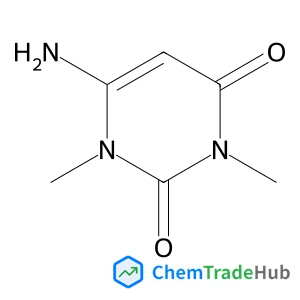
6-amino-1,3-dimethyl-1,2,3,4-tetrahydropyrimidine-2,4-dione
CAS Number:
6642-31-5
Molecular Formula:
C6H9N3O2
Recommended Suppliers





Disclaimer
This page provides academic journal information for reference and research purposes only. We are not affiliated with any journal publishers and do not handle publication submissions. For publication-related inquiries, please contact the respective journal publishers directly.
If you notice any inaccuracies in the information displayed, please contact us at support@chemtradehub.com. We will promptly review and address your concerns.