












Hybrid density functional study of band alignment in ZnO–GaN and ZnO–(Ga1−xZnx)(N1−xOx)–GaN heterostructures
Literature Information
Publication Date
2012-09-25
DOI
10.1039/C2CP42115A
Impact Factor
3.676
Authors
Zhenhai Wang, Mingwen Zhao, Xiaopeng Wang, Yan Xi, Xiujie He, Xiangdong Liu, Shishen Yan
View Original
Abstract
The band alignment in ZnO–GaN and related heterostructures is crucial for uses in solar harvesting technology. Here, we report our density functional calculations of the band alignment and optical properties of ZnO–GaN and ZnO–(Ga1−xZnx)(N1−xOx)–GaN heterostructures using a Heyd–Scuseria–Ernzerhof (HSE) hybrid functional. We found that the conventional GGA functionals underestimate not only the band gap but also the band offset of these heterostructures. Using the hybrid functional calculations, we show that the (Ga1−xZnx)(N1−xOx) solid solution has a direct band gap of about 2.608 eV, in good agreement with the experimental data. More importantly, this solid solution forms type-II band alignment with the host materials. A GaN–(Ga1−xZnx)(N1−xOx)–ZnO core–shell solar cell model is presented to improve the visible light absorption ability and carrier collection efficiency.
Related Literature
Near infrared electroluminescence of ZnMgO/InN core–shell nanorod heterostructures grown on Si substrate
Guoguang Wu, Weitao Zheng, Fubin Gao, Hang Yang, Yang Zhao, Jingzhi Yin, Wei Zheng, Wancheng Li, Baolin Zhang, Guotong Du
2016-06-07
Paper
DOI: 10.1039/C6CP03199D
Unravelling the optical responses of nanoplasmonic mirror-on-mirror metamaterials
Debabrata Sikdar, Shakeeb B. Hasan, Michael Urbakh, Joshua B. Edel, Alexei A. Kornyshev
2016-07-05
Paper
DOI: 10.1039/C6CP04551K
Formation of a thermally stable bilayer of coadsorbed intact and deprotonated thymine exploiting the surface corrugation of rutile TiO2(110)
J. H. K. Pfisterer, P. S. Deimel, R. G. Acres, M. Fritton, P. Feulner, J. V. Barth, F. Allegretti
2016-07-05
Paper
DOI: 10.1039/C6CP02541B
Modulation of the aggregation properties of sodium deoxycholate in presence of hydrophilic imidazolium based ionic liquid: water dynamics study to probe the structural alteration of the aggregates
Niloy Kundu, Debasis Banik, Arpita Roy, Jagannath Kuchlyan, Nilmoni Sarkar
2015-09-01
Paper
DOI: 10.1039/C5CP03906A
The efficiency of driving chemical reactions by a physical non-equilibrium is kinetically controlled
Tobias Göppel, Vladimir V. Palyulin, Ulrich Gerland
2016-04-28
Paper
DOI: 10.1039/C6CP01034B
Effect of Ca2+ codoping on the Eu2+ luminescence properties in the Sr2Si5N8 host lattice: a theoretical approach
Claudio Bulloni, Amador García-Fuente, Werner Urland, Claude Daul
2015-09-07
Paper
DOI: 10.1039/C5CP02915E
Replica exchange reactive molecular dynamics simulations of initial reactions in zeolite synthesis
Zhifeng Jing
2015-08-25
Paper
DOI: 10.1039/C5CP03063C
Aqueous biphasic systems composed of ionic liquids and polypropylene glycol: insights into their liquid–liquid demixing mechanisms
Catarina M. S. S. Neves, Jesus Lemus, Jorge F. B. Pereira, Mara G. Freire, João A. P. Coutinho
2016-06-24
Paper
DOI: 10.1039/C6CP04023C
Assessing backbone solvation effects in the conformational propensities of amino acid residues in unfolded peptides
Niranjan V. Ilawe, Alexandra E. Raeber, Reinhard Schweitzer-Stenner, Siobhan E. Toal, Bryan M. Wong
2015-08-27
Paper
DOI: 10.1039/C5CP03646A
Vertical heterostructures of MoS2 and graphene nanoribbons grown by two-step chemical vapor deposition for high-gain photodetectors
Rozan Mohamad Yunus, Hiroko Endo
2015-09-01
Paper
DOI: 10.1039/C5CP03958D
You might also like
Compound Q&A
What precautions should be taken when handling 4-Methyl-6-(trifluoromethyl)quinoline (CAS: 40716-16-3)?
When handling 4-Methyl-6-(trifluoromethyl)quinoline (CAS: 40716-16-3), safety go...
40716-16-34-Methyl-6-(trifluor...
Compound Q&A
What is 4-(3,5-Difluorophenyl)aniline (CAS: 405058-00-6)?
4-(3,5-Difluorophenyl)aniline is an aromatic organic compound with the CAS numbe...
405058-00-64-(3,5-Difluoropheny...
Compound Q&A
How is 5-{[4-(Trifluoromethyl)phenyl]sulfanyl}-1,2,3-thiadiazole-4-carboxylic acid (CAS: 338982-07-3) typically synthesized?
5-{[4-(Trifluoromethyl)phenyl]sulfanyl}-1,2,3-thiadiazole-4-carboxylic acid can ...
338982-07-35-{[4-(Trifluorometh...
Compound Q&A
What is the market or research trend for 4-Benzylaniline hydrochloride (CAS: 6317-57-3)?
The market for 4-Benzylaniline hydrochloride (CAS: 6317-57-3) is steadily growin...
6317-57-34-Benzylaniline hydr...
Compound Q&A
Is [3-(Diethylsulfamoyl)phenyl]boronic acid (CAS: 871329-58-7) safe?
[3-(Diethylsulfamoyl)phenyl]boronic acid is generally considered safe when handl...
871329-58-7[3-(Diethylsulfamoyl...
Compound Q&A
What are the main uses of 3-Bromo-2,5-dimethoxyaniline (CAS: 115929-62-9)?
3-Bromo-2,5-dimethoxyaniline is mainly used in the pharmaceutical and chemical i...
115929-62-93-Bromo-2,5-dimethox...
Compound Q&A
What regulatory guidelines apply to N-Methyl-1-(5-methyl-1H-indol-3-yl)methanamine (CAS: 915922-67-7)?
N-Methyl-1-(5-methyl-1H-indol-3-yl)methanamine (CAS: 915922-67-7) is subject to ...
915922-67-7N-Methyl-1-(5-methyl...
Compound Q&A
What industries use Carbamic acid, N-[(5S)-5,6-diamino-6-oxohexyl]-, 1,1-dimethylethyl ester (CAS: 24828-96-4)?
This compound is primarily used in the pharmaceutical industry for the synthesis...
24828-96-4Carbamic acid, N-[(5...
Compound Q&A
How should 2-Methyl-2-propanyl [(1S,3R)-3-aminocyclohexyl]carbamate (CAS: 1298101-47-9) be stored?
2-Methyl-2-propanyl [(1S,3R)-3-aminocyclohexyl]carbamate (CAS: 1298101-47-9) sho...
1298101-47-92-Methyl-2-propanyl ...
Compound Q&A
What industries use Ethyl 2-bromo-4,4,4-trifluorobutanoate (CAS: 367-33-9)?
Ethyl 2-bromo-4,4,4-trifluorobutanoate (CAS: 367-33-9) is utilized in the pharma...
367-33-9Ethyl 2-bromo-4,4,4-...
Source Journal
Physical Chemistry Chemical Physics

CiteScore:
5.5
Self-citation Rate:
10.3%
Articles per Year:
3036
Physical Chemistry Chemical Physics (PCCP) is an international journal co-owned by 19 physical chemistry and physics societies from around the world. This journal publishes original, cutting-edge research in physical chemistry, chemical physics and biophysical chemistry. To be suitable for publication in PCCP, articles must include significant innovation and/or insight into physical chemistry; this is the most important criterion that reviewers and Editors will judge against when evaluating submissions. The journal has a broad scope and welcomes contributions spanning experiment, theory, computation and data science. Topical coverage includes spectroscopy, dynamics, kinetics, statistical mechanics, thermodynamics, electrochemistry, catalysis, surface science, quantum mechanics, quantum computing and machine learning. Interdisciplinary research areas such as polymers and soft matter, materials, nanoscience, energy, surfaces/interfaces, and biophysical chemistry are welcomed if they demonstrate significant innovation and/or insight into physical chemistry. Joined experimental/theoretical studies are particularly appreciated when complementary and based on up-to-date approaches.
Recommended Compounds

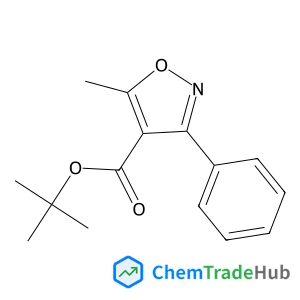
2-Methyl-2-propanyl 5-methyl-3-phenyl-1,2-oxazole-4-carboxylate
CAS Number:
211429-79-7
Molecular Formula:
C15H17NO3
Recommended Suppliers






Disclaimer
This page provides academic journal information for reference and research purposes only. We are not affiliated with any journal publishers and do not handle publication submissions. For publication-related inquiries, please contact the respective journal publishers directly.
If you notice any inaccuracies in the information displayed, please contact us at support@chemtradehub.com. We will promptly review and address your concerns.