![2,4-Dichloro-6-isopropyl-5H-pyrrolo[3,4-d]pyrimidin-7(6H)-one structure](https://static.chemtradehub.com/structs/107/1079649-94-7-ad4a.webp "2,4-Dichloro-6-isopropyl-5H-pyrrolo[3,4-d]pyrimidin-7(6H)-one structure")
2,4-Dichloro-6-isopropyl-5H-pyrrolo[3,4-d]pyrimidin-7(6H)-one
CAS Number:
1079649-94-7
Molecular Formula:
C9H9Cl2N3O
Katharina Chevalier, Matthias M. N. Wolf, Andreas Funk, Marko Andres, Markus Gerhards, Rolf Diller
Femtosecond polarization resolved UV/Vis and mid-infrared spectroscopy was used to thoroughly identify and characterize the relevant elementary chemical and physical processes in the photocycle of 3-hydroxyflavone (3-HF) in solution. In one set of experiments with the polar aprotic solvent acetonitrile-d3, for the first time excited state intramolecular proton transfer (ESIPT), vibrational cooling/relaxation and rotational diffusion could be separated, and furthermore mid IR vibrational spectra of 3-HF excited states in solution phase were obtained. UV/Vis transient absorption data yield the time constant τRot = 22 ps for rotational diffusion and the time constant τVR = 8.5 ps for vibrational cooling/relaxation in the tautomer excited state (S1′). Biphasic ESIPT with τ < 120 fs and τ = 2.4 ps as well as slow ground state recovery with τ > 500 ps was found. The time resolved mid IR data yield a time constant of ≈3.4 ps for the slow ESIPT step as well as the vibrational frequencies of S0, S1′ and, in particular those of the short lived excited state S1. Via quantum chemical calculations, structural parameters of these states are obtained. Various models were used, namely for the isolated molecule, aggregates with solvent as well as a polarizable continuum, that allow us to correlate the two ESIPT components with two mechanisms. Results are compared to those from previously published gas-phase experiments and indicate that the observed slow ESIPT is mediated by solute–solvent interaction via a hydrogen bond with the hydroxyl group of 3-HF.
M. H. Ghatee, S. Namvar, A. R. Zolghadr, F. Moosavi
DOI: 10.1039/C5CP02683K
Joshua P. Martin, Natalie R. Fetto, Matthew J. Tucker
DOI: 10.1039/C6CP04154J
Yasuaki Masumoto, Hikaru Umino, Jianhui Sun, Eri Suzumura
DOI: 10.1039/C5CP04256A
Sudip Kumar Mondal, Ken-ichi Inoue, Shoichi Yamaguchi
DOI: 10.1039/C5CP04264J
Mohan Zhang
DOI: 10.1039/C6CP03435G
Lucia Amidani, Pieter Glatzel, Paola Luches
DOI: 10.1039/C6CP04407G
Xiao Lin, Zhao-Yang Chen, P. Hu, Shi-Gang Sun, You-Qun Chu
DOI: 10.1039/C5CP02072G
Chaitanya V. Mungi, Sachin Kumar Singh, Sudha Rajamani
DOI: 10.1039/C6CP00686H
Christoph Kerzig, Martin Goez
DOI: 10.1039/C6CP03742A
Tobias Göppel, Vladimir V. Palyulin, Ulrich Gerland
DOI: 10.1039/C6CP01034B
When handling 4-Methyl-6-(trifluoromethyl)quinoline (CAS: 40716-16-3), safety go...
4-(3,5-Difluorophenyl)aniline is an aromatic organic compound with the CAS numbe...
5-{[4-(Trifluoromethyl)phenyl]sulfanyl}-1,2,3-thiadiazole-4-carboxylic acid can ...
The market for 4-Benzylaniline hydrochloride (CAS: 6317-57-3) is steadily growin...
[3-(Diethylsulfamoyl)phenyl]boronic acid is generally considered safe when handl...
3-Bromo-2,5-dimethoxyaniline is mainly used in the pharmaceutical and chemical i...
N-Methyl-1-(5-methyl-1H-indol-3-yl)methanamine (CAS: 915922-67-7) is subject to ...
This compound is primarily used in the pharmaceutical industry for the synthesis...
2-Methyl-2-propanyl [(1S,3R)-3-aminocyclohexyl]carbamate (CAS: 1298101-47-9) sho...
Ethyl 2-bromo-4,4,4-trifluorobutanoate (CAS: 367-33-9) is utilized in the pharma...

Physical Chemistry Chemical Physics (PCCP) is an international journal co-owned by 19 physical chemistry and physics societies from around the world. This journal publishes original, cutting-edge research in physical chemistry, chemical physics and biophysical chemistry. To be suitable for publication in PCCP, articles must include significant innovation and/or insight into physical chemistry; this is the most important criterion that reviewers and Editors will judge against when evaluating submissions. The journal has a broad scope and welcomes contributions spanning experiment, theory, computation and data science. Topical coverage includes spectroscopy, dynamics, kinetics, statistical mechanics, thermodynamics, electrochemistry, catalysis, surface science, quantum mechanics, quantum computing and machine learning. Interdisciplinary research areas such as polymers and soft matter, materials, nanoscience, energy, surfaces/interfaces, and biophysical chemistry are welcomed if they demonstrate significant innovation and/or insight into physical chemistry. Joined experimental/theoretical studies are particularly appreciated when complementary and based on up-to-date approaches.
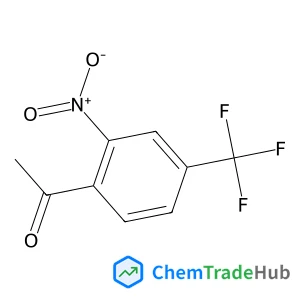
![Methyl 3-({2'-[(E)-(hydroxyhydrazono)methyl]-4-biphenylyl}methyl)-2-oxo-2,3-dihydro-1H-benzimidazole-4-carboxylate structure](https://static.chemtradehub.com/structs/149/1499167-72-4-034a.webp "Methyl 3-({2'-[(E)-(hydroxyhydrazono)methyl]-4-biphenylyl}methyl)-2-oxo-2,3-dihydro-1H-benzimidazole-4-carboxylate structure")