












Band engineered ternary solid solution CdSxSe1−x-sensitized mesoscopic TiO2 solar cells
Literature Information
Publication Date
2012-03-15
DOI
10.1039/C2CP40277G
Impact Factor
3.676
Authors
Md. Anower Hossain, James Robert Jennings, Nripan Mathews, Qing Wang
View Original
Abstract
The optical band gap of the light absorber and the alignment of its bands with the underlying wide band gap metal oxide are critical for efficient light harvesting and charge separation in semiconductor-sensitized solar cells (SSCs). In practice, these two requirements are however not always fulfilled concomitantly in SSCs. Favourable band alignment in CdSe-sensitized TiO2 requires utilization of quantum sized CdSe, which causes great losses in the harvesting of long wavelength photons due to quantum confinement effects. In the present study, ternary cadmium sulfoselenide (CdSxSe1−x), which has a tunable band gap between those of CdSe and CdS without reducing the dimension, was proposed as a sensitizer for TiO2. CdSxSe1−x was successfully synthesized by alternately depositing CdS and CdSe layers under ambient conditions. SSCs utilizing CdSxSe1−x-sensitized TiO2 yielded a power conversion efficiency of 4.05% under simulated AM1.5 100 mW cm−2 illumination, rivalling the well-studied cascaded CdS/CdSe electrodes when an aqueous polysulfide solution was used as the electrolyte and Cu2S as the counter electrode. The findings of the present study provide an alternative and viable approach for optimizing the energetics of semiconductor sensitizers for efficient charge separation, while also maintaining good light harvesting.
Related Literature
Viral infection of cells in culture detected using infrared microscopy
Gary Hastings, Peter Krug, Ruili Wang, Jing Guo, Hari P. Lamichhane, Tian Tang, Yu-sheng Hsu, John Ward, David Katz, Julia Hilliard
2009-05-05
Paper
DOI: 10.1039/B902154J
A highly selective chromogenic and fluorogenic chemodosimeter for dual detection of Cu2+ based on a redox-active calix[4]arene with isoxazolylchloroanthracene
Kai-Chi Chang, Chan-Yu Chen, Li-Wei Lee
2022-10-11
Paper
DOI: 10.1039/D2AN01201D
Impact of fixation on in vitro cell culture lines monitored with Raman spectroscopy
Melissa M. Mariani, Peter Lampen, Bayden R. Wood
2009-04-28
Paper
DOI: 10.1039/B822408K
Selective UV-filter detection with sensors based on stainless steel electrodes modified with polyaniline doped with metal tetrasulfonated phthalocyanine films
Luiz Fernando Moreira, Marcos Roberto de Vasconcelos Lanza, Auro Atsushi Tanaka, Maria Del Pilar Taboada Sotomayor
2009-04-28
Paper
DOI: 10.1039/B902273B
Development of a rapid biolistic assay to determine changes in relative levels of intracellular calcium in leaves following tetracycline uptake by pinto bean plants
Michael H. Farkas, Elmer-Rico E. Mojica, Minesh Patel, Diana S. Aga, James O. Berry
2009-06-02
Paper
DOI: 10.1039/B902147G
Correction: In situ synthesis of chiral AuNCs with aggregation-induced emission using glutathione and ceria precursor nanosheets for glutathione biosensing
Guoxing Wu, Alaa Eldin A. Salem, Lei Su, Bing Shi Li
2022-10-10
Correction
DOI: 10.1039/D2AN90082C
Molecularly imprinted nanoparticle-based assay (MINA) for microcystin-LR detection in water
Yadiris García, Myleidi Vera, Verónica A. Jiménez, Luis F. Barraza, Joao Aguilar, Susana Sánchez, Eduardo D. Pereira
2022-12-14
Paper
DOI: 10.1039/D2AN01680J
A dynamic fluorescence probed glycolysis suppression process in HeLa cells treated with trichostatin A
Wei Zhao, Xumiao Jing
2022-09-21
Paper
DOI: 10.1039/D2AN01114J
Vapor detection and vapor pressure measurements of fentanyl and fentanyl hydrochloride salt at ambient temperatures
Robert G. Ewing, Megan K. Nims, Kelsey A. Morrison, Garret L. Hart, Nancy M. Avalos, Elizabeth H. Denis
2022-09-28
Paper
DOI: 10.1039/D2AN01149B
You might also like
Compound Q&A
What precautions should be taken when handling 4-(2-Furylmethyl)thiomorpholine 1,1-dioxide (CAS: 79206-94-3)?
When handling 4-(2-Furylmethyl)thiomorpholine 1,1-dioxide (CAS: 79206-94-3), it ...
79206-94-34-(2-Furylmethyl)thi...
Compound Q&A
What precautions should be taken when handling 4-Chloro-N-[2-(4-morpholinyl)ethyl]benzamide (CAS: 71320-77-9)?
When handling 4-Chloro-N-[2-(4-morpholinyl)ethyl]benzamide (CAS: 71320-77-9), it...
71320-77-94-Chloro-N-[2-(4-mor...
Compound Q&A
How should waste containing 2-[2-(2-Methoxyethoxy)ethoxy]ethyl 4-methylbenzenesulfonate (CAS: 62921-74-8) be handled?
Waste containing this compound (CAS: 62921-74-8) should be handled according to ...
62921-74-82-[2-(2-Methoxyethox...
Compound Q&A
How should waste containing (S)-Methyl 2-amino-3-cyclohexylpropanoate be handled?
Waste containing (S)-Methyl 2-amino-3-cyclohexylpropanoate should be collected i...
40056-18-6(S)-Methyl 2-amino-3...
Compound Q&A
How is 5-({4-[(2S,4R)-4-Hydroxy-2-methyltetrahydro-2H-pyran-4-yl]-2-thienyl}sulfanyl)-1-methyl-1,3-dihydro-2H-indol-2-one (CAS: 166882-70-8) typically synthesized?
This compound can be synthesized using a multi-step process involving the conjug...
166882-70-85-({4-[(2S,4R)-4-Hyd...
Compound Q&A
Are there alternatives to (2E)-3-(3,4-Dichlorophenyl)acrylic acid (CAS: 7312-27-8) in synthesis?
There are several alternatives to (2E)-3-(3,4-Dichlorophenyl)acrylic acid in syn...
7312-27-8(2E)-3-(3,4-Dichloro...
Compound Q&A
How should Ethyl 6-(2-nitrophenyl)imidazo[2,1-b][1,3]thiazole-3-carboxylate (CAS: 925437-84-9) be stored?
Ethyl 6-(2-nitrophenyl)imidazo[2,1-b][1,3]thiazole-3-carboxylate (CAS: 925437-84...
925437-84-9Ethyl 6-(2-nitrophen...
Compound Q&A
How should waste containing 2-(1,3-Thiazol-2-yl)ethanamine (CAS: 18453-07-1) be handled?
Waste containing 2-(1,3-Thiazol-2-yl)ethanamine (CAS: 18453-07-1) should be coll...
18453-07-12-(1,3-Thiazol-2-yl)...
Compound Q&A
How is Methyl 5-iodo-2-methylbenzoate (CAS: 103440-54-6) typically synthesized?
Methyl 5-iodo-2-methylbenzoate can be synthesized through the iodination of meth...
103440-54-6Methyl 5-iodo-2-meth...
Compound Q&A
How is 5-Chloro[1,2,4]triazolo[1,5-a]pyridine (CAS: 1427399-34-5) typically synthesized?
5-Chloro[1,2,4]triazolo[1,5-a]pyridine is commonly synthesized via the condensat...
1427399-34-55-Chloro[1,2,4]triaz...
Source Journal
Physical Chemistry Chemical Physics

CiteScore:
5.5
Self-citation Rate:
10.3%
Articles per Year:
3036
Physical Chemistry Chemical Physics (PCCP) is an international journal co-owned by 19 physical chemistry and physics societies from around the world. This journal publishes original, cutting-edge research in physical chemistry, chemical physics and biophysical chemistry. To be suitable for publication in PCCP, articles must include significant innovation and/or insight into physical chemistry; this is the most important criterion that reviewers and Editors will judge against when evaluating submissions. The journal has a broad scope and welcomes contributions spanning experiment, theory, computation and data science. Topical coverage includes spectroscopy, dynamics, kinetics, statistical mechanics, thermodynamics, electrochemistry, catalysis, surface science, quantum mechanics, quantum computing and machine learning. Interdisciplinary research areas such as polymers and soft matter, materials, nanoscience, energy, surfaces/interfaces, and biophysical chemistry are welcomed if they demonstrate significant innovation and/or insight into physical chemistry. Joined experimental/theoretical studies are particularly appreciated when complementary and based on up-to-date approaches.
Recommended Compounds


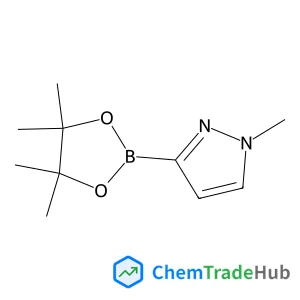
1-Methyl-3-(4,4,5,5-tetramethyl-1,3,2-dioxaborolan-2-yl)-1H-pyrazole
CAS Number:
1020174-04-2
Molecular Formula:
C10H17BN2O2
Recommended Suppliers








Disclaimer
This page provides academic journal information for reference and research purposes only. We are not affiliated with any journal publishers and do not handle publication submissions. For publication-related inquiries, please contact the respective journal publishers directly.
If you notice any inaccuracies in the information displayed, please contact us at support@chemtradehub.com. We will promptly review and address your concerns.