












![N-[(6-Bromo-3-pyridinyl)methyl]ethanamine structure](https://static.chemtradehub.com/structs/120/120740-05-8-ca55.webp "N-[(6-Bromo-3-pyridinyl)methyl]ethanamine structure")
Losartan's affinity to fluid bilayers modulates lipid–cholesterol interactions
Literature Information
Publication Date
2012-02-17
DOI
10.1039/C2CP40134G
Impact Factor
3.676
Authors
P. Zoumpoulakis, G. Pabst, T. Mavromoustakos, M. Rappolt
View Original
Abstract
Losartan is an angiotensin II receptor antagonist mainly used for the regulation of high blood pressure. Since it was anticipated that losartan reaches the receptor site via membrane diffusion, the impact of losartan on model membranes has been investigated by small angle X-ray scattering. For this purpose 2–20 mol% losartan was incorporated into dimyristoyl-phosphatidylcholine (DMPC) and palmitoyl-oleoyl-phosphatidylcholine (POPC) bilayers and into their binary mixtures with cholesterol in the concentration range of 0 to 40 mol%. Effects of losartan on single component bilayers are alike. Partitioning of losartan into the membranes confers a negative charge to the lipid bilayers that causes the formation of unilamellar vesicles and a reduction of the bilayer thickness by 3–4%. Analysis of the structural data resulted in an estimate for the partial area of losartan, ALos ≈ 40 Å2. In the presence of cholesterol, differences between the effects of losartan on POPC and DMPC are striking. Membrane condensation by cholesterol is retarded by losartan in POPC. This contrasts with DMPC, where an increase of the cholesterol content shifts the partitioning equilibrium of losartan towards the aqueous phase, such that losartan gets depleted from the bilayers from 20 mol% cholesterol onwards. This indicates (i) a chain-saturation dependent competition of losartan with lipid–cholesterol interactions, and (ii) the insolubility of losartan in the liquid ordered phase of PCs. Consequently, losartan's action is more likely to take place in fluid plasma membrane patches rather than in domains rich in cholesterol and saturated lipid species such as in membrane rafts.
Recommended Journals
Related Literature
A novel self-healing electrochromic film based on a triphenylamine cross-linked polymer
Rongzong Zheng, Jiaqiang Zhang, Chunyang Jia, Zhongquan Wan, Yaru Fan, Xiaolong Weng, Jianliang Xie, Longjiang Deng
2017-10-18
Paper
DOI: 10.1039/C7PY01434A
Diffusion ordered spectroscopy (DOSY) as applied to polymers
2017-10-25
Review Article
DOI: 10.1039/C7PY01577A
Terpyridine-functionalized stimuli-responsive microgels and their assembly through metal–ligand interactions
Jookyeong Lee, Eun Jung Choi, Imre Varga, Sang-Ho Yun, Changsik Song
2018-01-30
Paper
DOI: 10.1039/C8PY00016F
Facile fabrication of positively-charged helical poly(phenyl isocyanide) modified multi-stimuli-responsive nanoassembly capable of high efficiency cell-penetrating, ratiometric fluorescence imaging, and rapid intracellular drug release
Wen-Ming Zhang, Jian Zhang, Zhu Qiao, Huan-Ying Liu, Zong-Quan Wu, Jun Yin
2018-07-17
Paper
DOI: 10.1039/C8PY00865E
Grafting-from lipase: utilization of a common amino acid residue as a new grafting site
Boyle Cheng
2018-08-17
Paper
DOI: 10.1039/C8PY01026A
Branching and molar mass analysis of low density polyethylene using the multiple preparative fractionation concept
P. S. Eselem Bungu, H. Pasch
2018-02-08
Paper
DOI: 10.1039/C7PY02076G
Effective macrophage delivery using RAFT copolymer derived nanoparticles
R. W. M. Davidson, G. W. Simpson, J. Chiefari, M. J. Fuchter
2017-11-28
Paper
DOI: 10.1039/C7PY01363A
Synthesis of PEVE-b-P(CTFE-alt-EVE) block copolymers by sequential cationic and radical RAFT polymerization
Marc Guerre, Mineto Uchiyama, Gérald Lopez, Bruno Améduri, Masami Kamigaito, Vincent Ladmiral
2017-12-08
Paper
DOI: 10.1039/C7PY01924F
Ab initio based kinetic Monte Carlo analysis to unravel the propagation kinetics in vinyl acetate pulsed laser polymerization
Gilles B. Desmet, Yoshi W. Marien, Paul H. M. Van Steenberge, Marie-Françoise Reyniers, Guy B. Marin
2017-10-30
Paper
DOI: 10.1039/C7PY01008G
You might also like
Compound Q&A
What are the main uses of (3.beta.)-3-Hydroxy-N,N-dimethyl-chol-5-en-24-amide (CAS: 79066-03-8)?
(3.beta.)-3-Hydroxy-N,N-dimethyl-chol-5-en-24-amide (CAS: 79066-03-8) is primari...
79066-03-8(3.beta.)-3-Hydroxy-...
Compound Q&A
What regulatory guidelines apply to 5-(aminomethyl)-2-methoxyphenol (CAS: 89702-89-6)?
5-(Aminomethyl)-2-methoxyphenol (CAS: 89702-89-6) is classified under GHS as a s...
89702-89-65-(aminomethyl)-2-me...
Compound Q&A
What is Thieno[2,3-c]pyridin-7(6H)-one (CAS: 28981-13-7)?
Thieno[2,3-c]pyridin-7(6H)-one (CAS: 28981-13-7) is a heterocyclic organic compo...
28981-13-7Thieno[2,3-c]pyridin...
Compound Q&A
Is 1-[(6-Methoxy-3-pyridinyl)methyl]-4-piperidinamine dihydrochloride (CAS: 1185311-28-7) safe?
1-[(6-Methoxy-3-pyridinyl)methyl]-4-piperidinamine dihydrochloride is generally ...
1185311-28-71-[(6-Methoxy-3-pyri...
Compound Q&A
What regulatory guidelines apply to [(2E)-3-Phenyl-2-propen-1-yl]phosphonic acid (CAS: 146404-58-2)?
[(2E)-3-Phenyl-2-propen-1-yl]phosphonic acid (CAS: 146404-58-2) is regulated und...
146404-58-2[(2E)-3-Phenyl-2-pro...
Compound Q&A
What regulatory guidelines apply to 6-Bromo-7-methoxyquinoline (CAS: 1620515-86-7)?
6-Bromo-7-methoxyquinoline (CAS: 1620515-86-7) falls under the scope of the Glob...
1620515-86-76-Bromo-7-methoxyqui...
Compound Q&A
What industries use (2R)-1-(1-Benzofuran-2-yl)-N-propyl-2-pentanamine (CAS: 260550-89-8)?
This compound is primarily used in the pharmaceutical industry for the developme...
260550-89-8(2R)-1-(1-Benzofuran...
Compound Q&A
What are the main uses of 1-Ethyl-7-[2-methyl-6-(4H-1,2,4-triazol-3-yl)-3-pyridinyl]-3,5-dihydropyrazino[2,3-b]pyrazin-2(1H)-one (CAS: 1228013-15-7)?
1-Ethyl-7-[2-methyl-6-(4H-1,2,4-triazol-3-yl)-3-pyridinyl]-3,5-dihydropyrazino[2...
1228013-15-71-Ethyl-7-[2-methyl-...
Compound Q&A
Are there alternatives to {5-(Acryloylamino)-2-[(dimethylamino)methyl]phenyl}boronic acid (CAS: 1217500-78-1) in synthesis?
Alternative reagents such as 2-[(dimethylamino)methyl]phenylboronic acid or rela...
1217500-78-1{5-(Acryloylamino)-2...
Compound Q&A
What is 3-(Piperidin-4-yloxy)pyridine (CAS: 310881-48-2)?
3-(Piperidin-4-yloxy)pyridine (CAS: 310881-48-2) is an organic compound with the...
310881-48-23-(Piperidin-4-yloxy...
Source Journal
Physical Chemistry Chemical Physics

CiteScore:
5.5
Self-citation Rate:
10.3%
Articles per Year:
3036
Physical Chemistry Chemical Physics (PCCP) is an international journal co-owned by 19 physical chemistry and physics societies from around the world. This journal publishes original, cutting-edge research in physical chemistry, chemical physics and biophysical chemistry. To be suitable for publication in PCCP, articles must include significant innovation and/or insight into physical chemistry; this is the most important criterion that reviewers and Editors will judge against when evaluating submissions. The journal has a broad scope and welcomes contributions spanning experiment, theory, computation and data science. Topical coverage includes spectroscopy, dynamics, kinetics, statistical mechanics, thermodynamics, electrochemistry, catalysis, surface science, quantum mechanics, quantum computing and machine learning. Interdisciplinary research areas such as polymers and soft matter, materials, nanoscience, energy, surfaces/interfaces, and biophysical chemistry are welcomed if they demonstrate significant innovation and/or insight into physical chemistry. Joined experimental/theoretical studies are particularly appreciated when complementary and based on up-to-date approaches.
Recommended Compounds
![4-[(4-Bromophenyl)sulfonyl]thiomorpholine structure](https://static.chemtradehub.com/structs/223/223555-81-5-2d67.webp "4-[(4-Bromophenyl)sulfonyl]thiomorpholine structure")
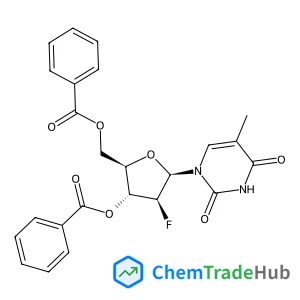
1-(3',5'-Di-O-benzoyl-2'-deoxy-2'-fluoro-b-D-arabinofuranosyl)thymine
CAS Number:
97614-47-6
Molecular Formula:
C24H21FN2O7
Recommended Suppliers




Disclaimer
This page provides academic journal information for reference and research purposes only. We are not affiliated with any journal publishers and do not handle publication submissions. For publication-related inquiries, please contact the respective journal publishers directly.
If you notice any inaccuracies in the information displayed, please contact us at support@chemtradehub.com. We will promptly review and address your concerns.