












Facile fabrication of positively-charged helical poly(phenyl isocyanide) modified multi-stimuli-responsive nanoassembly capable of high efficiency cell-penetrating, ratiometric fluorescence imaging, and rapid intracellular drug release
Literature Information
Publication Date
2018-07-17
DOI
10.1039/C8PY00865E
Impact Factor
5.582
Authors
Wen-Ming Zhang, Jian Zhang, Zhu Qiao, Huan-Ying Liu, Zong-Quan Wu, Jun Yin
View Original
Abstract
Sub-lethal drug concentrations in cancer therapy have always occurred because of the systematic barriers existing in the drug-resistant tumor microenvironment. To circumvent this issue, accurate and rapid drug release in cancer cells is crucial for providing optimum drug concentrations, preventing P-glycoprotein pumping out, increasing the efficiency of chemotherapy, and destroying cancer cells without respite. In this contribution, we report helical chain functionalized polymeric micelles for the co-delivery of dyes and drugs for cell imaging and therapy by taking advantage of pH, oxidation, and UV light multiple synergistic triggers. The positively charged guanidine group modified hydrophilic helical chains have a similar structure to cell penetrating peptides, which play an important role in their interaction with lipid bilayers in cell membranes and enhance subsequent cell internalization. The resultant complex nanoassembly has a preferable size of ∼185 nm and strong stability in aqueous solution, which is beneficial to long-term blood circulation and efficient extravasation from tumoral vessels. In conditions mimicking the extracellular environment, the complex nanoassembly showed a slow cargo release rate, while an accelerated release was observed after incubation of the micelles with an acidic medium or reductive environment. Moreover, an enhanced rapid drug release was realized if all three stimuli were performed on the micelles simultaneously, which exactly avoided insufficient drug concentration in cancer cells brought about by poor drug release or drug efflux pumps. The drug-loaded nanoassembly showed a devastating cytotoxicity against cancer cells, whereas blank samples were found to be non-toxic. This proof-of-concept is operated through multiple stimuli responsive drug release, showing promise for minimizing side effects, improving drug utilization efficiency, and having bright prospects in biomedical practice.
Related Literature
Simultaneous determination of 27 pesticides in corn and cow matrices by ultra-performance liquid chromatography-tandem mass spectrometry
Fengjiao Hao, Yuanyuan Luo, Fengshou Dong, Xinglu Pan, Xiaohu Wu, Yongquan Zheng, Jun Xu
2023-11-08
Paper
DOI: 10.1039/D3AY01473H
Low-cost electronic-nose (LC-e-nose) systems for the evaluation of plantation and fruit crops: recent advances and future trends
Jose Lucena Barbosa, Jr, Mohammed Kamruzzaman, Douglas Fernandes Barbin
2023-10-18
Critical Review
DOI: 10.1039/D3AY01192E
A novel copper-based nanozyme: fabrication and application for colorimetric detection of resveratrol
Wanxin Li, Jiaxin Sun, Yao Xin, Yu Han, Yanyang Sun, Aijun Li, Zhi Wang
2023-11-13
Paper
DOI: 10.1039/D3AY01666H
Multifunctional MXene-doped photothermal microneedles for drug-resistant bacteria-infected wound healing
Yongjin Zhong, Yancheng Lai, Zeru Feng, Si Huang, Yu Fu, Lirong Huang, Keng-fu Lan, Anchun Mo
2023-12-08
Paper
DOI: 10.1039/D3BM01676E
3D bioprinting of GelMA with enhanced extrusion printability through coupling sacrificial carrageenan
Yudong Yao
2023-12-07
Paper
DOI: 10.1039/D3BM01489D
Determination of polyfluoroalkyl substances in cosmetic products using dispersed liquid–liquid extraction coupled with UHPLC-MS/MS
Wenyao Liang, Zemin Xia, Jianhua Tan
2023-11-20
Paper
DOI: 10.1039/D3AY01553J
Optimization of heteronuclear ultrafast 2D NMR for the study of complex mixtures hyperpolarized by dynamic nuclear polarization
Clément Praud, Victor Ribay, Arnab Dey, Benoît Charrier, Joris Mandral, Jonathan Farjon, Jean-Nicolas Dumez, Patrick Giraudeau
2023-11-01
Paper
DOI: 10.1039/D3AY01681A
You might also like
Compound Q&A
What are the main uses of 4-Nitrophenyl phosphate disodium salt hexahydrate (CAS: 333338-18-4)?
4-Nitrophenyl phosphate disodium salt hexahydrate is primarily used as a substra...
333338-18-44-Nitrophenyl phosph...
Compound Q&A
What are the main uses of 2-(Trifluoromethyl)-1,3-oxazole-4-carboxylic Acid (CAS: 1060816-01-4)?
2-(Trifluoromethyl)-1,3-oxazole-4-carboxylic Acid (CAS: 1060816-01-4) is widely ...
1060816-01-42-(Trifluoromethyl)-...
Compound Q&A
How should 2-Fluoro-4-biphenylcarboxylic acid (CAS: 137045-30-8) be stored?
2-Fluoro-4-biphenylcarboxylic acid should be stored in a cool, dry place at room...
137045-30-82-Fluoro-4-biphenylc...
Compound Q&A
What industries use Prednisolone-21-Carboxylic Acid (CAS: 61549-70-0)?
Prednisolone-21-Carboxylic Acid is primarily used in the pharmaceutical industry...
61549-70-0Prednisolone-21-Carb...
Compound Q&A
How should 4-(Hydrazinomethyl)-1,2,3-benzenetriol (CAS: 3614-72-0) be stored?
4-(Hydrazinomethyl)-1,2,3-benzenetriol (CAS: 3614-72-0) should be stored in a co...
3614-72-04-(Hydrazinomethyl)-...
Compound Q&A
What industries use 4-Amino-1-methyl-1H-pyrazole-5-carboxylic acid hydrochloride (CAS: 92534-70-8)?
4-Amino-1-methyl-1H-pyrazole-5-carboxylic acid hydrochloride (CAS: 92534-70-8) i...
92534-70-84-Amino-1-methyl-1H-...
Compound Q&A
What regulatory guidelines apply to dehydropachymic acid (CAS: 77012-31-8)?
Dehydropachymic acid (CAS: 77012-31-8) is regulated by various agencies. It fall...
77012-31-8Dehydropachymic acid
Compound Q&A
What is the market or research trend for 6-[(2,2-Dimethylpropanoyl)amino]nicotinic acid (CAS: 898561-66-5)?
The market and research trends for 6-[(2,2-Dimethylpropanoyl)amino]nicotinic aci...
898561-66-56-[(2,2-Dimethylprop...
Compound Q&A
How should 1,10-Phenanthroline-2,9-dicarbaldehyde (CAS: 57709-62-3) be stored?
1,10-Phenanthroline-2,9-dicarbaldehyde should be stored in a cool, dry place awa...
57709-62-31,10-Phenanthroline-...
Compound Q&A
How is 5-Carbamoyl-11-oxo-10,11-dihydro-5H-dibenzo[b,f]azepin-10-yl acetate (CAS: 113952-21-9) typically synthesized?
5-Carbamoyl-11-oxo-10,11-dihydro-5H-dibenzo[b,f]azepin-10-yl acetate can be synt...
113952-21-95-Carbamoyl-11-oxo-1...
Source Journal
Polymer Chemistry

CiteScore:
8.6
Self-citation Rate:
7.3%
Articles per Year:
457
Polymer Chemistry welcomes submissions in all areas of polymer science that have a strong focus on macromolecular chemistry. Manuscripts may cover a broad range of fields, yet no direct application focus is required.
Recommended Compounds
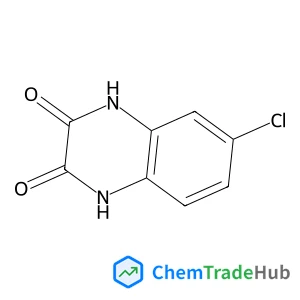
6-CHLORO-2,3-DIOXO-1,2,3,4-TETRAHYDROQUINOXALINE, 97
CAS Number:
169-14-2
Molecular Formula:
C8H5ClN2O2
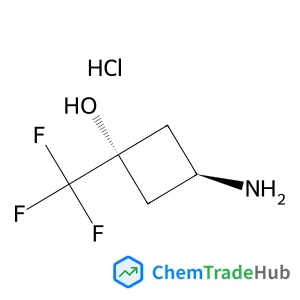
cis-3-Amino-1-(trifluoromethyl)cyclobutanol hydrochloride (1:1)
CAS Number:
1408075-16-0
Molecular Formula:
C5H9ClF3NO
Recommended Suppliers





Disclaimer
This page provides academic journal information for reference and research purposes only. We are not affiliated with any journal publishers and do not handle publication submissions. For publication-related inquiries, please contact the respective journal publishers directly.
If you notice any inaccuracies in the information displayed, please contact us at support@chemtradehub.com. We will promptly review and address your concerns.