












The irreversible formation of palladium carbide during hydrogenation of 1-pentyne over silica-supported palladium nanoparticles: in situ Pd K and L3 edge XAS
Literature Information
Publication Date
2012-02-28
DOI
10.1039/C2CP24068H
Impact Factor
3.676
Authors
Min Wei Tew, Maarten Nachtegaal, Markus Janousch, Thomas Huthwelker
View Original
Abstract
The catalytically active phase of silica-supported palladium catalysts in the selective and non-selective hydrogenation of 1-pentyne was determined using in situ X-ray absorption spectroscopy at the Pd K and L3 edges. Upon exposure to alkyne, a palladium carbide-like phase rapidly forms, which prevents hydrogen to diffuse into the bulk of the nano-sized particles. Both selective and non-selective hydrogenation occur over carbided particles. The palladium carbide-like phase is stable under reaction conditions and only partially decomposes under high hydrogen partial pressure. Non-selective hydrogenation to pentane is not indicative of hydride formation. The palladium carbide phase was detected in the EXAFS analysis and the K edge XANES showed representative features.
Related Literature
Visible light-induced selective oxidation of cyclohexane to cyclohexanone on Cr–Si binary oxide with molecular oxygen
Yasuhiro Shiraishi, Yugo Teshima, Takayuki Hirai
2005-08-17
Communication
DOI: 10.1039/B508172F
Liquid imidazole–borane complex
Noriyoshi Matsumi, Ayano Mori, Kenji Sakamoto, Hiroyuki Ohno
2005-08-12
Communication
DOI: 10.1039/B507805A
A novel and facile Zn-mediated intramolecular five-membered cyclization of β-tetraarylporphyrin radicals from β-bromotetraarylporphyrins
Dong-Mei Shen, Chao Liu, Qing-Yun Chen
2005-09-09
Communication
DOI: 10.1039/B509972B
Morphological control and molecular recognition by bis-urea hydrogen bonding in micelles of amphiphilic tri-block copolymers
Natalia Chebotareva, Paul H. H. Bomans, Peter M. Frederik, Nico A. J. M. Sommerdijk, Rint P. Sijbesma
2005-09-08
Communication
DOI: 10.1039/B507171B
Rhodium-catalyzed tandem cyclization–cycloaddition reactions of enynebenzaldehydes: construction of polycyclic ring systems
Seunghoon Shin, Arun Kumar Gupta, Chul Yun Rhim, Chang Ho Oh
2005-07-29
Communication
DOI: 10.1039/B506003F
Strongly luminescent binuclear aluminium chelate with polymer-like molecular packing and solution-processibility
Juan Qiao, Li. D. Wang, Jun. F. Xie, Gang. T. Lei, Guo. S. Wu, Yong Qiu
2005-08-16
Communication
DOI: 10.1039/B506907F
Structure and magnetic properties of a new ferrimagnet containing a paramagnetic [Cr(CN)5(NO)]3− building block
Wei Zhang, Kazuyoshi Yoshimura, Yan Ouyang, Zong-Hui Jiang, Shi-Ping Yan, Peng Cheng
2005-09-13
Communication
DOI: 10.1039/B506465A
New approach to sulfonated diphosphine complexes: synthesis and amphoteric behaviour of zwitterionic [Mn+(CO4{(PPh2)2C(H)SO3−}]
Javier Ruiz, Mario Ceroni, Marilín Vivanco, Marta P. Gonzalo, Santiago García-Granda, Francisco van der Maelen
2005-09-05
Communication
DOI: 10.1039/B507600E
You might also like
Compound Q&A
Is 6-(3-Fluorophenyl)picolinic acid (CAS: 887982-40-3) safe?
6-(3-Fluorophenyl)picolinic acid is generally considered safe for laboratory use...
887982-40-36-(3-Fluorophenyl)pi...
Compound Q&A
What industries use (3R)-3-Pyrrolidinol (CAS: 2799-21-5)?
(3R)-3-Pyrrolidinol is used in the pharmaceutical industry as a precursor for dr...
2799-21-5(3R)-3-Pyrrolidinol
Compound Q&A
What precautions should be taken when handling (4R,5R)-4,5-Diethoxycarbonyl-2,2-dimethyldioxolane (CAS: 59779-75-8)?
When handling (4R,5R)-4,5-Diethoxycarbonyl-2,2-dimethyldioxolane (CAS: 59779-75-...
59779-75-8(4R,5R)-4,5-Diethoxy...
Compound Q&A
How is 1-(6-Chloroimidazo[1,2-b]pyridazin-3-yl)ethanone (CAS: 90734-71-7) typically synthesized?
1-(6-Chloroimidazo[1,2-b]pyridazin-3-yl)ethanone is often synthesized via a mult...
90734-71-71-(6-Chloroimidazo[1...
Compound Q&A
What is the market or research trend for N-Ethyl-3,4-dimethylbenzylamine (CAS: 39180-83-1)?
The market for N-Ethyl-3,4-dimethylbenzylamine (CAS: 39180-83-1) remains steady,...
39180-83-1N-Ethyl-3,4-dimethyl...
Compound Q&A
What is Tert-butyl 3-(pyrrolidin-1-yl)azetidine-1-carboxylate (CAS: 1019008-21-9)?
Tert-butyl 3-(pyrrolidin-1-yl)azetidine-1-carboxylate is a chemical compound wit...
1019008-21-9Tert-butyl 3-(pyrrol...
Compound Q&A
What regulatory guidelines apply to 1-Bromo-3-chloro-2,4-dimethoxybenzene (CAS: 1228956-93-1)?
1-Bromo-3-chloro-2,4-dimethoxybenzene (CAS: 1228956-93-1) falls under the classi...
1228956-93-11-Bromo-3-chloro-2,4...
Compound Q&A
Is 8-Bromo-2-methyl-3,4-dihydroisoquinolin-1(2H)-one (CAS: 1368622-07-4) safe?
The safety of 8-Bromo-2-methyl-3,4-dihydroisoquinolin-1(2H)-one (CAS: 1368622-07...
1368622-07-48-Bromo-2-methyl-3,4...
Compound Q&A
Is Benzyl [(3S)-2,6-dioxo-3-piperidinyl]carbamate (CAS: 22785-43-9) safe?
Benzyl [(3S)-2,6-dioxo-3-piperidinyl]carbamate is generally safe when handled wi...
22785-43-9Benzyl [(3S)-2,6-dio...
Compound Q&A
How should 1-{[4-(4,4,5,5-Tetramethyl-1,3,2-dioxaborolan-2-yl)phenyl]sulfonyl}pyrrolidine (CAS: 928657-21-0) be stored?
1-{[4-(4,4,5,5-Tetramethyl-1,3,2-dioxaborolan-2-yl)phenyl]sulfonyl}pyrrolidine s...
928657-21-01-{[4-(4,4,5,5-Tetra...
Source Journal
Physical Chemistry Chemical Physics

CiteScore:
5.5
Self-citation Rate:
10.3%
Articles per Year:
3036
Physical Chemistry Chemical Physics (PCCP) is an international journal co-owned by 19 physical chemistry and physics societies from around the world. This journal publishes original, cutting-edge research in physical chemistry, chemical physics and biophysical chemistry. To be suitable for publication in PCCP, articles must include significant innovation and/or insight into physical chemistry; this is the most important criterion that reviewers and Editors will judge against when evaluating submissions. The journal has a broad scope and welcomes contributions spanning experiment, theory, computation and data science. Topical coverage includes spectroscopy, dynamics, kinetics, statistical mechanics, thermodynamics, electrochemistry, catalysis, surface science, quantum mechanics, quantum computing and machine learning. Interdisciplinary research areas such as polymers and soft matter, materials, nanoscience, energy, surfaces/interfaces, and biophysical chemistry are welcomed if they demonstrate significant innovation and/or insight into physical chemistry. Joined experimental/theoretical studies are particularly appreciated when complementary and based on up-to-date approaches.
Recommended Compounds
![[4-Chloro-3-(diethylcarbamoyl)phenyl]boronic acid structure](https://static.chemtradehub.com/structs/871/871332-68-2-0e3b.webp "[4-Chloro-3-(diethylcarbamoyl)phenyl]boronic acid structure")
[4-Chloro-3-(diethylcarbamoyl)phenyl]boronic acid
CAS Number:
871332-68-2
Molecular Formula:
C11H15BClNO3
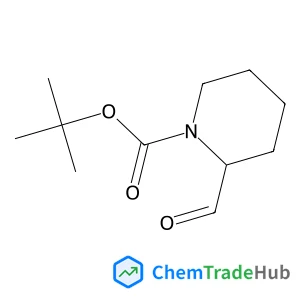
2-Methyl-2-propanyl (2R)-2-formyl-1-piperidinecarboxylate
CAS Number:
134526-69-5
Molecular Formula:
C11H19NO3
Recommended Suppliers





Disclaimer
This page provides academic journal information for reference and research purposes only. We are not affiliated with any journal publishers and do not handle publication submissions. For publication-related inquiries, please contact the respective journal publishers directly.
If you notice any inaccuracies in the information displayed, please contact us at support@chemtradehub.com. We will promptly review and address your concerns.