













Computational study of the adsorption and dissociation of phenol on Pt and Rh surfaces
Literature Information
Publication Date
2012-02-28
DOI
10.1039/C2CP24064E
Impact Factor
3.676
Authors
View Original
Abstract
The adsorption of phenol on flat and stepped Pt and Rh surfaces and the dissociation of hydrogen from the hydroxyl group of phenol on Pt(111) and Rh(111) were studied by density functional calculations. On both Pt(111) and Rh(111), phenol adsorbs with the aromatic ring parallel to the surface and the hydroxyl group tilted away from the surface. Furthermore, adsorption on stepped surfaces was concluded to be unfavourable compared to the (111) surfaces due to the repulsion of the hydroxyl group from the step edges. Transition state calculations revealed that the reaction barriers, associated with the dissociation of phenol into phenoxy, are almost identical on Pt and Rh. Furthermore, the oxygen in the dissociated phenol is strongly attracted by Rh(111), while it is repelled by Pt(111).
Related Literature
Correction: Fast prediction of oxygen reduction reaction activity on carbon nanotubes with a localized geometric descriptor
Jeremie Zaffran, Bo Yang
2021-02-17
Correction
DOI: 10.1039/D1CP90025K
New insights into the structural evolution of TiO2–Ti3O5–Ti2O3–TiO–TixOyCz–TiC systems at the nanoscale during the reduction process
Pengliang Jin, Lifeng Zhang
2021-02-08
Paper
DOI: 10.1039/D0CP06477G
High coordination number actinide-noble gas complexes; a computational study
Lin Yang, Sophie Cooper, Nikolas Kaltsoyannis
2021-02-03
Paper
DOI: 10.1039/D0CP06175A
The interplay between spatial and heliconical orientational order in twist-bend nematic materials
R. Saha, C. Welch, G. H. Mehl, J. Feng, C. Zhu, J. Gleeson
2021-02-03
Communication
DOI: 10.1039/D0CP06633H
Structure-directed formation of the dative/covalent bonds in complexes with C70⋯piperidine
Weizhou Wang, Martin Dračínský
2021-02-04
Paper
DOI: 10.1039/D0CP06280D
Microfluidic technologies for the synthesis and manipulation of biomimetic membranous nano-assemblies
John M. Seddon, Yuval Elani
2021-01-27
Perspective
DOI: 10.1039/D0CP06226J
Anion–anion and anion–neutral triel bonds
Rafał Wysokiński, Mariusz Michalczyk, Wiktor Zierkiewicz, Steve Scheiner
2021-02-11
Paper
DOI: 10.1039/D0CP06547A
A general model to optimise CuII labelling efficiency of double-histidine motifs for pulse dipolar EPR applications
Joshua L. Wort, Katrin Ackermann, David G. Norman, Bela E. Bode
2021-01-27
Paper
DOI: 10.1039/D0CP06196D
Singlet fission in naturally-organized carotenoid molecules
Annamaria Quaranta, Anja Krieger-Liszkay, Andrew A. Pascal, François Perreau, Bruno Robert, Mikas Vengris, Manuel J. Llansola-Portoles
2021-02-10
Paper
DOI: 10.1039/D0CP04493H
You might also like
Compound Q&A
Is 6-(3-Fluorophenyl)picolinic acid (CAS: 887982-40-3) safe?
6-(3-Fluorophenyl)picolinic acid is generally considered safe for laboratory use...
887982-40-36-(3-Fluorophenyl)pi...
Compound Q&A
What industries use (3R)-3-Pyrrolidinol (CAS: 2799-21-5)?
(3R)-3-Pyrrolidinol is used in the pharmaceutical industry as a precursor for dr...
2799-21-5(3R)-3-Pyrrolidinol
Compound Q&A
What precautions should be taken when handling (4R,5R)-4,5-Diethoxycarbonyl-2,2-dimethyldioxolane (CAS: 59779-75-8)?
When handling (4R,5R)-4,5-Diethoxycarbonyl-2,2-dimethyldioxolane (CAS: 59779-75-...
59779-75-8(4R,5R)-4,5-Diethoxy...
Compound Q&A
How is 1-(6-Chloroimidazo[1,2-b]pyridazin-3-yl)ethanone (CAS: 90734-71-7) typically synthesized?
1-(6-Chloroimidazo[1,2-b]pyridazin-3-yl)ethanone is often synthesized via a mult...
90734-71-71-(6-Chloroimidazo[1...
Compound Q&A
What is the market or research trend for N-Ethyl-3,4-dimethylbenzylamine (CAS: 39180-83-1)?
The market for N-Ethyl-3,4-dimethylbenzylamine (CAS: 39180-83-1) remains steady,...
39180-83-1N-Ethyl-3,4-dimethyl...
Compound Q&A
What is Tert-butyl 3-(pyrrolidin-1-yl)azetidine-1-carboxylate (CAS: 1019008-21-9)?
Tert-butyl 3-(pyrrolidin-1-yl)azetidine-1-carboxylate is a chemical compound wit...
1019008-21-9Tert-butyl 3-(pyrrol...
Compound Q&A
What regulatory guidelines apply to 1-Bromo-3-chloro-2,4-dimethoxybenzene (CAS: 1228956-93-1)?
1-Bromo-3-chloro-2,4-dimethoxybenzene (CAS: 1228956-93-1) falls under the classi...
1228956-93-11-Bromo-3-chloro-2,4...
Compound Q&A
Is 8-Bromo-2-methyl-3,4-dihydroisoquinolin-1(2H)-one (CAS: 1368622-07-4) safe?
The safety of 8-Bromo-2-methyl-3,4-dihydroisoquinolin-1(2H)-one (CAS: 1368622-07...
1368622-07-48-Bromo-2-methyl-3,4...
Compound Q&A
Is Benzyl [(3S)-2,6-dioxo-3-piperidinyl]carbamate (CAS: 22785-43-9) safe?
Benzyl [(3S)-2,6-dioxo-3-piperidinyl]carbamate is generally safe when handled wi...
22785-43-9Benzyl [(3S)-2,6-dio...
Compound Q&A
How should 1-{[4-(4,4,5,5-Tetramethyl-1,3,2-dioxaborolan-2-yl)phenyl]sulfonyl}pyrrolidine (CAS: 928657-21-0) be stored?
1-{[4-(4,4,5,5-Tetramethyl-1,3,2-dioxaborolan-2-yl)phenyl]sulfonyl}pyrrolidine s...
928657-21-01-{[4-(4,4,5,5-Tetra...
Source Journal
Physical Chemistry Chemical Physics

CiteScore:
5.5
Self-citation Rate:
10.3%
Articles per Year:
3036
Physical Chemistry Chemical Physics (PCCP) is an international journal co-owned by 19 physical chemistry and physics societies from around the world. This journal publishes original, cutting-edge research in physical chemistry, chemical physics and biophysical chemistry. To be suitable for publication in PCCP, articles must include significant innovation and/or insight into physical chemistry; this is the most important criterion that reviewers and Editors will judge against when evaluating submissions. The journal has a broad scope and welcomes contributions spanning experiment, theory, computation and data science. Topical coverage includes spectroscopy, dynamics, kinetics, statistical mechanics, thermodynamics, electrochemistry, catalysis, surface science, quantum mechanics, quantum computing and machine learning. Interdisciplinary research areas such as polymers and soft matter, materials, nanoscience, energy, surfaces/interfaces, and biophysical chemistry are welcomed if they demonstrate significant innovation and/or insight into physical chemistry. Joined experimental/theoretical studies are particularly appreciated when complementary and based on up-to-date approaches.
Recommended Compounds
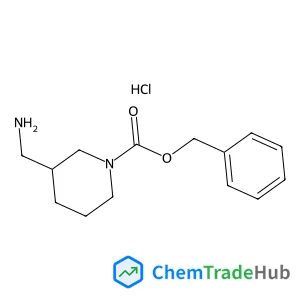
Benzyl 3-(aminomethyl)piperidine-1-carboxylate hydrochloride
CAS Number:
1186663-23-9
Molecular Formula:
C14H21ClN2O2
Recommended Suppliers




Disclaimer
This page provides academic journal information for reference and research purposes only. We are not affiliated with any journal publishers and do not handle publication submissions. For publication-related inquiries, please contact the respective journal publishers directly.
If you notice any inaccuracies in the information displayed, please contact us at support@chemtradehub.com. We will promptly review and address your concerns.