












Aqueous solvation of amphiphilic solutes: concentration and temperature dependent study of the ultrafast polarisability relaxation dynamics
Literature Information
Publication Date
2012-02-22
DOI
10.1039/C2CP23806C
Impact Factor
3.676
Authors
Kamila Mazur, Ismael A. Heisler, Stephen R. Meech
View Original
Abstract
An understanding of the influence of hydrophilic and hydrophobic interactions on the dynamics of solvating water molecules is important in a diverse range of phenomena. The polarisability anisotropy relaxation dynamics of aqueous solutions of the amphiphiles TBA (t-butyl alcohol) and TMAO (trimethylamine N-oxide) have been measured as a function of concentration and temperature. TMAO is shown to have a greater effect on the picosecond relaxation dynamics of water than TBA. This result is consistent with hydrophilic interactions being mainly responsible for the slowing down the polarisability relaxation in aqueous solutions. The room temperature Raman spectral densities of the two solutions are remarkably similar to that of bulk water, an effect which is tentatively ascribed to the formation of nanoscale structure in the solutions, allowing the formation of bulk-like water pools. The temperature dependent spectral density of TMAO remains similar to that of bulk water at all temperatures, while that for TBA shows a marked decrease in the amplitude of the response usually ascribed to a water-water stretch with increasing temperature. This is discussed in terms of the temperature dependent structure of TBA aggregates in solution.
Related Literature
Quantitative assessment of intracellular/extracellular dimethyl sulfoxide concentrations during freezing with low-temperature confocal Raman micro-spectroscopy
Taijie Zhan, Wenya Niu, Mengdong Cui, Hengxin Han, Ding Wang, Yi Xu
2022-10-19
Paper
DOI: 10.1039/D2AN01288J
A highly selective chromogenic and fluorogenic chemodosimeter for dual detection of Cu2+ based on a redox-active calix[4]arene with isoxazolylchloroanthracene
Kai-Chi Chang, Chan-Yu Chen, Li-Wei Lee
2022-10-11
Paper
DOI: 10.1039/D2AN01201D
Radiation treatment response and hypoxia biomarkers revealed by machine learning assisted Raman spectroscopy in tumour cells and xenograft tissues
Xinchen Deng, Kirsty Milligan, Alexandre Brolo, Jeffrey L. Andrews, Andrew Jirasek
2022-09-26
Paper
DOI: 10.1039/D2AN01222G
Fabrication of an amperometric bienzyme biosensing system with neutral red functionalized carbon nanotubes
D. R. Shobha Jeykumari, S. Sriman Narayanan
2009-05-19
Paper
DOI: 10.1039/B820040H
A colorimetric chemical tongue detects and distinguishes between multiple analytes
Francis Buan Hong Lim, Tingjun Lei, Gabriella Fernandez, Nicole Lopez, Andre-Lorenz Chu, Allan Valiente, Abhignyan Nagesetti, Andy Nelson, Kerstin Schmidt, Ta Chen Chang, Obdulio Piloto
2022-10-17
Paper
DOI: 10.1039/D2AN01615J
Reflection contributions to the dispersion artefact in FTIR spectra of single biological cells
Paul Bassan, Hugh J. Byrne, Joe Lee, Franck Bonnier, Colin Clarke, Paul Dumas, Ehsan Gazi, Michael D. Brown, Peter Gardner
2009-04-09
Paper
DOI: 10.1039/B821349F
Probing inhibitory effects of destruxins from Metarhizium anisopliae using insect cell based impedance spectroscopy: inhibition vs chemical structure
Keith B. Male, Yew-Min Tzeng, Johnny Montes, Bing-Lan Liu, Wan-Chun Liao, Amine Kamen
2009-04-15
Paper
DOI: 10.1039/B822133B
Evaluation of grade and invasiveness of bladder urothelial carcinoma using infrared imaging and machine learning
David Perez-Guaita, Piotr Chlosta, Krzysztof Okon, Kamilla Malek
2022-12-16
Paper
DOI: 10.1039/D2AN01583H
Rapid detection and classification of hongmu by atmospheric pressure ionization mass spectrometry
Dehua Yu
2022-09-08
Paper
DOI: 10.1039/D2AN01169G
You might also like
Compound Q&A
What precautions should be taken when handling 4-(2-Furylmethyl)thiomorpholine 1,1-dioxide (CAS: 79206-94-3)?
When handling 4-(2-Furylmethyl)thiomorpholine 1,1-dioxide (CAS: 79206-94-3), it ...
79206-94-34-(2-Furylmethyl)thi...
Compound Q&A
What precautions should be taken when handling 4-Chloro-N-[2-(4-morpholinyl)ethyl]benzamide (CAS: 71320-77-9)?
When handling 4-Chloro-N-[2-(4-morpholinyl)ethyl]benzamide (CAS: 71320-77-9), it...
71320-77-94-Chloro-N-[2-(4-mor...
Compound Q&A
How should waste containing 2-[2-(2-Methoxyethoxy)ethoxy]ethyl 4-methylbenzenesulfonate (CAS: 62921-74-8) be handled?
Waste containing this compound (CAS: 62921-74-8) should be handled according to ...
62921-74-82-[2-(2-Methoxyethox...
Compound Q&A
How should waste containing (S)-Methyl 2-amino-3-cyclohexylpropanoate be handled?
Waste containing (S)-Methyl 2-amino-3-cyclohexylpropanoate should be collected i...
40056-18-6(S)-Methyl 2-amino-3...
Compound Q&A
How is 5-({4-[(2S,4R)-4-Hydroxy-2-methyltetrahydro-2H-pyran-4-yl]-2-thienyl}sulfanyl)-1-methyl-1,3-dihydro-2H-indol-2-one (CAS: 166882-70-8) typically synthesized?
This compound can be synthesized using a multi-step process involving the conjug...
166882-70-85-({4-[(2S,4R)-4-Hyd...
Compound Q&A
Are there alternatives to (2E)-3-(3,4-Dichlorophenyl)acrylic acid (CAS: 7312-27-8) in synthesis?
There are several alternatives to (2E)-3-(3,4-Dichlorophenyl)acrylic acid in syn...
7312-27-8(2E)-3-(3,4-Dichloro...
Compound Q&A
How should Ethyl 6-(2-nitrophenyl)imidazo[2,1-b][1,3]thiazole-3-carboxylate (CAS: 925437-84-9) be stored?
Ethyl 6-(2-nitrophenyl)imidazo[2,1-b][1,3]thiazole-3-carboxylate (CAS: 925437-84...
925437-84-9Ethyl 6-(2-nitrophen...
Compound Q&A
How should waste containing 2-(1,3-Thiazol-2-yl)ethanamine (CAS: 18453-07-1) be handled?
Waste containing 2-(1,3-Thiazol-2-yl)ethanamine (CAS: 18453-07-1) should be coll...
18453-07-12-(1,3-Thiazol-2-yl)...
Compound Q&A
How is Methyl 5-iodo-2-methylbenzoate (CAS: 103440-54-6) typically synthesized?
Methyl 5-iodo-2-methylbenzoate can be synthesized through the iodination of meth...
103440-54-6Methyl 5-iodo-2-meth...
Compound Q&A
How is 5-Chloro[1,2,4]triazolo[1,5-a]pyridine (CAS: 1427399-34-5) typically synthesized?
5-Chloro[1,2,4]triazolo[1,5-a]pyridine is commonly synthesized via the condensat...
1427399-34-55-Chloro[1,2,4]triaz...
Source Journal
Physical Chemistry Chemical Physics

CiteScore:
5.5
Self-citation Rate:
10.3%
Articles per Year:
3036
Physical Chemistry Chemical Physics (PCCP) is an international journal co-owned by 19 physical chemistry and physics societies from around the world. This journal publishes original, cutting-edge research in physical chemistry, chemical physics and biophysical chemistry. To be suitable for publication in PCCP, articles must include significant innovation and/or insight into physical chemistry; this is the most important criterion that reviewers and Editors will judge against when evaluating submissions. The journal has a broad scope and welcomes contributions spanning experiment, theory, computation and data science. Topical coverage includes spectroscopy, dynamics, kinetics, statistical mechanics, thermodynamics, electrochemistry, catalysis, surface science, quantum mechanics, quantum computing and machine learning. Interdisciplinary research areas such as polymers and soft matter, materials, nanoscience, energy, surfaces/interfaces, and biophysical chemistry are welcomed if they demonstrate significant innovation and/or insight into physical chemistry. Joined experimental/theoretical studies are particularly appreciated when complementary and based on up-to-date approaches.
Recommended Compounds

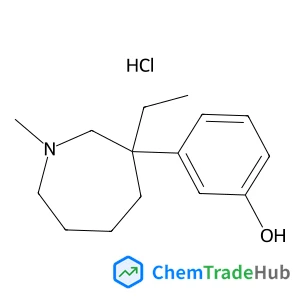
3-(3-Ethyl-1-methyl-3-azepanyl)phenol hydrochloride (1:1)
CAS Number:
59263-76-2
Molecular Formula:
C15H24ClNO
![1,2-Diphenyl-4-[2-(phenylsulfinyl)ethyl]-3,5-pyrazolidinedione structure](https://static.chemtradehub.com/structs/57-/57-96-5-efcc.webp "1,2-Diphenyl-4-[2-(phenylsulfinyl)ethyl]-3,5-pyrazolidinedione structure")
1,2-Diphenyl-4-[2-(phenylsulfinyl)ethyl]-3,5-pyrazolidinedione
CAS Number:
57-96-5
Molecular Formula:
C23H20N2O3S
Recommended Suppliers







Disclaimer
This page provides academic journal information for reference and research purposes only. We are not affiliated with any journal publishers and do not handle publication submissions. For publication-related inquiries, please contact the respective journal publishers directly.
If you notice any inaccuracies in the information displayed, please contact us at support@chemtradehub.com. We will promptly review and address your concerns.