












Rotational dynamics of thiocyanate ions in highly concentrated aqueous solutions
Literature Information
Publication Date
2012-02-27
DOI
10.1039/C2CP23749K
Impact Factor
3.676
Authors
Heejae Kim
View Original
Abstract
The thiocyanate (SCN−) anion is known as one of the best denaturants, which is also capable of breaking the hydrogen-bond network of water and destabilizing native structures of proteins. Despite prolonged efforts to understand the underlying mechanism of such Hofmeister effects, detailed dynamics of the ions in a highly concentrated solution have not been fully elucidated yet. Here, we used a dispersive IR pump–probe spectroscopic method to study the dependence of vibrational lifetimes and rotational relaxation times of thiocyanate ions on KSCN concentration in D2O. The nitrile stretch mode is used as a vibrational probe for dispersed IR pump–probe and FTIR measurements. To avoid possible self-attenuation of the IR pump–probe signal by highly concentrated SCN− ions, we added a small amount of 13C-isotope-labeled thiocyanate ions (S13CN−) and focused on the excited-state absorption contribution to the IR pump–probe signal of the 13C-isotope-labeled nitrile stretch mode. Quite unexpectedly, the vibrational lifetime of S13CN− ions is independent of the total KSCN concentration in the range from 0.46 m (molality) to 11.8 m while the rotational relaxation time of S13CN− ions is linearly dependent on the total KSCN concentration. By combining the present experimental findings with the fact that the dissolved ions of KSCN salt have a strong tendency to form a large ion cluster in a highly concentrated aqueous solution, we believe that the ion clusters consisting of potassium and thiocyanate ion pairs in D2O behave like ionic liquids and the ions inside ion clusters are weakly bound by electrostatic Coulombic interactions. The ability of SCN− ions to form ion clusters in aqueous protein solutions seems to be a key to understand the Hofmeister ion effect. We anticipate that the present experimental results provide a clue for further elucidating the underlying mechanism of the Hofmeister ion effects on protein stability in the future.
Recommended Journals
Related Literature
Radiation treatment response and hypoxia biomarkers revealed by machine learning assisted Raman spectroscopy in tumour cells and xenograft tissues
Xinchen Deng, Kirsty Milligan, Alexandre Brolo, Jeffrey L. Andrews, Andrew Jirasek
2022-09-26
Paper
DOI: 10.1039/D2AN01222G
Mass spectrometry tools and metabolite-specific databases for molecular identification in metabolomics
M. Brown, W. B. Dunn, P. Dobson, Y. Patel, C. L. Winder, S. Francis-McIntyre, P. Begley, K. Carroll, D. Broadhurst, A. Tseng, N. Swainston, I. Spasic
2009-04-09
Paper
DOI: 10.1039/B901179J
Switchable inhibitory behavior of divalent magnesium ion in DNA hybridization-based gene quantification
Hyowon Jin, Mark R. Liles, Beelee Chua, Ahjeong Son
2022-09-18
Paper
DOI: 10.1039/D2AN01164F
Phenotypic heterogeneity within microbial populations at the single-cell level investigated by confocal Raman microspectroscopy
Antje Hermelink, Angelika Brauer, Peter Lasch, Dieter Naumann
2009-03-25
Paper
DOI: 10.1039/B822574E
Analysis of breast cancer by small angle X-ray scattering (SAXS)
André Luiz Coelho Conceição, Marcelo Antoniassi, Martin Eduardo Poletti
2009-04-06
Paper
DOI: 10.1039/B821434D
Stereospecific recognition of a chiral centre over multiple flexible covalent bonds by 19F-NMR
Ya-Ting Chen, Bin Li, Jia-Liang Chen, Xun-Cheng Su
2022-12-09
Communication
DOI: 10.1039/D2AN01632J
Selective UV-filter detection with sensors based on stainless steel electrodes modified with polyaniline doped with metal tetrasulfonated phthalocyanine films
Luiz Fernando Moreira, Marcos Roberto de Vasconcelos Lanza, Auro Atsushi Tanaka, Maria Del Pilar Taboada Sotomayor
2009-04-28
Paper
DOI: 10.1039/B902273B
You might also like
Compound Q&A
What precautions should be taken when handling 4-(2-Furylmethyl)thiomorpholine 1,1-dioxide (CAS: 79206-94-3)?
When handling 4-(2-Furylmethyl)thiomorpholine 1,1-dioxide (CAS: 79206-94-3), it ...
79206-94-34-(2-Furylmethyl)thi...
Compound Q&A
What precautions should be taken when handling 4-Chloro-N-[2-(4-morpholinyl)ethyl]benzamide (CAS: 71320-77-9)?
When handling 4-Chloro-N-[2-(4-morpholinyl)ethyl]benzamide (CAS: 71320-77-9), it...
71320-77-94-Chloro-N-[2-(4-mor...
Compound Q&A
How should waste containing 2-[2-(2-Methoxyethoxy)ethoxy]ethyl 4-methylbenzenesulfonate (CAS: 62921-74-8) be handled?
Waste containing this compound (CAS: 62921-74-8) should be handled according to ...
62921-74-82-[2-(2-Methoxyethox...
Compound Q&A
How should waste containing (S)-Methyl 2-amino-3-cyclohexylpropanoate be handled?
Waste containing (S)-Methyl 2-amino-3-cyclohexylpropanoate should be collected i...
40056-18-6(S)-Methyl 2-amino-3...
Compound Q&A
How is 5-({4-[(2S,4R)-4-Hydroxy-2-methyltetrahydro-2H-pyran-4-yl]-2-thienyl}sulfanyl)-1-methyl-1,3-dihydro-2H-indol-2-one (CAS: 166882-70-8) typically synthesized?
This compound can be synthesized using a multi-step process involving the conjug...
166882-70-85-({4-[(2S,4R)-4-Hyd...
Compound Q&A
Are there alternatives to (2E)-3-(3,4-Dichlorophenyl)acrylic acid (CAS: 7312-27-8) in synthesis?
There are several alternatives to (2E)-3-(3,4-Dichlorophenyl)acrylic acid in syn...
7312-27-8(2E)-3-(3,4-Dichloro...
Compound Q&A
How should Ethyl 6-(2-nitrophenyl)imidazo[2,1-b][1,3]thiazole-3-carboxylate (CAS: 925437-84-9) be stored?
Ethyl 6-(2-nitrophenyl)imidazo[2,1-b][1,3]thiazole-3-carboxylate (CAS: 925437-84...
925437-84-9Ethyl 6-(2-nitrophen...
Compound Q&A
How should waste containing 2-(1,3-Thiazol-2-yl)ethanamine (CAS: 18453-07-1) be handled?
Waste containing 2-(1,3-Thiazol-2-yl)ethanamine (CAS: 18453-07-1) should be coll...
18453-07-12-(1,3-Thiazol-2-yl)...
Compound Q&A
How is Methyl 5-iodo-2-methylbenzoate (CAS: 103440-54-6) typically synthesized?
Methyl 5-iodo-2-methylbenzoate can be synthesized through the iodination of meth...
103440-54-6Methyl 5-iodo-2-meth...
Compound Q&A
How is 5-Chloro[1,2,4]triazolo[1,5-a]pyridine (CAS: 1427399-34-5) typically synthesized?
5-Chloro[1,2,4]triazolo[1,5-a]pyridine is commonly synthesized via the condensat...
1427399-34-55-Chloro[1,2,4]triaz...
Source Journal
Physical Chemistry Chemical Physics

CiteScore:
5.5
Self-citation Rate:
10.3%
Articles per Year:
3036
Physical Chemistry Chemical Physics (PCCP) is an international journal co-owned by 19 physical chemistry and physics societies from around the world. This journal publishes original, cutting-edge research in physical chemistry, chemical physics and biophysical chemistry. To be suitable for publication in PCCP, articles must include significant innovation and/or insight into physical chemistry; this is the most important criterion that reviewers and Editors will judge against when evaluating submissions. The journal has a broad scope and welcomes contributions spanning experiment, theory, computation and data science. Topical coverage includes spectroscopy, dynamics, kinetics, statistical mechanics, thermodynamics, electrochemistry, catalysis, surface science, quantum mechanics, quantum computing and machine learning. Interdisciplinary research areas such as polymers and soft matter, materials, nanoscience, energy, surfaces/interfaces, and biophysical chemistry are welcomed if they demonstrate significant innovation and/or insight into physical chemistry. Joined experimental/theoretical studies are particularly appreciated when complementary and based on up-to-date approaches.
Recommended Compounds

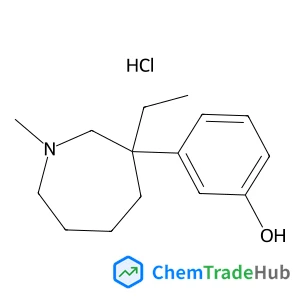
3-(3-Ethyl-1-methyl-3-azepanyl)phenol hydrochloride (1:1)
CAS Number:
59263-76-2
Molecular Formula:
C15H24ClNO

(3beta,7beta,12beta)-3,7,12-Trihydroxy-11,15,23-trioxolanost-8-en-26-oic acid
CAS Number:
98665-22-6
Molecular Formula:
C30H44O8
Recommended Suppliers



Disclaimer
This page provides academic journal information for reference and research purposes only. We are not affiliated with any journal publishers and do not handle publication submissions. For publication-related inquiries, please contact the respective journal publishers directly.
If you notice any inaccuracies in the information displayed, please contact us at support@chemtradehub.com. We will promptly review and address your concerns.