


Density, DSC, X-ray and NMR measurements through the gel and lamellar phase transitions of 1-myristoyl-2-stearoyl-sn-glycero-3-phosphatidylcholine (MSPC) and 1-stearoyl-2-myristoyl-sn-glycero-3-phosphatidylcholine (SMPC): observation of slow relaxation processes and mechanisms of phase transitions
Literature Information
Publication Date
2012-02-21
DOI
10.1039/C2CP23136K
Impact Factor
3.676
Authors
J. W. Jones, L. Lue, A. Saiani, G. J. T. Tiddy
View Original
Abstract
Dialkyl lecithin dispersions in water exhibit two phase transitions upon cooling from the lamellar phase (Lα). At the main transition (TM) the Lα phase changes to a ripple (gel) phase (Pβ′) which then transforms to a second gel phase (Lβ′) at the “pretransition” (TP). We have made accurate density measurements through the various phases for two lecithins having unequal chains: 1-myristoyl-2-stearoyl-sn-glycero-3-phosphatidylcholine (MSPC) and 1-stearoyl-2-myristoyl-sn-glycero-3-phosphatidylcholine (SMPC). The measurements were carried out over five heat/cool cycles from 5 to 55 °C, followed by cooling back to 5 °C. The samples were then held at 50 °C for 24 hours, followed by a further three cool/heat cycles. For SMPC we observe an increase in density of the gel phases over the first 5 cycles, followed by much smaller changes after incubation at 50 °C. The lamellar phase also shows an increase in density, albeit much smaller. This parallels the behaviour of 1,2-di-palmitoyl-sn-glycero-3-phosphatidylcholine (DPPC) and 1,2-di-myristoyl-sn-glycero-3-phosphatidylcholine (DMPC) reported earlier (Jones et al., Liquid Crystals 32, 1465 (2005)). For MSPC we observe a decrease in density within the gel phases while TP almost disappears after the first cycle. The lamellar phase shows little evidence of any change with each cycle. Within the lamellar phases there is a marked reduction in density on approaching TM, which is attributed to the formation of transitory gel phase domains. Additional measurements by DSC and X-ray diffraction show that the changes in densities are not accompanied by large changes in transition enthalpies or phase structures. NMR data indicate that the pretransitional event within the Lα phase is accompanied by ordering of the alkyl chains. The results indicate that the exact nature of the lipid alkyl chains could play a key role in the formation of gel phase patches within membrane bilayers. Their detailed chemical structures merit more attention than by simply assuming a uniform “bending energy” to describe the behaviour.
Recommended Journals

Journal of Organometallic Chemistry

Proceedings of the National Academy of Sciences of the United States of America

Journal of Physics and Chemistry of Solids

Pure and Applied Chemistry

Pharmacological Reviews

Planta Medica

Israel Journal of Chemistry

Journal of Catalysis

Kinetics and Catalysis

Journal of Medicinal Chemistry
Related Literature
Simultaneous determination of 27 pesticides in corn and cow matrices by ultra-performance liquid chromatography-tandem mass spectrometry
Fengjiao Hao, Yuanyuan Luo, Fengshou Dong, Xinglu Pan, Xiaohu Wu, Yongquan Zheng, Jun Xu
2023-11-08
Paper
DOI: 10.1039/D3AY01473H
Surface functionalization of endotracheal tubes coated with laccase–gadolinium phosphate hybrid nanoparticles for antibiofilm activity and contrasting properties
Somayeh Mojtabavi, Seyed Ali Asghar Fakhrmousavi, Mehrdad Faizi, Hamid Forootanfar, Nasrin Samadi, Mohammad Ali Faramarzi
2023-12-14
Paper
DOI: 10.1039/D3BM01406A
N-doped molybdenum oxide quantum dots as fluorescent probes for the quantitative detection of copper ions in environmental samples
Mingzhu Liu, Jingran Sun, Jin Wu, Zunquan Zhao, Jialei Bai, Yanjun Fang, Xiaoyong Jin
2023-10-30
Paper
DOI: 10.1039/D3AY01423A
Recent advances in composite hydrogels: synthesis, classification, and application in the treatment of bone defects
Pengfei Zhang, Jin Qi, Ran Zhang, Yifan Zhao, Jingyu Yan, Yajuan Gong, Xiaoming Liu, Binbin Zhang, Xiao Wu, Xiuping Wu, Cheng Zhang, Bing Zhao, Bing Li
2023-12-18
Minireview
DOI: 10.1039/D3BM01795H
Avoiding some common mistakes in straight line regression. Part 1
2023-11-06
AMC Technical Brief
DOI: 10.1039/D3AY90134C
Covalent drugs based on small molecules and peptides for disease theranostics
Yin-Sheng Xu, Yingying Cui, Zeng-Ying Qiao
2023-11-08
Review Article
DOI: 10.1039/D3BM01138K
A low-cost optofluidic platform for the colorimetric assessment of bacterial activity in domestic wastewater
Prajal Chettri, Kalathur Mohan Ganesh, Sahashransu Satyajeet Mahapatra, A. S. Vishwanathan, Shailesh Srivastava
2023-11-02
Paper
DOI: 10.1039/D3AY01612A
Hydroxyl-rich branched polycations for nucleic acid delivery
Mengrui Su, Zichen Hu, Yujie Sun, Bingran Yu, Fu-Jian Xu
2023-11-17
Review Article
DOI: 10.1039/D3BM01394D
You might also like
Compound Q&A
What regulatory guidelines apply to 6-Bromo-2-methylimidazo[1,2-a]pyrimidine (CAS: 1111638-05-1)?
6-Bromo-2-methylimidazo[1,2-a]pyrimidine (CAS: 1111638-05-1) falls under various...
1111638-05-16-Bromo-2-methylimid...
Compound Q&A
Are there alternatives to 1-Pyrrolidineethanol, β-methyl-α-phenyl-, (αS,βR) (CAS: 123620-80-4) in synthesis?
While there are no direct alternatives, similar compounds like 1-Pyrrolidineetha...
123620-80-41-Pyrrolidineethanol...
Compound Q&A
Is 4-Methyl-2,6-bis(2-methyl-2-propanyl)phenyl methylcarbamate (CAS: 1918-11-2) safe?
4-Methyl-2,6-bis(2-methyl-2-propanyl)phenyl methylcarbamate (CAS: 1918-11-2) is ...
1918-11-24-Methyl-2,6-bis(2-m...
Compound Q&A
How should 2-(3-Bromo-4-fluorophenyl)-1,3-dioxolane (CAS: 77771-04-1) be stored?
2-(3-Bromo-4-fluorophenyl)-1,3-dioxolane (CAS: 77771-04-1) should be stored in a...
77771-04-12-(3-Bromo-4-fluorop...
Compound Q&A
What are the physical and chemical properties of 4,5,6,7-Tetrahydro-1H-indazole hydrochloride (CAS: 18161-11-0)?
4,5,6,7-Tetrahydro-1H-indazole hydrochloride is a white crystalline solid with a...
18161-11-04,5,6,7-Tetrahydro-1...
Compound Q&A
What is (2R)-1-Methoxy-3-phenyl-2-propanamine (CAS: 59919-07-2)?
(2R)-1-Methoxy-3-phenyl-2-propanamine is a chiral organic compound with the CAS ...
59919-07-2(2R)-1-Methoxy-3-phe...
Compound Q&A
What industries use Ethyl 1-(1-phenylethyl)-1H-imidazole-5-carboxylate (CAS: 56649-47-9)?
Ethyl 1-(1-phenylethyl)-1H-imidazole-5-carboxylate is used in various industries...
56649-47-9Ethyl 1-(1-phenyleth...
Compound Q&A
What regulatory guidelines apply to 4-[(1E,3S)-1-(4-Hydroxyphenyl)-1,4-pentadien-3-yl]phenol (CAS: 17676-24-3)?
4-[(1E,3S)-1-(4-Hydroxyphenyl)-1,4-pentadien-3-yl]phenol (CAS: 17676-24-3) falls...
17676-24-34-[(1E,3S)-1-(4-Hydr...
Compound Q&A
What industries use (S)-3-Amino-5-phenylpentanoic acid hydrochloride (CAS: 331846-97-0)?
(S)-3-Amino-5-phenylpentanoic acid hydrochloride is primarily used in the pharma...
331846-97-0(S)-3-Amino-5-phenyl...
Compound Q&A
How is 7-methoxy-1-benzothiophene-2-carboxylic acid (CAS: 88791-07-5) typically synthesized?
7-Methoxy-1-benzothiophene-2-carboxylic acid is typically synthesized by reactin...
88791-07-57-methoxy-1-benzothi...
Source Journal
Physical Chemistry Chemical Physics

CiteScore:
5.5
Self-citation Rate:
10.3%
Articles per Year:
3036
Physical Chemistry Chemical Physics (PCCP) is an international journal co-owned by 19 physical chemistry and physics societies from around the world. This journal publishes original, cutting-edge research in physical chemistry, chemical physics and biophysical chemistry. To be suitable for publication in PCCP, articles must include significant innovation and/or insight into physical chemistry; this is the most important criterion that reviewers and Editors will judge against when evaluating submissions. The journal has a broad scope and welcomes contributions spanning experiment, theory, computation and data science. Topical coverage includes spectroscopy, dynamics, kinetics, statistical mechanics, thermodynamics, electrochemistry, catalysis, surface science, quantum mechanics, quantum computing and machine learning. Interdisciplinary research areas such as polymers and soft matter, materials, nanoscience, energy, surfaces/interfaces, and biophysical chemistry are welcomed if they demonstrate significant innovation and/or insight into physical chemistry. Joined experimental/theoretical studies are particularly appreciated when complementary and based on up-to-date approaches.
Recommended Compounds
![9H-Fluoren-9-ylmethyl {15-[(2,5-dioxo-1-pyrrolidinyl)oxy]-15-oxo-3,6,9,12-tetraoxapentadec-1-yl}carbamate structure](https://static.chemtradehub.com/structs/131/1314378-14-7-4316.webp "9H-Fluoren-9-ylmethyl {15-[(2,5-dioxo-1-pyrrolidinyl)oxy]-15-oxo-3,6,9,12-tetraoxapentadec-1-yl}carbamate structure")
9H-Fluoren-9-ylmethyl {15-[(2,5-dioxo-1-pyrrolidinyl)oxy]-15-oxo-3,6,9,12-tetraoxapentadec-1-yl}carbamate
CAS Number:
1314378-14-7
Molecular Formula:
C30H36N2O10
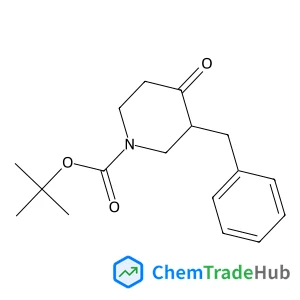
2-Methyl-2-propanyl 3-benzyl-4-oxo-1-piperidinecarboxylate
CAS Number:
193274-82-7
Molecular Formula:
C17H23NO3
Recommended Suppliers







Disclaimer
This page provides academic journal information for reference and research purposes only. We are not affiliated with any journal publishers and do not handle publication submissions. For publication-related inquiries, please contact the respective journal publishers directly.
If you notice any inaccuracies in the information displayed, please contact us at support@chemtradehub.com. We will promptly review and address your concerns.