












![(2E)-4-[(1R,2S,8R,19S,21R)-14-Hydroxy-11-isopropenyl-8,23,23-trimethyl-5-(3-methyl-2-buten-1-yl)-16,20-dioxo-3,7,22-trioxaheptacyclo[17.4.1.1~8,12~.0~2,17~.0~2,21~.0~4,15~.0~6,13~]pentacosa-4(15),5,13
,17-tetraen-21-yl]-2-methyl-2-butenoic acid structure](https://static.chemtradehub.com/structs/173/173867-04-4-d2d3.webp "(2E)-4-[(1R,2S,8R,19S,21R)-14-Hydroxy-11-isopropenyl-8,23,23-trimethyl-5-(3-methyl-2-buten-1-yl)-16,20-dioxo-3,7,22-trioxaheptacyclo[17.4.1.1~8,12~.0~2,17~.0~2,21~.0~4,15~.0~6,13~]pentacosa-4(15),5,13
,17-tetraen-21-yl]-2-methyl-2-butenoic acid structure")
Temperature and pressure dependence of the rate coefficient for the reaction between ClO and CH3O2 in the gas-phase
Literature Information
Publication Date
2012-02-03
DOI
10.1039/C2CP22834C
Impact Factor
3.676
Authors
Kimberley E. Leather, Asan Bacak, Ruth Wamsley, Alexander Husk, Dudley E. Shallcross, Carl J. Percival
View Original
Abstract
A temperature and pressure kinetic study for the CH3O2 + ClO reaction has been performed using the turbulent flow technique with a chemical ionisation mass spectrometry detection system. An Arrhenius expression was obtained for the overall rate coefficient of CH3O2 + ClO reaction: k10(T) = (1.96+0.28−0.24) × 10−11 exp[(−626 ± 35)/T] cm3 molecule−1 s−1 where the uncertainty associated with the rate coefficient is given at the one standard deviation level. Over a range of pressure (100–200 Torr) and temperature (298–223 K) no pressure dependence is observed. The smaller rate coefficients measured at lower temperatures compared with both previous low temperature studies are believed to arise through the reduction of secondary chemistry and greater sensitivity in terms of reactant detection (hence much lower initial concentrations were employed). These new data reduce the effectiveness of ozone loss cycles involving reaction of CH3O2 + ClO in the polar stratosphere by around a factor of 1.5 and restrict the importance of the reaction to the tropical and extra-tropical clean marine environments in the troposphere.
Related Literature
Synthesis and cellular uptake of porphyrin decorated iron oxide nanoparticles—a potential candidate for bimodal anticancer therapy
Hongwei Gu, Keming Xu, Zhimou Yang, Chi K. Chang
2005-07-14
Communication
DOI: 10.1039/B507779F
A novel and facile Zn-mediated intramolecular five-membered cyclization of β-tetraarylporphyrin radicals from β-bromotetraarylporphyrins
Dong-Mei Shen, Chao Liu, Qing-Yun Chen
2005-09-09
Communication
DOI: 10.1039/B509972B
Synthesis and crystal structure of [tBu3SiPAg2]8: A novel Ag16-cluster featuring a remarkable symmetrical structure
Hans-Wolfram Lerner, Günter Margraf, Jan W. Bats, Matthias Wagner
2005-08-11
Communication
DOI: 10.1039/B507833D
Organocatalytic asymmetric α-bromination of aldehydes and ketones
Søren Bertelsen, Nis Halland, Stephan Bachmann, Mauro Marigo, Alan Braunton, Karl Anker Jørgensen
2005-08-30
Communication
DOI: 10.1039/B509366J
Controlled synthesis of thermoresponsive polymers derived from l-prolinevia RAFT polymerization
Hideharu Mori, Hideyuki Iwaya, Atsushi Nagai, Takeshi Endo
2005-08-31
Communication
DOI: 10.1039/B509212D
Fluorescence resonance energy transfer between a quantum dot donor and a dye acceptor attached to DNA
Joe D. Piper, Chris Abell, David Klenerman, Liming Ying
2005-09-06
Communication
DOI: 10.1039/B508911E
An unprecedented eight-connected self-penetrating network based on pentanuclear zinc cluster building blocks
Xin-Long Wang, Chao Qin, En-Bo Wang, Zhong-Min Su, Lin Xu, Stuart R. Batten
2005-08-25
Communication
DOI: 10.1039/B506398A
The synthesis of isostructural Mo2+porphyrin and N-confused porphyrin complexes
John D. Harvey, Janet L. Shaw, Richard S. Herrick, Christopher J. Ziegler
2005-08-23
Communication
DOI: 10.1039/B508913A
You might also like
Compound Q&A
Is 6-(3-Fluorophenyl)picolinic acid (CAS: 887982-40-3) safe?
6-(3-Fluorophenyl)picolinic acid is generally considered safe for laboratory use...
887982-40-36-(3-Fluorophenyl)pi...
Compound Q&A
What industries use (3R)-3-Pyrrolidinol (CAS: 2799-21-5)?
(3R)-3-Pyrrolidinol is used in the pharmaceutical industry as a precursor for dr...
2799-21-5(3R)-3-Pyrrolidinol
Compound Q&A
What precautions should be taken when handling (4R,5R)-4,5-Diethoxycarbonyl-2,2-dimethyldioxolane (CAS: 59779-75-8)?
When handling (4R,5R)-4,5-Diethoxycarbonyl-2,2-dimethyldioxolane (CAS: 59779-75-...
59779-75-8(4R,5R)-4,5-Diethoxy...
Compound Q&A
How is 1-(6-Chloroimidazo[1,2-b]pyridazin-3-yl)ethanone (CAS: 90734-71-7) typically synthesized?
1-(6-Chloroimidazo[1,2-b]pyridazin-3-yl)ethanone is often synthesized via a mult...
90734-71-71-(6-Chloroimidazo[1...
Compound Q&A
What is the market or research trend for N-Ethyl-3,4-dimethylbenzylamine (CAS: 39180-83-1)?
The market for N-Ethyl-3,4-dimethylbenzylamine (CAS: 39180-83-1) remains steady,...
39180-83-1N-Ethyl-3,4-dimethyl...
Compound Q&A
What is Tert-butyl 3-(pyrrolidin-1-yl)azetidine-1-carboxylate (CAS: 1019008-21-9)?
Tert-butyl 3-(pyrrolidin-1-yl)azetidine-1-carboxylate is a chemical compound wit...
1019008-21-9Tert-butyl 3-(pyrrol...
Compound Q&A
What regulatory guidelines apply to 1-Bromo-3-chloro-2,4-dimethoxybenzene (CAS: 1228956-93-1)?
1-Bromo-3-chloro-2,4-dimethoxybenzene (CAS: 1228956-93-1) falls under the classi...
1228956-93-11-Bromo-3-chloro-2,4...
Compound Q&A
Is 8-Bromo-2-methyl-3,4-dihydroisoquinolin-1(2H)-one (CAS: 1368622-07-4) safe?
The safety of 8-Bromo-2-methyl-3,4-dihydroisoquinolin-1(2H)-one (CAS: 1368622-07...
1368622-07-48-Bromo-2-methyl-3,4...
Compound Q&A
Is Benzyl [(3S)-2,6-dioxo-3-piperidinyl]carbamate (CAS: 22785-43-9) safe?
Benzyl [(3S)-2,6-dioxo-3-piperidinyl]carbamate is generally safe when handled wi...
22785-43-9Benzyl [(3S)-2,6-dio...
Compound Q&A
How should 1-{[4-(4,4,5,5-Tetramethyl-1,3,2-dioxaborolan-2-yl)phenyl]sulfonyl}pyrrolidine (CAS: 928657-21-0) be stored?
1-{[4-(4,4,5,5-Tetramethyl-1,3,2-dioxaborolan-2-yl)phenyl]sulfonyl}pyrrolidine s...
928657-21-01-{[4-(4,4,5,5-Tetra...
Source Journal
Physical Chemistry Chemical Physics

CiteScore:
5.5
Self-citation Rate:
10.3%
Articles per Year:
3036
Physical Chemistry Chemical Physics (PCCP) is an international journal co-owned by 19 physical chemistry and physics societies from around the world. This journal publishes original, cutting-edge research in physical chemistry, chemical physics and biophysical chemistry. To be suitable for publication in PCCP, articles must include significant innovation and/or insight into physical chemistry; this is the most important criterion that reviewers and Editors will judge against when evaluating submissions. The journal has a broad scope and welcomes contributions spanning experiment, theory, computation and data science. Topical coverage includes spectroscopy, dynamics, kinetics, statistical mechanics, thermodynamics, electrochemistry, catalysis, surface science, quantum mechanics, quantum computing and machine learning. Interdisciplinary research areas such as polymers and soft matter, materials, nanoscience, energy, surfaces/interfaces, and biophysical chemistry are welcomed if they demonstrate significant innovation and/or insight into physical chemistry. Joined experimental/theoretical studies are particularly appreciated when complementary and based on up-to-date approaches.
Recommended Compounds

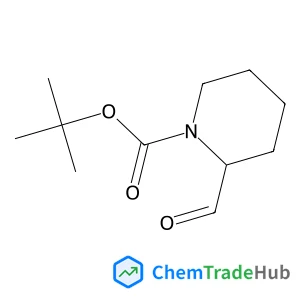
2-Methyl-2-propanyl (2R)-2-formyl-1-piperidinecarboxylate
CAS Number:
134526-69-5
Molecular Formula:
C11H19NO3
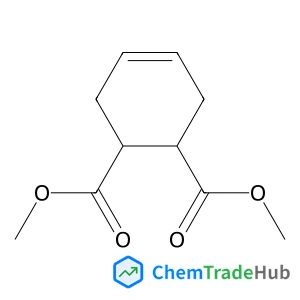
4-Cyclohexene-1,2-dicarboxylic acid, 1,2-dimethyl ester, (1R,2R)-rel-
CAS Number:
17673-68-6
Molecular Formula:
C10H14O4
Recommended Suppliers




Disclaimer
This page provides academic journal information for reference and research purposes only. We are not affiliated with any journal publishers and do not handle publication submissions. For publication-related inquiries, please contact the respective journal publishers directly.
If you notice any inaccuracies in the information displayed, please contact us at support@chemtradehub.com. We will promptly review and address your concerns.