












A known photoinitiator for a novel technology: 2-(4-methoxystyryl)-4,6-bis(trichloromethyl)-1,3,5-triazine for near UV or visible LED
Literature Information
Publication Date
2014-06-27
DOI
10.1039/C4PY00770K
Impact Factor
5.582
Authors
Jing Zhang, Pu Xiao, Fabrice Morlet-Savary, Bernadette Graff, Jean Pierre Fouassier, Jacques Lalevée
View Original
Abstract
2-(4-Methoxystyryl)-4,6-bis(trichloromethyl)-1,3,5-triazine (R–Cl) appears as a versatile high-performance photoinitiator (PI) under LED exposure at 385, 395 or 405 nm (intensities in the range ∼9–140 mW cm−2). It has been used as an efficient Type I cleavable PI for the free radical photopolymerization (FRP) of (meth)acrylates under near UV or visible LED irradiation. When combined with various additives (i.e. amine, iodonium salt, or N-vinylcarbazole), the R–Cl based photoinitiating systems can exhibit an even higher efficiency than R–Cl alone. Remarkably, R–Cl alone as well as the R–Cl/additive systems lead to a photoinitiation ability for the FRP of methacrylate under air at 405 nm that is better than that of well-known commercial photoinitiators (e.g. bisacylphosphine oxide (BAPO), 2,4,6-trimethylbenzoyl-diphenyl-phosphineoxide (TPO), or 2-benzyl-2-dimethylamino-1-(4-morpholinophenyl)-butanone-1 (BDMB)). In addition, the R–Cl/iodonium salt/N-vinylcarbazole combination can also initiate the cationic polymerization of epoxides in the 385–405 nm range. Moreover, the photochemistry of these systems has been investigated by steady state photolysis, molecular orbital (MO) calculations, and electron spin resonance spin trapping techniques.
Recommended Journals
Related Literature
HERFD-XANES probes of electronic structures of ironII/III carbene complexes
Om Prakash, Hao Fan, Lisa H. M. de Groot, Valtýr Freyr Hlynsson, Simon Kaufhold, Olga Gordivska, Nicolás Velásquez, Pavel Chabera, Pieter Glatzel, Kenneth Wärnmark, Petter Persson, Jens Uhlig
2020-04-16
Paper
DOI: 10.1039/C9CP06309A
Charge separation, recombination and intersystem crossing of directly connected perylenemonoimide–carbazole electron donor/acceptor dyads
Xue Zhang, Ayhan Elmali, Ruomeng Duan, Qingyun Liu, Wei Ji, Chen Li, Ahmet Karatay
2020-02-24
Paper
DOI: 10.1039/C9CP06914C
The ground state of KO revisited: the millimeter and submillimeter spectrum of potassium oxide
Mark A. Burton, Benjamin T. Russ, Matthew P. Bucchino, Phillip M. Sheridan, Lucy M. Ziurys
2019-09-19
Paper
DOI: 10.1039/C9CP03465J
Pseudo-equilibrium equation of calcium phosphate precipitation from aqueous solution
Bao-Di Gou, Yu-Xi Gao, Gang Wu, Tian-Lan Zhang
2019-09-16
Paper
DOI: 10.1039/C9CP04250D
Dissociative chemisorption of O2 on Agn and Agn−1Ir (n = 3–26) clusters: a first-principle study
Chuangchuang Wang, Yongpeng Yang, Xiaojing Liu, Yuanjie Li, Dandan Song, Yun Tian, Zhaojun Zhang
2020-04-06
Paper
DOI: 10.1039/D0CP01005G
Interfacial anomaly in low global warming potential refrigerant blends as predicted by molecular dynamics simulations
Yuting Li, Wael A. Fouad
2019-09-19
Paper
DOI: 10.1039/C9CP03231B
On the wetting translucency of hexagonal boron nitride
Enrique Wagemann, Yanbin Wang, Siddhartha Das, Sushanta K. Mitra
2020-02-27
Paper
DOI: 10.1039/D0CP00200C
Four resonance structures elucidate double-bond isomerisation of a biological chromophore
Evgeniy V. Gromov, Tatiana Domratcheva
2020-04-09
Paper
DOI: 10.1039/D0CP00814A
Photoelectron spectroscopy and computational investigations of the electronic structures and noncovalent interactions of cyclodextrin-closo-dodecaborate anion complexes χ-CD·B12X122− (χ = α, β, γ; X = H, F)
Yanrong Jiang, Qinqin Yuan, Jonas Warneke, Zhubin Hu, Yan Yang, Xue-Bin Wang
2020-03-10
Paper
DOI: 10.1039/D0CP00700E
Implications of the fractional charge of hydroxide at the electrochemical interface
Leanne D. Chen, Michal Bajdich, Karen Chan
2020-03-03
Paper
DOI: 10.1039/C9CP05952K
You might also like
Compound Q&A
What are the main uses of 4-Nitrophenyl phosphate disodium salt hexahydrate (CAS: 333338-18-4)?
4-Nitrophenyl phosphate disodium salt hexahydrate is primarily used as a substra...
333338-18-44-Nitrophenyl phosph...
Compound Q&A
What are the main uses of 2-(Trifluoromethyl)-1,3-oxazole-4-carboxylic Acid (CAS: 1060816-01-4)?
2-(Trifluoromethyl)-1,3-oxazole-4-carboxylic Acid (CAS: 1060816-01-4) is widely ...
1060816-01-42-(Trifluoromethyl)-...
Compound Q&A
How should 2-Fluoro-4-biphenylcarboxylic acid (CAS: 137045-30-8) be stored?
2-Fluoro-4-biphenylcarboxylic acid should be stored in a cool, dry place at room...
137045-30-82-Fluoro-4-biphenylc...
Compound Q&A
What industries use Prednisolone-21-Carboxylic Acid (CAS: 61549-70-0)?
Prednisolone-21-Carboxylic Acid is primarily used in the pharmaceutical industry...
61549-70-0Prednisolone-21-Carb...
Compound Q&A
How should 4-(Hydrazinomethyl)-1,2,3-benzenetriol (CAS: 3614-72-0) be stored?
4-(Hydrazinomethyl)-1,2,3-benzenetriol (CAS: 3614-72-0) should be stored in a co...
3614-72-04-(Hydrazinomethyl)-...
Compound Q&A
What industries use 4-Amino-1-methyl-1H-pyrazole-5-carboxylic acid hydrochloride (CAS: 92534-70-8)?
4-Amino-1-methyl-1H-pyrazole-5-carboxylic acid hydrochloride (CAS: 92534-70-8) i...
92534-70-84-Amino-1-methyl-1H-...
Compound Q&A
What regulatory guidelines apply to dehydropachymic acid (CAS: 77012-31-8)?
Dehydropachymic acid (CAS: 77012-31-8) is regulated by various agencies. It fall...
77012-31-8Dehydropachymic acid
Compound Q&A
What is the market or research trend for 6-[(2,2-Dimethylpropanoyl)amino]nicotinic acid (CAS: 898561-66-5)?
The market and research trends for 6-[(2,2-Dimethylpropanoyl)amino]nicotinic aci...
898561-66-56-[(2,2-Dimethylprop...
Compound Q&A
How should 1,10-Phenanthroline-2,9-dicarbaldehyde (CAS: 57709-62-3) be stored?
1,10-Phenanthroline-2,9-dicarbaldehyde should be stored in a cool, dry place awa...
57709-62-31,10-Phenanthroline-...
Compound Q&A
How is 5-Carbamoyl-11-oxo-10,11-dihydro-5H-dibenzo[b,f]azepin-10-yl acetate (CAS: 113952-21-9) typically synthesized?
5-Carbamoyl-11-oxo-10,11-dihydro-5H-dibenzo[b,f]azepin-10-yl acetate can be synt...
113952-21-95-Carbamoyl-11-oxo-1...
Source Journal
Polymer Chemistry

CiteScore:
8.6
Self-citation Rate:
7.3%
Articles per Year:
457
Polymer Chemistry welcomes submissions in all areas of polymer science that have a strong focus on macromolecular chemistry. Manuscripts may cover a broad range of fields, yet no direct application focus is required.
Recommended Compounds
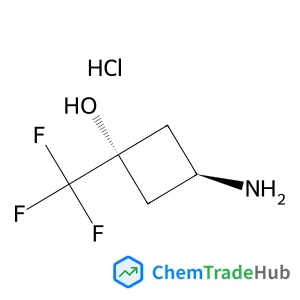
cis-3-Amino-1-(trifluoromethyl)cyclobutanol hydrochloride (1:1)
CAS Number:
1408075-16-0
Molecular Formula:
C5H9ClF3NO
Recommended Suppliers





Disclaimer
This page provides academic journal information for reference and research purposes only. We are not affiliated with any journal publishers and do not handle publication submissions. For publication-related inquiries, please contact the respective journal publishers directly.
If you notice any inaccuracies in the information displayed, please contact us at support@chemtradehub.com. We will promptly review and address your concerns.