












Stable azlactone-functionalized nanoparticles prepared from thermoresponsive copolymers synthesized by RAFT polymerization
Literature Information
Publication Date
2011-10-17
DOI
10.1039/C1PY00320H
Impact Factor
5.582
Authors
Martin E. Levere, Hien The Ho, Sagrario Pascual, Laurent Fontaine
View Original
Abstract
A new class of stable azlactone-functionalized thermoresponsive nanoparticles have been synthesized and characterized. Such particles are based on well-defined copolymers of poly(N-isopropylacrylamide) (PNIPAM), poly(N,N-dimethylacrylamide) (PDMA) and poly(2-vinyl-4,4-dimethylazlactone) (PVDM) copolymers synthesized using reversible addition–fragmentation chain transfer (RAFT) polymerization. A well-defined PNIPAM macromolecular RAFT agent and a PDMA macromolecular RAFT agent of low polydispersities (PDIs = 1.04–1.12) were used to mediate the copolymerizations of DMA/VDM and of NIPAM/VDM, respectively, resulting in copolymers of Mn ranging from 19 500 g mol−1 to 64 600 g mol−1 and PDIs ranging from 1.04 to 1.20. Depending on the number-average polymerization degrees of NIPAM, DMA and VDM, lower critical solution temperatures (LCSTs) ranging from 36 °C to 44 °C were measured. Two block copolymers PNIPAM46-b-P(VDM6-co-DMA65) and PDMA23-b-P(VDM10-co-NIPAM46) have a LCST that occurs at the physiological temperature. Above the LCST, the resulting nanoparticles were covalently stabilized by reacting a diamine with azlactone rings. The size exclusion chromatography (SEC) analyses revealed that all unimers are incorporated into the core-crosslinked structures and into the shell-crosslinked structures. This new strategy of crosslinking nanoparticles based on thermoresponsive copolymers is of particular interest as it is highly efficient. The azlactone groups remaining in core-crosslinked nanoparticles are suitable to react with dansylhydrazine as shown by SEC analysis using UV detection.
Recommended Journals
Related Literature
Exceptional H2 sorption characteristics in a Mg2+-based metal–organic framework with small pores: insights from experimental and theoretical studies
Tony Pham, Katherine A. Forrest, Eduardo H. L. Falcão, Juergen Eckert, Brian Space
2015-12-17
Paper
DOI: 10.1039/C5CP05906B
Electronic coherence and the kinetics of inter-complex energy transfer in light-harvesting systems
Pengfei Huo, Thomas F. Miller III
2015-06-01
Paper
DOI: 10.1039/C5CP02517F
Thermal phase behavior and ion hopping in a 1,2,4-triazolium perfluorobutanesulfonate protic organic ionic plastic crystal
Anirban Mondal, Anurag Prakash Sunda, Sundaram Balasubramanian
2015-12-09
Paper
DOI: 10.1039/C5CP05701A
Testing the transferability of a coarse-grained model to intrinsically disordered proteins
Gil O. Rutter, David Quigley, Tiffany R. Walsh
2015-11-05
Paper
DOI: 10.1039/C5CP05652G
Measurement and modelling of reactive transport in geological barriers for nuclear waste containment
Qingrong Xiong, Claudia Joseph, Katja Schmeide, Andrey P. Jivkov
2015-10-26
Paper
DOI: 10.1039/C5CP05243B
Size-dependent strain and surface energies of gold nanoclusters
S. Ali, V. S. Myasnichenko, E. C. Neyts
2015-11-18
Paper
DOI: 10.1039/C5CP06153A
The role of copper in the thermal conductivity of thermoelectric oxychalcogenides: do lone pairs matter?
P. Vaqueiro, R. A. R. Al Orabi, G. Guélou, A. V. Powell, R. I. Smith, J.-P. Song, D. Wee, M. Fornari
2015-11-06
Paper
DOI: 10.1039/C5CP06192J
Using the C–O stretch to unravel the nature of hydrogen bonding in low-temperature solid methanol–water condensates
Anita Dawes, Nigel John Mason, Helen Jane Fraser
2015-12-03
Paper
DOI: 10.1039/C5CP05299H
Surface modified multifunctional ZnFe2O4 nanoparticles for hydrophobic and hydrophilic anti-cancer drug molecule loading
Debabrata Maiti, Arindam Saha, Parukuttyamma Sujatha Devi
2015-10-19
Paper
DOI: 10.1039/C5CP05840F
You might also like
Compound Q&A
What is 3-Fluoro-2-methylbenzylamine (CAS: 771573-36-5)?
3-Fluoro-2-methylbenzylamine is an organic compound with the CAS number 771573-3...
771573-36-53-Fluoro-2-methylben...
Compound Q&A
Is Tert-butyl 2-(oxetan-3-ylidene)acetate (CAS: 1207175-03-8) safe?
Tert-butyl 2-(oxetan-3-ylidene)acetate is considered safe for its intended uses ...
1207175-03-8Tert-butyl 2-(oxetan...
Compound Q&A
What precautions should be taken when handling 4-Acetyl-2-fluorobenzonitrile (CAS: 214760-18-6)?
Proper personal protective equipment (PPE) such as gloves, goggles, and a lab co...
214760-18-64-Acetyl-2-fluoroben...
Compound Q&A
How is 2-Ethyl-4-methyl-1,3-thiazole (CAS: 15679-12-6) typically synthesized?
2-Ethyl-4-methyl-1,3-thiazole is commonly synthesized via the reaction of thiour...
15679-12-62-Ethyl-4-methyl-1,3...
Compound Q&A
How should 5',5''-([2,2'-Bithiophene]-5,5'-diyl)bis(([1,1':3',1''-terphenyl]-4,4''-dicarboxylic acid)) (CAS: 1227780-71-3) be stored?
This compound should be stored in a cool, dry place away from direct sunlight an...
1227780-71-35',5''''-([2,2'-Bith...
Compound Q&A
What regulatory guidelines apply to L-Lysine Acetate Salt (CAS: 52315-92-1)?
L-Lysine Acetate Salt (CAS: 52315-92-1) is subject to various regulatory guideli...
52315-92-1L-LYSINE ACETATE SAL...
Compound Q&A
Is 6-Fluoro-3-hydroxy-2-pyrazinecarboxamide (CAS: 259793-96-9) safe?
6-Fluoro-3-hydroxy-2-pyrazinecarboxamide (CAS: 259793-96-9) is generally conside...
259793-96-96-Fluoro-3-hydroxy-2...
Compound Q&A
What are the physical and chemical properties of 1,1'-Sulfonylbis(1H-imidazole) (CAS: 7189-69-7)?
1,1'-Sulfonylbis(1H-imidazole) is a crystalline solid with a molecular weight of...
7189-69-71,1'-Sulfonylbis(1H-...
Compound Q&A
What industries use 4-methyl-7-nitro-1H-indole-3-carbonitrile (CAS: 289483-82-5)?
4-Methyl-7-nitro-1H-indole-3-carbonitrile (CAS: 289483-82-5) is primarily used i...
289483-82-54-methyl-7-nitro-1H-...
Compound Q&A
How should waste containing 5-Bromo-3-indolyl-beta-galactoside (CAS: 97753-82-7) be handled?
Waste containing 5-Bromo-3-indolyl-beta-galactoside (CAS: 97753-82-7) should be ...
97753-82-75-Bromo-3-indolyl-be...
Source Journal
Polymer Chemistry

CiteScore:
8.6
Self-citation Rate:
7.3%
Articles per Year:
457
Polymer Chemistry welcomes submissions in all areas of polymer science that have a strong focus on macromolecular chemistry. Manuscripts may cover a broad range of fields, yet no direct application focus is required.
Recommended Compounds
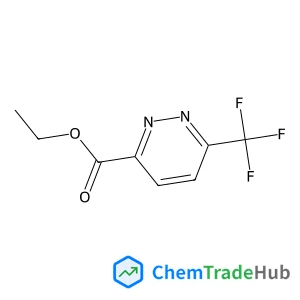
Ethyl 6-(trifluoromethyl)pyridazine-3-carboxylate
CAS Number:
1192155-06-8
Molecular Formula:
C8H7F3N2O2

Recommended Suppliers






Disclaimer
This page provides academic journal information for reference and research purposes only. We are not affiliated with any journal publishers and do not handle publication submissions. For publication-related inquiries, please contact the respective journal publishers directly.
If you notice any inaccuracies in the information displayed, please contact us at support@chemtradehub.com. We will promptly review and address your concerns.