












Crossed beam reaction of phenyl and D5-phenyl radicals with propene and deuterated counterparts—competing atomic hydrogen and methyl loss pathways
Literature Information
Publication Date
2011-11-25
DOI
10.1039/C1CP22758K
Impact Factor
3.676
Authors
R. I. Kaiser, D. S. N. Parker, M. Goswami, F. Zhang, V. V. Kislov, A. M. Mebel, J. Aguilera-Iparraguirre, W. H. Green
View Original
Abstract
We conducted the crossed molecular beams reactions of the phenyl and D5-phenyl radicals with propylene together with its partially deuterated reactants at collision energies of ∼45 kJ mol−1 under single collision conditions. The scattering dynamics were found to be indirect and were mainly dictated by an addition of the phenyl radical to the sterically accessible CH2 unit of the propylene reactant. The resulting doublet radical isomerized to multiple C9H11 intermediates, which were found to be long-lived, decomposing in competing methyl group loss and atomic hydrogen loss pathways with the methyl group loss leading to styrene (C6H5C2H3) and the atomic hydrogen loss forming C9H10 isomers cis/trans1-phenylpropene (CH3CHCHC6H5) and 3-phenylpropene (C6H5CH2C2H3). Fractions of the methylversushydrogen loss channels of 68 ± 16% : 32 ± 10% were derived experimentally, which agrees nicely with RRKM theory. As the collision energy rises to 200 kJmol−1, the contribution of the methyl loss channel decreases sharply to typically 25%; the decreased importance of the methyl group loss channel was also demonstrated in previous crossed beam experiments conducted at elevated collision energies of 130–193 kJ mol−1. The presented work highlights the interesting differences of the branching ratios with rising collision energies in the reaction dynamics of phenyl radicals with unsaturated hydrocarbons related to combustion processes. The facility of forming styrene, a common molecule found in combustion against the elusiveness of forming the cyclic indane molecule demonstrates the need to continue to explore the potential surfaces through the combinative single collision experiment and electronic structure calculations.
Related Literature
A semipinacol rearrangement of vinylogous α-ketol cocatalyzed by a cinchona-based primary amine and N-Boc-phenylglycines: mechanisms, roles of catalysts and the origin of enantioselectivity
Chao-Xian Yan, Fang-Ling Yang, Ka Lu, Xing Yang, Pan-Pan Zhou, Xiangfeng Shao
2020-06-05
Research Article
DOI: 10.1039/D0QO00506A
Photochemical benzylic bromination in continuous flow using BrCCl3 and its application to telescoped p-methoxybenzyl protection
Yuma Otake, Juan A. Rincón, Oscar de Frutos, Carlos Mateos
2019-01-22
Communication
DOI: 10.1039/C9OB00044E
A fluorogenic C4N4 probe for azide-based labelling
Hidetoshi Noda, Yasuko Asada, Masakatsu Shibasaki, Naoya Kumagai
2018-12-11
Communication
DOI: 10.1039/C8OB02695E
A metal-free synthesis of 1,1-diphenylvinylsulfides with thiols via thioetherification under continuous-flow conditions
Jiawei Zhang, Erfei Wang, Yang Zhou, Lu Zhang, Mao Chen, Xinrong Lin
2020-05-11
Research Article
DOI: 10.1039/D0QO00432D
HKOCl-4: a rhodol-based yellow fluorescent probe for the detection of hypochlorous acid in living cells and tissues
Xiaoyu Bai, Bowei Yang, Hansen Chen, Jiangang Shen, Dan Yang
2020-03-10
Research Article
DOI: 10.1039/D0QO00081G
Access to SCN-containing thiazolines via electrochemical regioselective thiocyanothiocyclization of N-allylthioamides
Yan-An Zhang, Zhong Ding, Peng Liu, Wei-Si Guo, Li-Rong Wen, Ming Li
2020-04-09
Research Article
DOI: 10.1039/D0QO00300J
You might also like
Compound Q&A
What industries use (1R,3S)-1,3-Cyclopentanediol (CAS: 16326-97-9)?
(1R,3S)-1,3-Cyclopentanediol finds applications in various industries. In the ph...
16326-97-9(1R,3S)-1,3-Cyclopen...
Compound Q&A
What precautions should be taken when handling N'-[4-(Dimethylamino)phenyl]-N,N-dimethyl-1,4-benzenediamine (CAS: 637-31-0)?
When handling N'-[4-(Dimethylamino)phenyl]-N,N-dimethyl-1,4-benzenediamine, it i...
637-31-0N'-[4-(Dimethylamino...
Compound Q&A
Are there alternatives to 5-(2,4-Difluorophenyl)-2-methoxypyrimidine (CAS: 1352318-16-1) in synthesis?
There are several alternatives to 5-(2,4-Difluorophenyl)-2-methoxypyrimidine in ...
1352318-16-15-(2,4-Difluoropheny...
Compound Q&A
What regulatory guidelines apply to 1-(3-Methoxyphenoxy)propan-2-ol (CAS: 382141-68-6)?
1-(3-Methoxyphenoxy)propan-2-ol (CAS: 382141-68-6) must comply with the Globally...
382141-68-61-(3-Methoxyphenoxy)...
Compound Q&A
Is Tetrodotoxin Citrate (CAS: 18660-81-6) safe?
Tetrodotoxin Citrate is extremely dangerous and should be handled with extreme c...
18660-81-6Tetrodotoxin Citrate
Compound Q&A
What are the main uses of 2-Methyl-2-propanyl [(1R,3S)-3-hydroxycyclopentyl]carbamate (CAS: 225641-84-9)?
2-Methyl-2-propanyl [(1R,3S)-3-hydroxycyclopentyl]carbamate (CAS: 225641-84-9) i...
225641-84-92-Methyl-2-propanyl ...
Compound Q&A
How should waste containing 4-(2-Hydroxyhexafluoroisopropyl)Benzoic Acid (CAS: 16261-80-6) be handled?
Waste containing 4-(2-Hydroxyhexafluoroisopropyl)Benzoic Acid (CAS: 16261-80-6) ...
16261-80-64-(2-Hydroxyhexafluo...
Compound Q&A
How is 2-Methyl-2-proanyl {(2S)-1-[(benzyloxy)amino]-3-hydroxy-3-methyl-1-oxo-2-butanyl}carbamate (CAS: 102507-19-7) typically synthesized?
2-Methyl-2-proanyl {(2S)-1-[(benzyloxy)amino]-3-hydroxy-3-methyl-1-oxo-2-butanyl...
102507-19-72-Methyl-2-propanyl ...
Compound Q&A
What is Benzeneethanamine, α-ethyl-, hydrochloride (1:1) (CAS: 20735-15-3)?
Benzeneethanamine, α-ethyl-, hydrochloride (1:1) is an organic compound with the...
20735-15-3Benzeneethanamine, α...
Compound Q&A
Are there alternatives to 3-{(E)-[4-(Dimethylamino)phenyl]diazenyl}benzoic acid (CAS: 20691-84-3) in synthesis?
In the synthesis of compounds similar to 3-{(E)-[4-(Dimethylamino)phenyl]diazeny...
20691-84-33-{(E)-[4-(Dimethyla...
Source Journal
Physical Chemistry Chemical Physics

CiteScore:
5.5
Self-citation Rate:
10.3%
Articles per Year:
3036
Physical Chemistry Chemical Physics (PCCP) is an international journal co-owned by 19 physical chemistry and physics societies from around the world. This journal publishes original, cutting-edge research in physical chemistry, chemical physics and biophysical chemistry. To be suitable for publication in PCCP, articles must include significant innovation and/or insight into physical chemistry; this is the most important criterion that reviewers and Editors will judge against when evaluating submissions. The journal has a broad scope and welcomes contributions spanning experiment, theory, computation and data science. Topical coverage includes spectroscopy, dynamics, kinetics, statistical mechanics, thermodynamics, electrochemistry, catalysis, surface science, quantum mechanics, quantum computing and machine learning. Interdisciplinary research areas such as polymers and soft matter, materials, nanoscience, energy, surfaces/interfaces, and biophysical chemistry are welcomed if they demonstrate significant innovation and/or insight into physical chemistry. Joined experimental/theoretical studies are particularly appreciated when complementary and based on up-to-date approaches.
Recommended Compounds
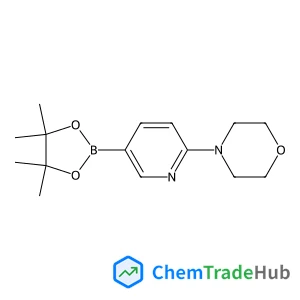
4-(5-(4,4,5,5-tetramethyl-1,3,2-dioxaborolan-2-yl)pyridin-2-yl)morpholine
CAS Number:
485799-04-0
Molecular Formula:
C15H23BN2O3
Recommended Suppliers





Disclaimer
This page provides academic journal information for reference and research purposes only. We are not affiliated with any journal publishers and do not handle publication submissions. For publication-related inquiries, please contact the respective journal publishers directly.
If you notice any inaccuracies in the information displayed, please contact us at support@chemtradehub.com. We will promptly review and address your concerns.