












The unusual importance of activity coefficients for micelle solutions illustrated by an osmometry study of aqueous sodium decanoate and aqueous sodium decanoate + sodium chloride solutions
Literature Information
Publication Date
2011-10-31
DOI
10.1039/C1CP22437A
Impact Factor
3.676
Authors
Poonam Sharma, Jennifer A. MacNeil, Justine Bowles, Derek G. Leaist
View Original
Abstract
Freezing-point and vapor-pressure osmometry data are reported for aqueous sodium decanoate (NaD) solutions and aqueous NaD + NaCl solutions. The derived osmotic coefficients are analyzed with a mass-action model based on the micelle formation reaction qNa+ + nD− = (NaqDn)q−n and Guggenheim equations for the micelle and ionic activity coefficients. Stoichiometric activity coefficients of the NaD and NaCl components and the equilibrium constant for micelle formation are evaluated. Illustrating the remarkable but not widely appreciated nonideal behavior of ionic surfactant solutions, the micelle activity coefficient drops to astonishingly low values, below 10−7 (relative to unity for ideal solutions). The activity coefficients of the Na+ and D− ions, raised to large powers of q and n, reduce calculated extents of micelle formation by up to 15 orders of magnitude. Activity coefficients, frequently omitted from the Gibbs equation, are found to increase the calculated surface excess concentration of NaD by up to an order of magnitude. Inflection points in the extent of micelle formation, used to calculate critical micelle concentration (cmc) lowering caused by added salt, provide unexpected thermodynamic evidence for the elusive second cmc.
Related Literature
An Aspidosperma-type alkaloid dimer from Tabernaemontana bovina as a candidate for the inhibition of microglial activation
Si-Meng Zhao, Mei-Fen Bao, Xiang-Hai Cai
2020-04-27
Research Article
DOI: 10.1039/D0QO00296H
Design, synthesis and glycosidase inhibition studies of novel triazole fused iminocyclitol-δ-lactams
Venkatesan Santhanam, Pradeep Pant, B. Jayaram, Namakkal G. Ramesh
2019-01-03
Paper
DOI: 10.1039/C8OB03084G
Access to cyano-substituted pyrazolines through copper-catalyzed cascade cyanation/cyclization of unactivated olefins
Fei Meng, Qin Fang, Weidong Yuan, Ning Xu, Shujun Cao, Jianlin Chun, Jie Li, Honglin Zhang, Yingguang Zhu
2020-04-22
Research Article
DOI: 10.1039/D0QO00282H
Aromatization-driven deconstruction/refunctionalization of unstrained rings
Fangzhi Hu, Lubin Xu
2020-06-01
Highlight
DOI: 10.1039/D0QO00344A
Bicyclic acetals: biological relevance, scaffold analysis, and applications in diversity-oriented synthesis
Elena Lenci, Fernanda I. Saldívar-Gonzalez, José L. Medina-Franco
2018-12-19
Review Article
DOI: 10.1039/C8OB02808G
Rh-Catalyzed nitrene alkyne metathesis/formal C–N bond insertion cascade: synthesis of 3-iminoindolines
Kemiao Hong, Su Zhou, Wenhao Hu
2020-04-08
Research Article
DOI: 10.1039/D0QO00294A
Synthesis of naphtho[1′,2′:4,5]imidazo[1,2-a]pyridines via Rh(iii)-catalyzed C–H functionalization of 2-arylimidazo[1,2-a]pyridines with cyclic 2-diazo-1,3-diketones featuring with a ring opening and reannulation
Bin Li, Nana Shen, Yujie Yang, Xinying Zhang, Xuesen Fan
2020-02-26
Research Article
DOI: 10.1039/D0QO00073F
Rhodium(iii)-catalyzed synthesis of 3-trifluoromethylindanones from N-methoxybenzamides via C–H activation and Claisen/retro-Claisen reaction
Bharatkumar Chaudhary, Neeraj Kulkarni, Satyasheel Sharma
2020-05-09
Research Article
DOI: 10.1039/D0QO00330A
Palladium-catalyzed cross-coupling of (hetero)aryl or alkenyl sulfonates with aryl titanium as the multi-functional reagent
2020-03-03
Research Article
DOI: 10.1039/C9QO01537J
Iron catalysed selective reduction of esters to alcohols
Sem Raj Tamang, Anthony F. Cozzolino, Michael Findlater
2018-12-18
Communication
DOI: 10.1039/C8OB02661K
You might also like
Compound Q&A
What industries use (1R,3S)-1,3-Cyclopentanediol (CAS: 16326-97-9)?
(1R,3S)-1,3-Cyclopentanediol finds applications in various industries. In the ph...
16326-97-9(1R,3S)-1,3-Cyclopen...
Compound Q&A
What precautions should be taken when handling N'-[4-(Dimethylamino)phenyl]-N,N-dimethyl-1,4-benzenediamine (CAS: 637-31-0)?
When handling N'-[4-(Dimethylamino)phenyl]-N,N-dimethyl-1,4-benzenediamine, it i...
637-31-0N'-[4-(Dimethylamino...
Compound Q&A
Are there alternatives to 5-(2,4-Difluorophenyl)-2-methoxypyrimidine (CAS: 1352318-16-1) in synthesis?
There are several alternatives to 5-(2,4-Difluorophenyl)-2-methoxypyrimidine in ...
1352318-16-15-(2,4-Difluoropheny...
Compound Q&A
What regulatory guidelines apply to 1-(3-Methoxyphenoxy)propan-2-ol (CAS: 382141-68-6)?
1-(3-Methoxyphenoxy)propan-2-ol (CAS: 382141-68-6) must comply with the Globally...
382141-68-61-(3-Methoxyphenoxy)...
Compound Q&A
Is Tetrodotoxin Citrate (CAS: 18660-81-6) safe?
Tetrodotoxin Citrate is extremely dangerous and should be handled with extreme c...
18660-81-6Tetrodotoxin Citrate
Compound Q&A
What are the main uses of 2-Methyl-2-propanyl [(1R,3S)-3-hydroxycyclopentyl]carbamate (CAS: 225641-84-9)?
2-Methyl-2-propanyl [(1R,3S)-3-hydroxycyclopentyl]carbamate (CAS: 225641-84-9) i...
225641-84-92-Methyl-2-propanyl ...
Compound Q&A
How should waste containing 4-(2-Hydroxyhexafluoroisopropyl)Benzoic Acid (CAS: 16261-80-6) be handled?
Waste containing 4-(2-Hydroxyhexafluoroisopropyl)Benzoic Acid (CAS: 16261-80-6) ...
16261-80-64-(2-Hydroxyhexafluo...
Compound Q&A
How is 2-Methyl-2-proanyl {(2S)-1-[(benzyloxy)amino]-3-hydroxy-3-methyl-1-oxo-2-butanyl}carbamate (CAS: 102507-19-7) typically synthesized?
2-Methyl-2-proanyl {(2S)-1-[(benzyloxy)amino]-3-hydroxy-3-methyl-1-oxo-2-butanyl...
102507-19-72-Methyl-2-propanyl ...
Compound Q&A
What is Benzeneethanamine, α-ethyl-, hydrochloride (1:1) (CAS: 20735-15-3)?
Benzeneethanamine, α-ethyl-, hydrochloride (1:1) is an organic compound with the...
20735-15-3Benzeneethanamine, α...
Compound Q&A
Are there alternatives to 3-{(E)-[4-(Dimethylamino)phenyl]diazenyl}benzoic acid (CAS: 20691-84-3) in synthesis?
In the synthesis of compounds similar to 3-{(E)-[4-(Dimethylamino)phenyl]diazeny...
20691-84-33-{(E)-[4-(Dimethyla...
Source Journal
Physical Chemistry Chemical Physics

CiteScore:
5.5
Self-citation Rate:
10.3%
Articles per Year:
3036
Physical Chemistry Chemical Physics (PCCP) is an international journal co-owned by 19 physical chemistry and physics societies from around the world. This journal publishes original, cutting-edge research in physical chemistry, chemical physics and biophysical chemistry. To be suitable for publication in PCCP, articles must include significant innovation and/or insight into physical chemistry; this is the most important criterion that reviewers and Editors will judge against when evaluating submissions. The journal has a broad scope and welcomes contributions spanning experiment, theory, computation and data science. Topical coverage includes spectroscopy, dynamics, kinetics, statistical mechanics, thermodynamics, electrochemistry, catalysis, surface science, quantum mechanics, quantum computing and machine learning. Interdisciplinary research areas such as polymers and soft matter, materials, nanoscience, energy, surfaces/interfaces, and biophysical chemistry are welcomed if they demonstrate significant innovation and/or insight into physical chemistry. Joined experimental/theoretical studies are particularly appreciated when complementary and based on up-to-date approaches.
Recommended Compounds
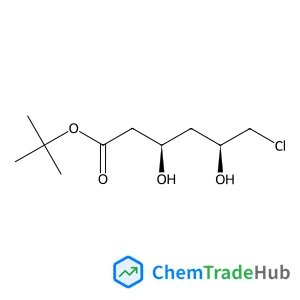
2-Methyl-2-propanyl (3R,5S)-6-chloro-3,5-dihydroxyhexanoate
CAS Number:
154026-93-4
Molecular Formula:
C10H19ClO4
![Ethyl 3-((6-(4,5-dihydro-1H-benzo[d]azepin-3(2H)-yl)-2-(pyridin-2-yl)pyrimidin-4-yl)amino)propanoate structure](https://static.chemtradehub.com/structs/137/1373423-53-0-496a.webp "Ethyl 3-((6-(4,5-dihydro-1H-benzo[d]azepin-3(2H)-yl)-2-(pyridin-2-yl)pyrimidin-4-yl)amino)propanoate structure")
Ethyl 3-((6-(4,5-dihydro-1H-benzo[d]azepin-3(2H)-yl)-2-(pyridin-2-yl)pyrimidin-4-yl)amino)propanoate
CAS Number:
1373423-53-0
Molecular Formula:
C24H27N5O2
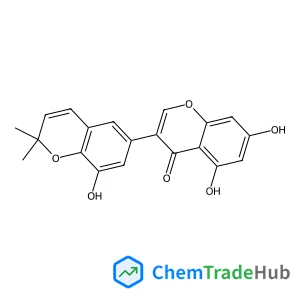
5,7,8'-Trihydroxy-2',2'-dimethyl-2'H,4H-3,6'-bichromen-4-one
CAS Number:
129280-33-7
Molecular Formula:
C20H16O6
Recommended Suppliers






Disclaimer
This page provides academic journal information for reference and research purposes only. We are not affiliated with any journal publishers and do not handle publication submissions. For publication-related inquiries, please contact the respective journal publishers directly.
If you notice any inaccuracies in the information displayed, please contact us at support@chemtradehub.com. We will promptly review and address your concerns.