



Infrared spectra of the protonated neurotransmitterhistamine: competition between imidazolium and ammonium isomers in the gas phase
Literature Information
Publication Date
2011-07-28
DOI
10.1039/C1CP21681C
Impact Factor
3.676
Authors
Anita Lagutschenkov, Judith Langer, Giel Berden, Otto Dopfer
View Original
Abstract
The infrared (IR) spectrum of protonated histamine (histamineH+) was recorded in the 575–1900 cm−1 fingerprint range by means of IR multiple photon dissociation (IRMPD) spectroscopy. The IRMPD spectrum of mass-selected histamineH+ ions was obtained in a Fourier transform ion cyclotron resonance mass spectrometer coupled to an electrospray ionization source and an IR free electron laser. A variety of isomers were identified and characterized by quantum chemical calculations at the B3LYP and MP2 levels of theory using the cc-pVDZ basis set. The low-energy isomers are derived from various favourable protonation sites—all of which are N atoms—and different orientations of the ethylamine side chain with respect to the heterocyclic imidazole ring. The measured IRMPD spectrum was monitored in the NH3 loss channel and exhibits 14 bands in the investigated spectral range, which were assigned to vibrational transitions of the most stable isomer, denoted A. This imidazolium-type isomer A with protonation at the imidazole ring and gauche conformation of the ethylamine side chain is significantly stabilized by an intramolecular ionic Nπ–H+⋯Nα hydrogen bond to the ethylamino group. The slightly less stable ammonium-type isomer B with protonation at the ethylamino group is only a few kJ mol−1 higher in energy and may also provide a minor contribution to the observed IRMPD spectrum. Isomer B is derived from A by simple proton transfer from imidazole to the ethylamino group along the intramolecular Nπ–H+⋯Nα hydrogen bond via a low barrier, which is calculated to be of the order of 5–15 kJ mol−1. Significantly, the most stable structure of isolated histamineH+ differs from that in the condensed phase by both the protonation site and the conformation of the side chain, emphasizing the important effects of solvation on the structure and function of this neurotransmitter. The effects of protonation on the geometric and electronic structure of histamine are evaluated by comparing the calculated properties of isomer A with those of the most stable structure of neutral histamine A(n).
Recommended Journals

Chemistry Education Research and Practice

Russian Journal of Applied Chemistry

Journal of Peptide Science

Russian Journal of General Chemistry

Saudi Pharmaceutical Journal

Journal of Saudi Chemical Society

Russian Chemical Bulletin

Organic Process Research & Development

New Journal of Chemistry

Journal of Natural Medicines
Related Literature
Experimentally probing the libration of interfacial water: the rotational potential of water is stiffer at the air/water interface than in bulk liquid
Yujin Tong, Tobias Kampfrath, R. Kramer Campen
2016-06-15
Paper
DOI: 10.1039/C6CP01004K
Crystallographic origin of cycle decay of the high-voltage LiNi0.5Mn1.5O4 spinel lithium-ion battery electrode
Cheng-Zhang Lu, Chia-Erh Liu, Vanessa K. Peterson, Shih-Chieh Liao, Jin-Ming Chen
2016-03-04
Paper
DOI: 10.1039/C6CP00947F
Enhanced photocatalytic activity of a self-stabilized synthetic flavin anchored on a TiO2 surface
Manjula Pandiri, Mohammad S. Hossain, Frank W. Foss, Jr., Krishnan Rajeshwar, Yaron Paz
2016-06-13
Paper
DOI: 10.1039/C6CP02060G
Mesoporous SnO2 single crystals as an effective electron collector for perovskite solar cells
Xiaoli Zheng, Yang Bai, Zilong Wang
2015-06-09
Communication
DOI: 10.1039/C5CP01534K
Enhanced photoelectrochemical performance of quantum dot-sensitized TiO2 nanotube arrays with Al2O3 overcoating by atomic layer deposition
Min Zeng, Xiange Peng, Jianjun Liao, Guizhen Wang, Yanfang Li, Jianbao Li, Yong Qin, Joshua Wilson, Aimin Song
2016-04-15
Paper
DOI: 10.1039/C6CP01299J
Structural phase transition in perovskite metal–formate frameworks: a Potts-type model with dipolar interactions
Mantas Šimėnas, Sergejus Balčiūnas, Mirosław Maçzka, Jūras Banys, Evaldas E. Tornau
2016-06-13
Paper
DOI: 10.1039/C6CP03414D
Energetics and kinetics of Cu atoms and clusters on the Si(111)-7 × 7 surface: first-principles calculations
Wei-Guang Chen, Ming-Sheng Tang
2016-06-13
Paper
DOI: 10.1039/C6CP01919F
Spectacular enhancement of thermoelectric phenomena in chemically synthesized graphene nanoribbons with substitution atoms
K. Zberecki, R. Swirkowicz, M. Wierzbicki
2016-06-07
Paper
DOI: 10.1039/C6CP02877B
Understanding the light soaking effect of ZnMgO buffer in CIGS solar cells
Suncheul Kim, Chang-Soo Lee, Seungtae Kim, R. B. V. Chalapathy, Essam A. Al-Ammar, Byung Tae Ahn
2015-06-25
Paper
DOI: 10.1039/C5CP01758K
You might also like
Compound Q&A
Is 4-Benzyl-2,2-dimethylmorpholine (CAS: 84761-04-6) safe?
4-Benzyl-2,2-dimethylmorpholine is generally considered safe when handled under ...
84761-04-64-Benzyl-2,2-dimethy...
Compound Q&A
What is (5,6-Dimethoxy-3-pyridinyl)boronic acid (CAS: 1346526-61-1)?
(5,6-Dimethoxy-3-pyridinyl)boronic acid is a chemical compound with the molecula...
1346526-61-1(5,6-Dimethoxy-3-pyr...
Compound Q&A
How is 1,1,3,3-Tetramethyl-1,3-bis(2-methyl-2-propanyl)disiloxane (CAS: 67875-55-2) typically synthesized?
1,1,3,3-Tetramethyl-1,3-bis(2-methyl-2-propanyl)disiloxane is synthesized throug...
67875-55-21,1,3,3-Tetramethyl-...
Compound Q&A
What are the main uses of (2R,4S)-1-Boc-4-methylpyrrolidine-2-carboxylic acid (CAS: 1018818-04-6)?
(2R,4S)-1-Boc-4-methylpyrrolidine-2-carboxylic acid is primarily used as a build...
1018818-04-6(2R,4S)-1-Boc-4-meth...
Compound Q&A
What precautions should be taken when handling 2,3-Dichloroacrylonitrile (CAS: 22410-58-8)?
When handling 2,3-Dichloroacrylonitrile, it is crucial to wear appropriate perso...
22410-58-82,3-Dichloroacryloni...
Compound Q&A
How should (S)-1-(o-Tolyl)ethanamine hydrochloride (CAS: 1332832-16-2) be stored?
(S)-1-(o-Tolyl)ethanamine hydrochloride should be stored in a cool, dry place to...
1332832-16-2(S)-1-(o-Tolyl)ethan...
Compound Q&A
What are the physical and chemical properties of Benzyl [1-(hydroxyamino)-1-imino-2-methyl-2-propanyl]carbamate (CAS: 518047-98-8)?
Benzyl [1-(hydroxyamino)-1-imino-2-methyl-2-propanyl]carbamate (CAS: 518047-98-8...
518047-98-8Benzyl [1-(hydroxyam...
Compound Q&A
What industries use 2-Methyloxazole-5-carbaldehyde (CAS: 885273-42-7)?
2-Methyloxazole-5-carbaldehyde is used in the pharmaceutical industry for the sy...
885273-42-72-Methyloxazole-5-ca...
Compound Q&A
What is the market or research trend for 2-Methyl-2-propanyl 4-[(1S)-1-hydroxyethyl]-1-piperidinecarboxylate (CAS: 389889-82-1)?
The market for 2-Methyl-2-propanyl 4-[(1S)-1-hydroxyethyl]-1-piperidinecarboxyla...
389889-82-12-Methyl-2-propanyl ...
Compound Q&A
Is 1-Butyl-3-methylpyridinium bromide (CAS: 26576-85-2) safe?
1-Butyl-3-methylpyridinium bromide is generally considered safe for laboratory u...
26576-85-21-Butyl-3-methylpyri...
Source Journal
Physical Chemistry Chemical Physics

CiteScore:
5.5
Self-citation Rate:
10.3%
Articles per Year:
3036
Physical Chemistry Chemical Physics (PCCP) is an international journal co-owned by 19 physical chemistry and physics societies from around the world. This journal publishes original, cutting-edge research in physical chemistry, chemical physics and biophysical chemistry. To be suitable for publication in PCCP, articles must include significant innovation and/or insight into physical chemistry; this is the most important criterion that reviewers and Editors will judge against when evaluating submissions. The journal has a broad scope and welcomes contributions spanning experiment, theory, computation and data science. Topical coverage includes spectroscopy, dynamics, kinetics, statistical mechanics, thermodynamics, electrochemistry, catalysis, surface science, quantum mechanics, quantum computing and machine learning. Interdisciplinary research areas such as polymers and soft matter, materials, nanoscience, energy, surfaces/interfaces, and biophysical chemistry are welcomed if they demonstrate significant innovation and/or insight into physical chemistry. Joined experimental/theoretical studies are particularly appreciated when complementary and based on up-to-date approaches.
Recommended Compounds
![3-(6-Nitrobenzo[d][1,3]dioxol-5-yl)acrylic acid structure](https://static.chemtradehub.com/structs/631/6315-90-8-6b36.webp "3-(6-Nitrobenzo[d][1,3]dioxol-5-yl)acrylic acid structure")
![2-benzyl-2,6-diazaspiro[3.3]heptane structure](https://static.chemtradehub.com/structs/119/1194508-28-5-ef9e.webp "2-benzyl-2,6-diazaspiro[3.3]heptane structure")
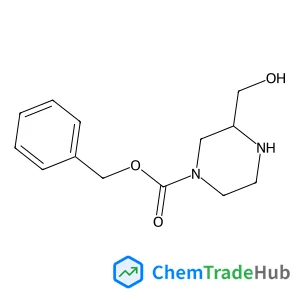
Benzyl 3-(hydroxymethyl)-1-piperazinecarboxylate
CAS Number:
191739-40-9
Molecular Formula:
C13H18N2O3
Recommended Suppliers






Disclaimer
This page provides academic journal information for reference and research purposes only. We are not affiliated with any journal publishers and do not handle publication submissions. For publication-related inquiries, please contact the respective journal publishers directly.
If you notice any inaccuracies in the information displayed, please contact us at support@chemtradehub.com. We will promptly review and address your concerns.