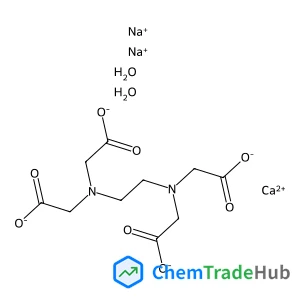
EthylenediaminetetraaceticacidcalciumDisodiumsalthydrate
CAS Number:
23411-34-9
Molecular Formula:
C10H16CaN2Na2O10
Janne Halme
This paper unifies the analytical models used widely but thus far mostly separately for electrical and optical small amplitude perturbation measurements of nanostructured electrochemical dye solar cells (DSC): electrochemical impedance spectroscopy (EIS), intensity-modulated photocurrent spectroscopy (IMPS) and intensity-modulated photovoltage spectroscopy (IMVS). The models are linked by expressing the kinetic boundary condition used for solving the time-dependent continuity equation of electrons in IMPS and IMVS analysis in terms of the series and parallel impedance components found in the complete equivalent circuit impedance model of DSC. As a result, analytical expressions are derived for potentiostatic IMPS and galvanostatic IMVS transfer functions of complete DSCs that are applicable at any operating point along the solar cell current–voltage (IV) curve. In agreement with the theory, impedance spectrum calculated as a ratio of IMVS and IMPS transfer functions measured near the maximum power point matches exactly with the impedance spectrum measured directly with EIS. Consequently, both IMPS-IMVS and EIS yield equal estimates for the electron diffusion length. The role of the chemical capacitance of the nanostructured semiconductor photoelectrode in the interpretation of the so-called RC attenuation of the IMPS response is clarified, as well as the capacitive frequency dispersion in IMPS and IMVS.
Qiang Cui, Marcus Elstner
DOI: 10.1039/C4CP00908H
G. Fedoseev, M. Minissale, E. Congiu, F. Dulieu, H. Linnartz
DOI: 10.1039/C3CP54918F
H.-J. Freund, N. Nilius, T. Risse, S. Schauermann
DOI: 10.1039/C3CP55231D
Nicolas Siedl, David Koller, Andreas Kurt Sternig
DOI: 10.1039/C3CP54582B
Hana Krysova, Zuzana Vlckova-Zivcova, Jan Barton, Vaclav Petrak, Milos Nesladek, Petr Cigler, Ladislav Kavan
DOI: 10.1039/C4CP04148H
Jian Li, Changzeng Fan
DOI: 10.1039/C4CP04185B
Adam P. Green, Alastair R. Buckley
DOI: 10.1039/C4CP05244G
L. Qin, Y. Sakamoto, M. W. Anderson
DOI: 10.1039/C4CP00343H
Melanie Letzner, Torsten Endres, Gerhard Schwaab, Martina Havenith
DOI: 10.1039/C3CP55284E
Jingbai Li, Andrey Yu. Rogachev
DOI: 10.1039/C4CP04208E
1H-Indazole-6-carbonitrile finds applications in pharmaceuticals, where it serve...
Waste containing Dioctyl (2E)-2-butenedioate (CAS: 2997-85-5) should be collecte...
Sodium [(1,2-benzoxazol-3-ylmethyl)sulfonyl]azanide is primarily used in pharmac...
Dimethyl 4-(4,4,5,5-tetramethyl-1,3,2-dioxaborolan-2-yl)-2,6-pyridinedicarboxyla...
Waste containing 2-Fluoro-6-hydrazinopyridine (CAS: 80714-39-2) should be manage...
6-Formyl-2-pyridinecarboxylic acid is an organic compound with the molecular for...
Research trends for this compound indicate a focus on its potential applications...
9H-Tribenzo[b,d,f]azepine is typically synthesized via a multi-step process invo...
1-Cyclopropyl-7-ethoxy-6-fluoro-8-methoxy-4-oxo-1,4-dihydro-3-quinolinecarboxyli...
Waste containing Methyl 3-oxo-1,2,3,4-tetrahydro-6-quinoxalinecarboxylate (CAS: ...

Physical Chemistry Chemical Physics (PCCP) is an international journal co-owned by 19 physical chemistry and physics societies from around the world. This journal publishes original, cutting-edge research in physical chemistry, chemical physics and biophysical chemistry. To be suitable for publication in PCCP, articles must include significant innovation and/or insight into physical chemistry; this is the most important criterion that reviewers and Editors will judge against when evaluating submissions. The journal has a broad scope and welcomes contributions spanning experiment, theory, computation and data science. Topical coverage includes spectroscopy, dynamics, kinetics, statistical mechanics, thermodynamics, electrochemistry, catalysis, surface science, quantum mechanics, quantum computing and machine learning. Interdisciplinary research areas such as polymers and soft matter, materials, nanoscience, energy, surfaces/interfaces, and biophysical chemistry are welcomed if they demonstrate significant innovation and/or insight into physical chemistry. Joined experimental/theoretical studies are particularly appreciated when complementary and based on up-to-date approaches.
![Sodium 3-[(E)-(4-anilinophenyl)diazenyl]benzenesulfonate structure](https://static.chemtradehub.com/structs/587/587-98-4-035f.webp "Sodium 3-[(E)-(4-anilinophenyl)diazenyl]benzenesulfonate structure")