![5-Methyl-4,5,6,7-tetrahydropyrazolo[1,5-a]pyrazin-2-amine structure](https://static.chemtradehub.com/structs/122/1227210-33-4-8d64.webp "5-Methyl-4,5,6,7-tetrahydropyrazolo[1,5-a]pyrazin-2-amine structure")
5-Methyl-4,5,6,7-tetrahydropyrazolo[1,5-a]pyrazin-2-amine
CAS Number:
1227210-33-4
Molecular Formula:
C7H12N4
Alexander V. Popov, Elizabeth-Ann Gould, Michael A. Salvitti, Rigoberto Hernandez, Kyril M. Solntsev
We have studied an excited state proton transfer (ESPT) from the cationic “super” photoacid N-methyl 6-hydroxyquinolinium perfluorobutane sulfonate to non-aqueous solvents using picosecond and nanosecond time-resolved fluorescence spectroscopy. Upon the photoinduced adiabatic deprotonation from the hydroxyl moiety, a quinolinium zwitterion with a highly anisotropic charge distribution is formed. Due to the complexity of the resultant photodissociated system, the typical description of the reversible ESPT within the framework of the Spherically Symmetric Diffusion Problem (SSDP) is not possible. Additional complications are caused by the presence of a counteranion particle which affects the proton mobility. To better understand the ESPT process, we have performed extensive Brownian dynamics (BD) simulations of this three-body system as a tool to reveal the nature of the nonstationary interaction potentials and to elucidate the role of a counterion in the diffusion and reactive properties of the proton. Moreover, our results demonstrated that the anisotropy of the potential force can be taken into account after adapting this force for use in the SSDP. The results of both BD simulations and SSDP calculation with the adapted force field were used to fit the experimental kinetics of this three-body problem adequately.
Xintong Xu, John Robertson, Huanglong Li
DOI: 10.1039/C9CP06654C
Michael J. Servis, Ernesto Martinez-Baez
DOI: 10.1039/D0CP00164C
Pascal Didier, Jagannath Kuchlyan, Lara Martinez-Fernandez, Pauline Gosset, Jérémie Léonard, Yitzhak Tor, Roberto Improta, Yves Mély
DOI: 10.1039/C9CP06931C
Zhibo Ma
DOI: 10.1039/C9CP06893G
Nickolas D. Charistos, Alvaro Muñoz-Castro
DOI: 10.1039/D0CP01252A
Peng Cen, Mikhail S. Tyumentsev, Mark R. St. J. Foreman
DOI: 10.1039/C9CP05982B
Samuel Moxon, Adam R. Symington, Joshua S. Tse, James Dawson, Joseph M. Flitcroft, Stephen C. Parker, David J. Cooke, Robert M. Harker, Marco Molinari
DOI: 10.1039/D0CP00021C
Guilherme Ribeiro Portugal, Jeverson Teodoro Arantes
DOI: 10.1039/C9CP06769H
Andika Asyuda, Xianglong Wan, Michael Zharnikov
DOI: 10.1039/D0CP01740J
Mariagrazia Fortino, Elisabetta Collini, Alfonso Pedone, Julien Bloino
DOI: 10.1039/D0CP00034E
This compound is mainly used as an intermediate in the synthesis of antipsychoti...
Waste containing 1-(D-Ribofuranosyl)-1,4-dihydro-3-pyridinecarboxamide (CAS: 191...
2-Methyl-2-propanyl 3-bromo-3-(hydroxymethyl)-1-azetidinecarboxylate (CAS: 20079...
N-(4-Chloro-2-pyridinyl)acetamide (CAS: 245056-66-0) is a chemical compound with...
5-Chloro-2-hydroxybenzoic acid, also known as 5-chlorosalicylic acid, is an arom...
When handling 1,1-Dichloro-1-fluoroethane (CAS: 1717-00-6), it is important to u...
Fmoc-(2S,3R)-3-phenylpyrrolidine-2-carboxylic acid is a white crystalline solid ...
4-Amino-5-bromo-2-pyridinecarboxylic acid is primarily used as a precursor in th...
Handling this compound should be done with personal protective equipment (PPE) i...
When handling 8-bromo-2,2-dimethyl-3,4-dihydro-2H-1,4-benzoxazin-3-one, use prop...

Physical Chemistry Chemical Physics (PCCP) is an international journal co-owned by 19 physical chemistry and physics societies from around the world. This journal publishes original, cutting-edge research in physical chemistry, chemical physics and biophysical chemistry. To be suitable for publication in PCCP, articles must include significant innovation and/or insight into physical chemistry; this is the most important criterion that reviewers and Editors will judge against when evaluating submissions. The journal has a broad scope and welcomes contributions spanning experiment, theory, computation and data science. Topical coverage includes spectroscopy, dynamics, kinetics, statistical mechanics, thermodynamics, electrochemistry, catalysis, surface science, quantum mechanics, quantum computing and machine learning. Interdisciplinary research areas such as polymers and soft matter, materials, nanoscience, energy, surfaces/interfaces, and biophysical chemistry are welcomed if they demonstrate significant innovation and/or insight into physical chemistry. Joined experimental/theoretical studies are particularly appreciated when complementary and based on up-to-date approaches.
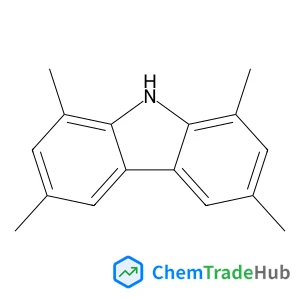
![2,6-Di(thiophen-2-yl)dithieno[3,2-b:2',3'-d]thiophene structure](https://static.chemtradehub.com/structs/910/910788-24-8-5b70.webp "2,6-Di(thiophen-2-yl)dithieno[3,2-b:2',3'-d]thiophene structure")