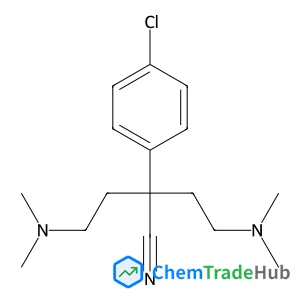
2-(4-Chlorophenyl)-4-(dimethylamino)-2-(2-(dimethylamino)ethyl)butanenitrile
CAS Number:
1246816-57-8
Molecular Formula:
C16H24ClN3
Peilin Liao, Emily A. Carter
Quantitative characterization of low-lying excited electronic states in materials is critical for the development of solar energy conversion materials. The many-body Green's function method known as the GW approximation (GWA) directly probes states corresponding to photoemission and inverse photoemission experiments, thereby determining the associated band structure. Several versions of the GW approximation with different levels of self-consistency exist in the field. While the GWA based on density functional theory (DFT) works well for conventional semiconductors, less is known about its reliability for strongly correlated semiconducting materials. Here we present a systematic study of the GWA using hematite (α-Fe2O3) as the benchmark material. We analyze its performance in terms of the calculated photoemission/inverse photoemission band gaps, densities of states, and dielectric functions. Overall, a non-self-consistent G0W0 using input from DFT+U theory produces physical observables in best agreement with experiments.
Filomena Mattner, Thomas Bourdier, Christian Loc'h, Paula Berghofer, Christopher Fookes, Tzong-Tyng Hung, Timothy Jackson, David Henderson, Tien Pham, Brendan J. Lee, Rachael Shepherd, Ivan Greguric, Naomi Wyatt, Thanh Le, Jackson Poon, Carl Power
DOI: 10.1039/D1MD00035G
Alex D. Johnson, Joseph A. Buhagiar, David C. Magri
DOI: 10.1039/D1MD00246E
Larissa G. Maciel, Andrey da S. Barbosa, Edilson B. de Alencar-Filho, Thereza A. Soares, Janaína V. dos Anjos
DOI: 10.1039/D0MD00305K
Guilherme Vieira de Castro, Alessio Ciulli
DOI: 10.1039/D1MD00215E
Felix F. Loeffler, Isabelle F. T. Viana, Nico Fischer, Carolina S. Silva, Antônio F. Purificação, Jr., Catarina M. C. S. Araújo, Bruno H. S. Leite, Ricardo Durães-Carvalho, Tereza Magalhães, Clarice N. L. Morais, Marli T. Cordeiro, Roberto D. Lins
DOI: 10.1039/D1MD00124H
Ashlin Turner, Quentin Kaas, David J. Craik
DOI: 10.1039/D0MD00173B
Tahmina Ahmed Milly, Yftah Tal-Gan
DOI: 10.1039/D0CB00012D
Vinicius Bonatto, Pedro Henrique Jatai Batista, Lorenzo Cianni, Daniela De Vita, Daniel G. Silva, Rodrigo Cedron, Sérgio de Albuquerque, Carolina Borsoi Moraes, Caio Haddad Franco, Andrei Leitão, Carlos A. Montanari
DOI: 10.1039/D0MD00097C
This compound is mainly used as an intermediate in the synthesis of antipsychoti...
Waste containing 1-(D-Ribofuranosyl)-1,4-dihydro-3-pyridinecarboxamide (CAS: 191...
2-Methyl-2-propanyl 3-bromo-3-(hydroxymethyl)-1-azetidinecarboxylate (CAS: 20079...
N-(4-Chloro-2-pyridinyl)acetamide (CAS: 245056-66-0) is a chemical compound with...
5-Chloro-2-hydroxybenzoic acid, also known as 5-chlorosalicylic acid, is an arom...
When handling 1,1-Dichloro-1-fluoroethane (CAS: 1717-00-6), it is important to u...
Fmoc-(2S,3R)-3-phenylpyrrolidine-2-carboxylic acid is a white crystalline solid ...
4-Amino-5-bromo-2-pyridinecarboxylic acid is primarily used as a precursor in th...
Handling this compound should be done with personal protective equipment (PPE) i...
When handling 8-bromo-2,2-dimethyl-3,4-dihydro-2H-1,4-benzoxazin-3-one, use prop...

Physical Chemistry Chemical Physics (PCCP) is an international journal co-owned by 19 physical chemistry and physics societies from around the world. This journal publishes original, cutting-edge research in physical chemistry, chemical physics and biophysical chemistry. To be suitable for publication in PCCP, articles must include significant innovation and/or insight into physical chemistry; this is the most important criterion that reviewers and Editors will judge against when evaluating submissions. The journal has a broad scope and welcomes contributions spanning experiment, theory, computation and data science. Topical coverage includes spectroscopy, dynamics, kinetics, statistical mechanics, thermodynamics, electrochemistry, catalysis, surface science, quantum mechanics, quantum computing and machine learning. Interdisciplinary research areas such as polymers and soft matter, materials, nanoscience, energy, surfaces/interfaces, and biophysical chemistry are welcomed if they demonstrate significant innovation and/or insight into physical chemistry. Joined experimental/theoretical studies are particularly appreciated when complementary and based on up-to-date approaches.
![2,6-Bis({(2R)-2-[hydroxy(diphenyl)methyl]-1-pyrrolidinyl}methyl)-4-methylphenol structure](https://static.chemtradehub.com/structs/877/877395-58-9-70bf.webp "2,6-Bis({(2R)-2-[hydroxy(diphenyl)methyl]-1-pyrrolidinyl}methyl)-4-methylphenol structure")
![6-Benzyl-4,5,6,7-tetrahydro-1H-pyrazolo[3,4-c]pyridin-3(2H)-one structure](https://static.chemtradehub.com/structs/909/909187-64-0-f54f.webp "6-Benzyl-4,5,6,7-tetrahydro-1H-pyrazolo[3,4-c]pyridin-3(2H)-one structure")