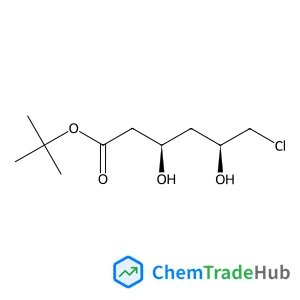
2-Methyl-2-propanyl (3R,5S)-6-chloro-3,5-dihydroxyhexanoate
CAS Number:
154026-93-4
Molecular Formula:
C10H19ClO4
Hiroto Tachikawa, Akihiro Yabushita, Masahiro Kawasaki
A direct ab initio molecular dynamics method has been applied to a water monomer and water clusters (H2O)n (n = 1–3) to elucidate the effects of zero-point energy (ZPE) vibration on the absorption spectra of water clusters. Static ab initio calculations without ZPE showed that the first electronic transitions of (H2O)n, 1B1 ← 1A1, are blue-shifted as a function of cluster size (n): 7.38 eV (n = 1), 7.58 eV (n = 2) and 8.01 eV (n = 3). The inclusion of the ZPE vibration strongly affects the excitation energies of a water dimer, and a long red-tail appears in the range of 6.42–6.90 eV due to the structural flexibility of a water dimer. The ultraviolet photodissociation of water clusters and water ice surfaces is relevant to these results.

Topics in Catalysis

Medicinal Chemistry Research

Herald of the Russian Academy of Sciences

Bioorganic & Medicinal Chemistry Letters

Colloid Journal

Electroanalysis

Journal of the Indian Institute of Science

Journal of Chemical Sciences

Critical Reviews in Solid State and Materials Sciences

Journal of Asian Natural Products Research
Wei-Zhi Weng, Jian Xie, Bo Zhang
DOI: 10.1039/C8OB00795K
Hui Nie, Qian-Hui Li, Siqi Zhang, Chuan-Ming Wang, Wen-Hui Lin, Ke Deng, Li-Jin Shu, Qing-Dao Zeng, Jun-Hua Wan
DOI: 10.1039/D1QO00812A
Yuan Chen, Xiaoyu Ren, Yumeng Guo, Bing Yi, Hongkui Zhang, Guowei Gao, Tianli Wang
DOI: 10.1039/D1QO01501J
Dongfeng Yang, Chengyi Wang, Yu Wang, Guohua Liu, Tanyu Cheng, Rui Liu
DOI: 10.1039/D1QO01482J
Xu Wang, Shuai-Shuai Huang, Feng-Jiao Zhang, Jia-Le Xie, Zhao Li, Zheng Xu, Fei Ye
DOI: 10.1039/D1QO01386F
Chen Zhu, Serik Zhumagazy, Huifeng Yue, Magnus Rueping
DOI: 10.1039/D1QO01633D
Nivedita S. Mahajani, John D. Chisholm
DOI: 10.1039/C8OB00687C
Xiu Yang, Wei-Dong Meng, Xiu-Hua Xu, Yangen Huang
DOI: 10.1039/D1QO01170G
DOI: 10.1039/C8OB00504D
Li-Wen Sun, Zi-Lun Yu, Xin-Long Luo, Mengtao Ma, Zhi-Liang Shen, Xue-Qiang Chu
DOI: 10.1039/D1QO01439K
(1R,3S)-1,3-Cyclopentanediol finds applications in various industries. In the ph...
When handling N'-[4-(Dimethylamino)phenyl]-N,N-dimethyl-1,4-benzenediamine, it i...
There are several alternatives to 5-(2,4-Difluorophenyl)-2-methoxypyrimidine in ...
1-(3-Methoxyphenoxy)propan-2-ol (CAS: 382141-68-6) must comply with the Globally...
Tetrodotoxin Citrate is extremely dangerous and should be handled with extreme c...
2-Methyl-2-propanyl [(1R,3S)-3-hydroxycyclopentyl]carbamate (CAS: 225641-84-9) i...
Waste containing 4-(2-Hydroxyhexafluoroisopropyl)Benzoic Acid (CAS: 16261-80-6) ...
2-Methyl-2-proanyl {(2S)-1-[(benzyloxy)amino]-3-hydroxy-3-methyl-1-oxo-2-butanyl...
Benzeneethanamine, α-ethyl-, hydrochloride (1:1) is an organic compound with the...
In the synthesis of compounds similar to 3-{(E)-[4-(Dimethylamino)phenyl]diazeny...

Physical Chemistry Chemical Physics (PCCP) is an international journal co-owned by 19 physical chemistry and physics societies from around the world. This journal publishes original, cutting-edge research in physical chemistry, chemical physics and biophysical chemistry. To be suitable for publication in PCCP, articles must include significant innovation and/or insight into physical chemistry; this is the most important criterion that reviewers and Editors will judge against when evaluating submissions. The journal has a broad scope and welcomes contributions spanning experiment, theory, computation and data science. Topical coverage includes spectroscopy, dynamics, kinetics, statistical mechanics, thermodynamics, electrochemistry, catalysis, surface science, quantum mechanics, quantum computing and machine learning. Interdisciplinary research areas such as polymers and soft matter, materials, nanoscience, energy, surfaces/interfaces, and biophysical chemistry are welcomed if they demonstrate significant innovation and/or insight into physical chemistry. Joined experimental/theoretical studies are particularly appreciated when complementary and based on up-to-date approaches.
![Ethyl 3-((6-(4,5-dihydro-1H-benzo[d]azepin-3(2H)-yl)-2-(pyridin-2-yl)pyrimidin-4-yl)amino)propanoate structure](https://static.chemtradehub.com/structs/137/1373423-53-0-496a.webp "Ethyl 3-((6-(4,5-dihydro-1H-benzo[d]azepin-3(2H)-yl)-2-(pyridin-2-yl)pyrimidin-4-yl)amino)propanoate structure")