












A method for the calculation of the adsorbed phase volume and pseudo-saturation pressure from adsorption isotherm data on activated carbon
Literature Information
Publication Date
2011-06-13
DOI
10.1039/C1CP20383E
Impact Factor
3.676
Authors
Kandadai Srinivasan, Bidyut Baran Saha, Kim Choon Ng, Pradip Dutta, Madhu Prasad
View Original
Abstract
We propose a new method for evaluating the adsorbed phase volume during physisorption of several gases on activated carbon specimens. We treat the adsorbed phase as another equilibrium phase which satisfies the Gibbs equation and hence assume that the law of rectilinear diameters is applicable. Since invariably the bulk gas phase densities are known along measured isotherms, the constants of the adsorbed phase volume can be regressed from the experimental data. We take the Dubinin–Astakhov isotherm as the model for verifying our hypothesis since it is one of the few equations that accounts for adsorbed phase volume changes. In addition, the pseudo-saturation pressure in the supercritical region is calculated by letting the index of the temperature term in Dubinin's equation to be temperature dependent. Based on over 50 combinations of activated carbons and adsorbates (nitrogen, oxygen, argon, carbon dioxide, hydrocarbons and halocarbon refrigerants) it is observed that the proposed changes fit experimental data quite well.
Related Literature
Solvent pulse desorption on-line solid-phase extraction combined with high-performance liquid chromatographic determination of 14 sulfonamides in environmental water samples
Feng-Chun Hsieh, Jia-Lin Wang, Youn-Yuen Shu
2019-08-09
Paper
DOI: 10.1039/C9AY01142K
The combined detection of ovarian cancer biomarkers HE4 and CA125 by a fluorescence and quantum dot dual-signal immunoassay
Shuange Yao, Wei Xiao, Hui Chen, Yong Tang, Qifang Song, Qubo Zheng, Ning Deng
2019-08-20
Paper
DOI: 10.1039/C9AY01454C
Highly chemoselective difluoromethylative homologation of iso(thio)cyanates: expeditious access to unprecedented α,α-difluoro(thio)amides
Margherita Miele, Rosarita D’Orsi, Vellaisamy Sridharan, Wolfgang Holzer, Vittorio Pace
2019-10-11
Communication
DOI: 10.1039/C9CC06929A
Magnetite nanoparticles coated with surfactant Sylgard 309 and its application as an adsorbent for paraben extraction from pharmaceutical and water samples
Marinah Mohd Ariffin, Norseyrihan Mohd Sohaimi, Beh Shiuan Yih, Noorashikin Md Saleh
2019-07-23
Paper
DOI: 10.1039/C9AY01147A
Scalable calibration transfer without standards via dynamic time warping for near-infrared spectroscopy
Congming Zou, Huimin Zhu, Junru Shen, Yue He, Jiaen Su, Xiaqiong Fan, Hongmei Lu, Zhimin Zhang, Yi Chen
2019-08-13
Paper
DOI: 10.1039/C9AY01139K
Calcium stannyl formation by organostannane dehydrogenation
Louis J. Morris, Michael S. Hill, Ian Manners, Claire L. McMullin, Mary F. Mahon, Nasir A. Rajabi
2019-10-03
Communication
DOI: 10.1039/C9CC07289F
You might also like
Compound Q&A
What are the main uses of 1H-Indazole-6-carbonitrile (CAS: 141290-59-7)?
1H-Indazole-6-carbonitrile finds applications in pharmaceuticals, where it serve...
141290-59-71H-Indazole-6-carbon...
Compound Q&A
How should waste containing Dioctyl (2E)-2-butenedioate (CAS: 2997-85-5) be handled?
Waste containing Dioctyl (2E)-2-butenedioate (CAS: 2997-85-5) should be collecte...
2997-85-5Dioctyl (2E)-2-buten...
Compound Q&A
What industries use Sodium [(1,2-benzoxazol-3-ylmethyl)sulfonyl]azanide (CAS: 68291-98-5)?
Sodium [(1,2-benzoxazol-3-ylmethyl)sulfonyl]azanide is primarily used in pharmac...
68291-98-5Sodium [(1,2-benzoxa...
Compound Q&A
Are there alternatives to Dimethyl 4-(4,4,5,5-tetramethyl-1,3,2-dioxaborolan-2-yl)-2,6-pyridinedicarboxylate (CAS: 741709-66-0) in synthesis?
Dimethyl 4-(4,4,5,5-tetramethyl-1,3,2-dioxaborolan-2-yl)-2,6-pyridinedicarboxyla...
741709-66-0Dimethyl 4-(4,4,5,5-...
Compound Q&A
How should waste containing 2-Fluoro-6-hydrazinopyridine (CAS: 80714-39-2) be handled?
Waste containing 2-Fluoro-6-hydrazinopyridine (CAS: 80714-39-2) should be manage...
80714-39-22-Fluoro-6-hydrazino...
Compound Q&A
What is 6-Formyl-2-pyridinecarboxylic acid (CAS: 499214-11-8)?
6-Formyl-2-pyridinecarboxylic acid is an organic compound with the molecular for...
499214-11-86-Formyl-2-pyridinec...
Compound Q&A
What is the market or research trend for 3-(3,4-dimethoxyphenyl)-2,5-dimethyl-N-(2-morpholin-4-ylethyl)pyrazolo[1,5-a]pyrimidin-7-amine (CAS: 900874-91-1)?
Research trends for this compound indicate a focus on its potential applications...
900874-91-13-(3,4-dimethoxyphen...
Compound Q&A
How is 9H-Tribenzo[b,d,f]azepine (CAS: 29875-73-8) typically synthesized?
9H-Tribenzo[b,d,f]azepine is typically synthesized via a multi-step process invo...
29875-73-89H-Tribenzo[b,d,f]az...
Compound Q&A
How is 1-Cyclopropyl-7-ethoxy-6-fluoro-8-methoxy-4-oxo-1,4-dihydro-3-quinolinecarboxylic acid (CAS: 1797982-51-4) typically synthesized?
1-Cyclopropyl-7-ethoxy-6-fluoro-8-methoxy-4-oxo-1,4-dihydro-3-quinolinecarboxyli...
1797982-51-41-Cyclopropyl-7-etho...
Compound Q&A
How should waste containing Methyl 3-oxo-1,2,3,4-tetrahydro-6-quinoxalinecarboxylate (CAS: 671820-52-3) be handled?
Waste containing Methyl 3-oxo-1,2,3,4-tetrahydro-6-quinoxalinecarboxylate (CAS: ...
671820-52-3Methyl 3-oxo-1,2,3,4...
Source Journal
Physical Chemistry Chemical Physics

CiteScore:
5.5
Self-citation Rate:
10.3%
Articles per Year:
3036
Physical Chemistry Chemical Physics (PCCP) is an international journal co-owned by 19 physical chemistry and physics societies from around the world. This journal publishes original, cutting-edge research in physical chemistry, chemical physics and biophysical chemistry. To be suitable for publication in PCCP, articles must include significant innovation and/or insight into physical chemistry; this is the most important criterion that reviewers and Editors will judge against when evaluating submissions. The journal has a broad scope and welcomes contributions spanning experiment, theory, computation and data science. Topical coverage includes spectroscopy, dynamics, kinetics, statistical mechanics, thermodynamics, electrochemistry, catalysis, surface science, quantum mechanics, quantum computing and machine learning. Interdisciplinary research areas such as polymers and soft matter, materials, nanoscience, energy, surfaces/interfaces, and biophysical chemistry are welcomed if they demonstrate significant innovation and/or insight into physical chemistry. Joined experimental/theoretical studies are particularly appreciated when complementary and based on up-to-date approaches.
Recommended Compounds
![N-[(9H-Fluoren-9-ylmethoxy)carbonyl]serine structure](https://static.chemtradehub.com/structs/737/73724-45-5-b0dc.webp "N-[(9H-Fluoren-9-ylmethoxy)carbonyl]serine structure")
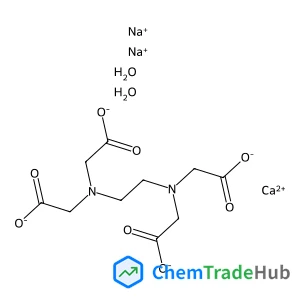
EthylenediaminetetraaceticacidcalciumDisodiumsalthydrate
CAS Number:
23411-34-9
Molecular Formula:
C10H16CaN2Na2O10
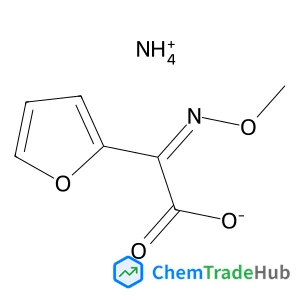
Ammonium (Z)-2-(furan-2-yl)-2-(methoxyimino)acetate
CAS Number:
97148-39-5
Molecular Formula:
C7H10N2O4
Recommended Suppliers






Disclaimer
This page provides academic journal information for reference and research purposes only. We are not affiliated with any journal publishers and do not handle publication submissions. For publication-related inquiries, please contact the respective journal publishers directly.
If you notice any inaccuracies in the information displayed, please contact us at support@chemtradehub.com. We will promptly review and address your concerns.