


Synthesis, characterization, fluorescence labeling and cellular internalization of novel amine-functionalized poly(ethylene glycol)-block-poly(ε-caprolactone) amphiphilic block copolymers
Literature Information
Publication Date
2011-04-12
DOI
10.1039/C0PY00391C
Impact Factor
5.582
Authors
Zhaoyang Ye, Houyong Luo, Min Chen, Yan Zhou, Wensong Tan, Yan Xiao, Yan Zhang
View Original
Abstract
We report in this paper a facile way to prepare novel amine-functionalized monomethoxy-poly(ethylene glycol)-b-poly(ε-caprolactone) (mPEG-b-PCL) amphiphilic block copolymers, which are subsequently fluorescently labeled. In our synthetic route, monomethoxy-poly(ethylene glycol)-b-poly[ε-caprolactone-co-γ-(carbamic acid benzyl ester)-ε-caprolactone] [mPEG-b-P(CL-co-CABCL)] copolymers were synthesized viaring-opening polymerization (ROP) of ε-caprolactone (CL) and a newly developed monomer, γ-(carbamic acid benzyl ester)-ε-caprolactone (CABCL) at varied ratios using mPEG as macroinitiator and Sn(Oct)2 as catalyst. Subsequent deprotection upon removal of carbobenzoxy (Cbz) group yielded monomethoxy-poly(ethylene glycol)-b-poly(ε-caprolactone-co-γ-amino-ε-caprolactone) [mPEG-b-P(CL-co-ACL)] copolymers bearing primary amine functional groups on the PCL block. The structures of polymers were characterized with NMR, FT-IR and GPC techniques. These amphiphilic block copolymers self-assembled into micelles in aqueous solution and the critical micelle concentration (CMC) was dependent on the compositions of the copolymers. In addition, the particle size and morphology of micelles were studied with DLS and TEM, respectively. In vitro study demonstrated that the micelles were nontoxic to human fibroblasts based on MTT and live/dead assays. Furthermore, a proof-of-concept usage of amino groups for bioconjugation was illustrated by tagging the copolymer with a fluorophore, fluorescein isothiocyanate (FITC). Internalization of FITC-labeled micelles by fibroblast cells was observed under fluorescence microscopy. Through facile conjugation of chemical moieties such as drugs, peptides, proteins or fluorophores, micelles prepared with these amine-functionalized mPEG-b-PCL copolymers hold great promise in biomedical applications.
Recommended Journals

Environmental Toxicology and Pharmacology

Angewandte Chemie International Edition

CrystEngComm

Lab on a Chip

European Journal of Organic Chemistry

Photochemical & Photobiological Sciences

Coloration Technology

Journal of Enzyme inhibition and Medicinal Chemistry

Current Pharmaceutical Biotechnology

Nature Reviews Drug Discovery
Related Literature
Pressure-dependent formation of i-motif and G-quadruplex DNA structures
S. Takahashi
2015-09-03
Paper
DOI: 10.1039/C5CP04727G
Physicochemical perspectives (aggregation, structure and dynamics) of interaction between pluronic (L31) and surfactant (SDS)
G. K. S. Prameela, B. V. N. Phani Kumar, A. Pan, V. K. Aswal, J. Subramanian, A. B. Mandal, S. P. Moulik
2015-10-13
Paper
DOI: 10.1039/C5CP04910E
Enhanced field-emission of silver nanoparticle–graphene oxide decorated ZnO nanowire arrays
Guojing Wang, Jiecui Liao, Chienhua Chen, Shasha Lv, Chuanqing Shi
2015-11-02
Paper
DOI: 10.1039/C5CP05036G
A combined computational and experimental investigation of Mg doped α-Fe2O3
Monica Kosa, Hannah Noa Barad, Vijay Singh, David A. Keller, Klimentiy Shimanovich, Sven Rühle, Assaf Y. Anderson, Arie Zaban, Dan Thomas Major
2015-11-23
Paper
DOI: 10.1039/C5CP05987A
High-performance formaldehyde gas-sensors based on three dimensional center-hollow ZnO
Linqi Shi, Jiabao Cui, Fei Zhao, Dejun Wang, Tengfeng Xie, Yanhong Lin
2015-10-29
Paper
DOI: 10.1039/C5CP05935F
Synthesis of ceria based superhydrophobic coating on Ni20Cr substrate via cathodic electrodeposition
F. Pedraza, S. A. Mahadik, B. Bouchaud
2015-11-06
Paper
DOI: 10.1039/C5CP04723D
Self-assembly of block copolymers on lithographically patterned template with ordered posts
Dan Xu, Yao-Hong Xue, Yan-Bo Sun
2015-11-03
Paper
DOI: 10.1039/C5CP05449D
How exciton-vibrational coherences control charge separation in the photosystem II reaction center
Vladimir I. Novoderezhkin, Elisabet Romero, Rienk van Grondelle
2015-03-31
Paper
DOI: 10.1039/C5CP00582E
Measurement and modelling of reactive transport in geological barriers for nuclear waste containment
Qingrong Xiong, Claudia Joseph, Katja Schmeide, Andrey P. Jivkov
2015-10-26
Paper
DOI: 10.1039/C5CP05243B
You might also like
Compound Q&A
What is 3-Fluoro-2-methylbenzylamine (CAS: 771573-36-5)?
3-Fluoro-2-methylbenzylamine is an organic compound with the CAS number 771573-3...
771573-36-53-Fluoro-2-methylben...
Compound Q&A
Is Tert-butyl 2-(oxetan-3-ylidene)acetate (CAS: 1207175-03-8) safe?
Tert-butyl 2-(oxetan-3-ylidene)acetate is considered safe for its intended uses ...
1207175-03-8Tert-butyl 2-(oxetan...
Compound Q&A
What precautions should be taken when handling 4-Acetyl-2-fluorobenzonitrile (CAS: 214760-18-6)?
Proper personal protective equipment (PPE) such as gloves, goggles, and a lab co...
214760-18-64-Acetyl-2-fluoroben...
Compound Q&A
How is 2-Ethyl-4-methyl-1,3-thiazole (CAS: 15679-12-6) typically synthesized?
2-Ethyl-4-methyl-1,3-thiazole is commonly synthesized via the reaction of thiour...
15679-12-62-Ethyl-4-methyl-1,3...
Compound Q&A
How should 5',5''-([2,2'-Bithiophene]-5,5'-diyl)bis(([1,1':3',1''-terphenyl]-4,4''-dicarboxylic acid)) (CAS: 1227780-71-3) be stored?
This compound should be stored in a cool, dry place away from direct sunlight an...
1227780-71-35',5''''-([2,2'-Bith...
Compound Q&A
What regulatory guidelines apply to L-Lysine Acetate Salt (CAS: 52315-92-1)?
L-Lysine Acetate Salt (CAS: 52315-92-1) is subject to various regulatory guideli...
52315-92-1L-LYSINE ACETATE SAL...
Compound Q&A
Is 6-Fluoro-3-hydroxy-2-pyrazinecarboxamide (CAS: 259793-96-9) safe?
6-Fluoro-3-hydroxy-2-pyrazinecarboxamide (CAS: 259793-96-9) is generally conside...
259793-96-96-Fluoro-3-hydroxy-2...
Compound Q&A
What are the physical and chemical properties of 1,1'-Sulfonylbis(1H-imidazole) (CAS: 7189-69-7)?
1,1'-Sulfonylbis(1H-imidazole) is a crystalline solid with a molecular weight of...
7189-69-71,1'-Sulfonylbis(1H-...
Compound Q&A
What industries use 4-methyl-7-nitro-1H-indole-3-carbonitrile (CAS: 289483-82-5)?
4-Methyl-7-nitro-1H-indole-3-carbonitrile (CAS: 289483-82-5) is primarily used i...
289483-82-54-methyl-7-nitro-1H-...
Compound Q&A
How should waste containing 5-Bromo-3-indolyl-beta-galactoside (CAS: 97753-82-7) be handled?
Waste containing 5-Bromo-3-indolyl-beta-galactoside (CAS: 97753-82-7) should be ...
97753-82-75-Bromo-3-indolyl-be...
Source Journal
Polymer Chemistry

CiteScore:
8.6
Self-citation Rate:
7.3%
Articles per Year:
457
Polymer Chemistry welcomes submissions in all areas of polymer science that have a strong focus on macromolecular chemistry. Manuscripts may cover a broad range of fields, yet no direct application focus is required.
Recommended Compounds
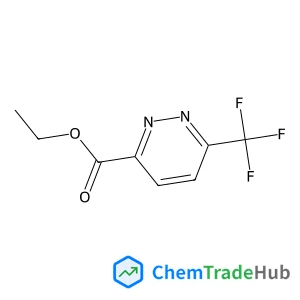
Ethyl 6-(trifluoromethyl)pyridazine-3-carboxylate
CAS Number:
1192155-06-8
Molecular Formula:
C8H7F3N2O2

Recommended Suppliers




Disclaimer
This page provides academic journal information for reference and research purposes only. We are not affiliated with any journal publishers and do not handle publication submissions. For publication-related inquiries, please contact the respective journal publishers directly.
If you notice any inaccuracies in the information displayed, please contact us at support@chemtradehub.com. We will promptly review and address your concerns.