












Kinetics of thermo-induced micelle-to-vesicle transitions in a catanionic surfactant system investigated by stopped-flow temperature jump
Literature Information
Publication Date
2011-06-13
DOI
10.1039/C0CP02856H
Impact Factor
3.676
Authors
Shiyong Liu
View Original
Abstract
The kinetics of thermo-induced micelle-to-vesicle transitions in a catanionic surfactant system consisting of sodium dodecyl sulfate (SDS) and dodecyltriethylammonium bromide (DEAB) were investigated by the stopped-flow temperature jump technique, which can achieve T-jumps within ∼2–3 ms. SDS/DEAB aqueous mixtures ([SDS]/[DEAB] = 2/1, 10 mM) undergo microstructural transitions from cylindrical micelles to vesicles when heated above 33 °C. Upon T-jumps from 20 °C to final temperatures in the range of 25–31 °C, relaxation processes associated with negative amplitudes can be ascribed to the dilution-induced structural rearrangement of cylindrical micelles and to the dissolution of non-equilibrium mixed aggregates. In the final temperature range of 33–43 °C the obtained dynamic traces can be fitted by single exponential functions, revealing one relaxation time (τ) in the range of 82–440 s, which decreases with increasing temperature. This may be ascribed to the transformation of floppy bilayer structures into precursor vesicles followed by further growth into final equilibrium vesiclesvia the exchange and insertion/expulsion of surfactant monomers. In the final temperature range of 45–55 °C, vesicles are predominant. Here T-jump relaxations revealed a distinctly different kinetic behavior. All dynamic traces can only be fitted with double exponential functions, yielding two relaxation times (τ1 and τ2), exhibiting a considerable decrease with increasing final temperatures. The fast process (τ1 ∼ 5.2–28.5 s) should be assigned to the formation of non-equilibrium precursor vesicles, and the slow process (τ2 ∼ 188–694 s) should be ascribed to their further growth into final equilibrium vesiclesvia the fusion/fission of precursor vesicles. In contrast, the reverse vesicle-to-micelle transition process induced by a negative T-jump from elevated temperatures to 20 °C occurs quite fast and almost completes within the stopped-flow dead time (∼2–3 ms).
Related Literature
Surfactant-templated zeolites for the production of active pharmaceutical intermediates
Noemi Linares, Francisco G. Cirujano, Dirk E. De Vos, J. García-Martínez
2019-10-10
Communication
DOI: 10.1039/C9CC06696A
Facile synthesis of yolk–shell structured Si–C nanocomposites as anodes for lithium-ion batteries
Lei Pan, Haibin Wang, Dacheng Gao, Shengyang Chen, Lei Tan, Lei Li
2014-04-14
Communication
DOI: 10.1039/C4CC01728E
A label-free fluorescence method for actin detection based on DNA-templated silver nanoclusters
Mingjian Chen, Changbei Ma, Ying Yan
2019-07-31
Paper
DOI: 10.1039/C9AY01154D
An electrostatic self-assembly route to prepare C-dots/gold nanoclusters for dual-emission ratiometric optical thermometry in living cells
Xiaojie Zhang, Chunxia Yin, Xun Zhang, Jiaping Zhang, Xinwai Wang, Jingwei Xin
2019-07-26
Paper
DOI: 10.1039/C9AY01115C
Label-free and ratiometric detection of microRNA based on target-induced catalytic hairpin assembly and two fluorescent dyes
Danyang Ji, Xi Mou
2019-09-13
Paper
DOI: 10.1039/C9AY01891C
Artificial repressors for controlling gene expression in bacteria‡
2012-11-19
Communication
DOI: 10.1039/C2CC37107C
The combined detection of ovarian cancer biomarkers HE4 and CA125 by a fluorescence and quantum dot dual-signal immunoassay
Shuange Yao, Wei Xiao, Hui Chen, Yong Tang, Qifang Song, Qubo Zheng, Ning Deng
2019-08-20
Paper
DOI: 10.1039/C9AY01454C
An investigation of new electrochemical sensors for curcumin detection: a mini review
Rosan Zokhtareh, Mostafa Rahimnejad
2019-08-06
Minireview
DOI: 10.1039/C9AY01352K
Study on the affinity characteristics of proteins on the immobilized metal affinity chromatography column
Rong Li, Peng Chen, Ning Zhang, Bin Chen
2019-08-15
Paper
DOI: 10.1039/C9AY01469A
You might also like
Compound Q&A
What are the main uses of 1H-Indazole-6-carbonitrile (CAS: 141290-59-7)?
1H-Indazole-6-carbonitrile finds applications in pharmaceuticals, where it serve...
141290-59-71H-Indazole-6-carbon...
Compound Q&A
How should waste containing Dioctyl (2E)-2-butenedioate (CAS: 2997-85-5) be handled?
Waste containing Dioctyl (2E)-2-butenedioate (CAS: 2997-85-5) should be collecte...
2997-85-5Dioctyl (2E)-2-buten...
Compound Q&A
What industries use Sodium [(1,2-benzoxazol-3-ylmethyl)sulfonyl]azanide (CAS: 68291-98-5)?
Sodium [(1,2-benzoxazol-3-ylmethyl)sulfonyl]azanide is primarily used in pharmac...
68291-98-5Sodium [(1,2-benzoxa...
Compound Q&A
Are there alternatives to Dimethyl 4-(4,4,5,5-tetramethyl-1,3,2-dioxaborolan-2-yl)-2,6-pyridinedicarboxylate (CAS: 741709-66-0) in synthesis?
Dimethyl 4-(4,4,5,5-tetramethyl-1,3,2-dioxaborolan-2-yl)-2,6-pyridinedicarboxyla...
741709-66-0Dimethyl 4-(4,4,5,5-...
Compound Q&A
How should waste containing 2-Fluoro-6-hydrazinopyridine (CAS: 80714-39-2) be handled?
Waste containing 2-Fluoro-6-hydrazinopyridine (CAS: 80714-39-2) should be manage...
80714-39-22-Fluoro-6-hydrazino...
Compound Q&A
What is 6-Formyl-2-pyridinecarboxylic acid (CAS: 499214-11-8)?
6-Formyl-2-pyridinecarboxylic acid is an organic compound with the molecular for...
499214-11-86-Formyl-2-pyridinec...
Compound Q&A
What is the market or research trend for 3-(3,4-dimethoxyphenyl)-2,5-dimethyl-N-(2-morpholin-4-ylethyl)pyrazolo[1,5-a]pyrimidin-7-amine (CAS: 900874-91-1)?
Research trends for this compound indicate a focus on its potential applications...
900874-91-13-(3,4-dimethoxyphen...
Compound Q&A
How is 9H-Tribenzo[b,d,f]azepine (CAS: 29875-73-8) typically synthesized?
9H-Tribenzo[b,d,f]azepine is typically synthesized via a multi-step process invo...
29875-73-89H-Tribenzo[b,d,f]az...
Compound Q&A
How is 1-Cyclopropyl-7-ethoxy-6-fluoro-8-methoxy-4-oxo-1,4-dihydro-3-quinolinecarboxylic acid (CAS: 1797982-51-4) typically synthesized?
1-Cyclopropyl-7-ethoxy-6-fluoro-8-methoxy-4-oxo-1,4-dihydro-3-quinolinecarboxyli...
1797982-51-41-Cyclopropyl-7-etho...
Compound Q&A
How should waste containing Methyl 3-oxo-1,2,3,4-tetrahydro-6-quinoxalinecarboxylate (CAS: 671820-52-3) be handled?
Waste containing Methyl 3-oxo-1,2,3,4-tetrahydro-6-quinoxalinecarboxylate (CAS: ...
671820-52-3Methyl 3-oxo-1,2,3,4...
Source Journal
Physical Chemistry Chemical Physics

CiteScore:
5.5
Self-citation Rate:
10.3%
Articles per Year:
3036
Physical Chemistry Chemical Physics (PCCP) is an international journal co-owned by 19 physical chemistry and physics societies from around the world. This journal publishes original, cutting-edge research in physical chemistry, chemical physics and biophysical chemistry. To be suitable for publication in PCCP, articles must include significant innovation and/or insight into physical chemistry; this is the most important criterion that reviewers and Editors will judge against when evaluating submissions. The journal has a broad scope and welcomes contributions spanning experiment, theory, computation and data science. Topical coverage includes spectroscopy, dynamics, kinetics, statistical mechanics, thermodynamics, electrochemistry, catalysis, surface science, quantum mechanics, quantum computing and machine learning. Interdisciplinary research areas such as polymers and soft matter, materials, nanoscience, energy, surfaces/interfaces, and biophysical chemistry are welcomed if they demonstrate significant innovation and/or insight into physical chemistry. Joined experimental/theoretical studies are particularly appreciated when complementary and based on up-to-date approaches.
Recommended Compounds
![Sodium (2Z)-7-{[(2R)-2-amino-2-carboxyethyl]sulfanyl}-2-({[(1S)-2,2-dimethylcyclopropyl]carbonyl}amino)-2-heptenoate structure](https://static.chemtradehub.com/structs/811/81129-83-1-441c.webp "Sodium (2Z)-7-{[(2R)-2-amino-2-carboxyethyl]sulfanyl}-2-({[(1S)-2,2-dimethylcyclopropyl]carbonyl}amino)-2-heptenoate structure")
Sodium (2Z)-7-{[(2R)-2-amino-2-carboxyethyl]sulfanyl}-2-({[(1S)-2,2-dimethylcyclopropyl]carbonyl}amino)-2-heptenoate
CAS Number:
81129-83-1
Molecular Formula:
C16H25N2NaO5S
![(1S)-1,5-Anhydro-1-[3-(1-benzothiophen-2-ylmethyl)-4-fluorophenyl]-D-glucitol structure](https://static.chemtradehub.com/structs/761/761423-87-4-dbeb.webp "(1S)-1,5-Anhydro-1-[3-(1-benzothiophen-2-ylmethyl)-4-fluorophenyl]-D-glucitol structure")
(1S)-1,5-Anhydro-1-[3-(1-benzothiophen-2-ylmethyl)-4-fluorophenyl]-D-glucitol
CAS Number:
761423-87-4
Molecular Formula:
C21H21FO5S

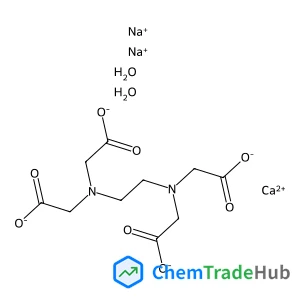
EthylenediaminetetraaceticacidcalciumDisodiumsalthydrate
CAS Number:
23411-34-9
Molecular Formula:
C10H16CaN2Na2O10
Recommended Suppliers






Disclaimer
This page provides academic journal information for reference and research purposes only. We are not affiliated with any journal publishers and do not handle publication submissions. For publication-related inquiries, please contact the respective journal publishers directly.
If you notice any inaccuracies in the information displayed, please contact us at support@chemtradehub.com. We will promptly review and address your concerns.