












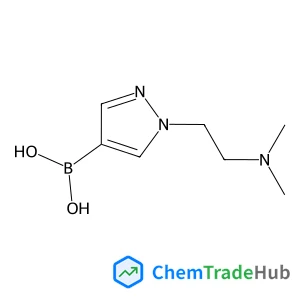
(1-(2-(Dimethylamino)ethyl)-1H-pyrazol-4-yl)boronic acid
CAS Number:
1086063-73-1
Molecular Formula:
C7H14BN3O2
Che-Hung Kuo, Hsun-Yun Chang, Chi-Ping Liu, Szu-Hsian Lee, Yun-Wen You
Self-assembled monolayer (SAM)-modified nano-materials are a new technology to deliver drug molecules. While the majority of these depend on covalently immobilizing molecules on the surface, it is proposed that electrostatic interactions may be used to deliver drugs. By tuning the surface potential of solid substrates with SAMs, drug molecules could be either absorbed on or desorbed from substrates through the difference in electrostatic interactions around the selected iso-electric point (IEP). In this work, the surface of silicon substrates was tailored with various ratios of 3-aminopropyltrimethoxysilane (APTMS) and 3-mercaptopropyltrimethoxysilane (MPTMS), which form amine- and thiol-bearing SAMs, respectively. The ratio of the functional groups on the silicon surface was quantified by X-ray photoelectron spectrometry (XPS); in general, the deposition kinetics of APTMS were found to be faster than those of MPTMS. Furthermore, for solutions with high MPTMS concentrations, the relative deposition rate of APTMS increased dramatically due to the acid–base reaction in the solution and subsequent electrostatic interactions between the molecules and the substrate. The zeta potential in aqueous electrolytes was determined with an electro-kinetic analyzer. By depositing SAMs of binary functional groups in varied ratios, the surface potential and IEP of silicon substrates could be fine-tuned. For <50% amine concentration in SAMs, the IEP changed linearly with the chemical composition from <2 to 7.18. For higher amine concentrations, the IEP slowly increased with concentration to 7.94 because the formation of hydrogen-bonding suppressed the subsequent protonation of amines.
Junran Lu, Lin Li, Hongxiao Cao, Yi Li, Jihong Yu
DOI: 10.1039/C6CP06217B
Andrin Doll, Gunnar Jeschke
DOI: 10.1039/C6CP07262C
Hyung Cheoul Shim, Donghan Kim, Dongwook Shin, Seungmin Hyun, Chang-Su Woo, Taehwan Yu, Jae-Pyoung Ahn
DOI: 10.1039/C6CP07574F
Yundong Zhou, Xiaoen Wang, Haijin Zhu, Michel Armand, Maria Forsyth, George W. Greene, Jennifer M. Pringle, Patrick C. Howlett
DOI: 10.1039/C6CP07415D
Thomas Buchecker, Sebastian Krickl, Robert Winkler, Isabelle Grillo, Pierre Bauduin, Didier Touraud, Arno Pfitzner, Werner Kunz
DOI: 10.1039/C6CP06696H
Vladimir A. Osipov
DOI: 10.1039/C6CP07496K
Ruge Quhe, Shenyan Feng, Ming Lei
DOI: 10.1039/C6CP06583J
Hongqin Li, Haijun Ye, Zheng Xu, Chuanyi Wang, Jiao Yin
DOI: 10.1039/C6CP07569J
Ranajit Saha, Sudip Pan, Gernot Frenking, Pratim K. Chattaraj, Gabriel Merino
DOI: 10.1039/C6CP06824C
2-(2-Chloroacetamido)-3-phenylpropanoic acid (CAS: 7765-11-9) is generally consi...
2-(Benzyloxy)-5-bromobenzoic acid can be handled safely if appropriate precautio...
(4-Methyl-1,2,5-oxadiazol-3-yl)methanamine hydrochloride is a chemical compound ...
2-(5-Hexylthiophen-2-yl)-4,4,5,5-tetramethyl-1,3,2-dioxaborolane (CAS: 917985-54...
While 4-(8-Methyl-9H-1,3-dioxolo[4,5-h][2,3]benzodiazepin-5-yl)benzenamine (CAS:...
The market for tert-butyl 3-hydroxy-4,5,7,8-tetrahydro-2H-pyrazolo[3,4-d]azepine...
Waste containing 3,5-Diamino-1H-pyrazole-4-carbonitrile (CAS: 6844-58-2) should ...
(6-Fluoro-3-pyridinyl)boronic acid can be synthesized through the reaction of 6-...
Dibenzyl carbonimidoylbiscarbamate (CAS: 10065-79-9) finds applications in vario...
The market for (beta,beta,2,3,4,5,6-~2~H_7_)Phenylalanine (CAS: 74228-83-4) is g...

Physical Chemistry Chemical Physics (PCCP) is an international journal co-owned by 19 physical chemistry and physics societies from around the world. This journal publishes original, cutting-edge research in physical chemistry, chemical physics and biophysical chemistry. To be suitable for publication in PCCP, articles must include significant innovation and/or insight into physical chemistry; this is the most important criterion that reviewers and Editors will judge against when evaluating submissions. The journal has a broad scope and welcomes contributions spanning experiment, theory, computation and data science. Topical coverage includes spectroscopy, dynamics, kinetics, statistical mechanics, thermodynamics, electrochemistry, catalysis, surface science, quantum mechanics, quantum computing and machine learning. Interdisciplinary research areas such as polymers and soft matter, materials, nanoscience, energy, surfaces/interfaces, and biophysical chemistry are welcomed if they demonstrate significant innovation and/or insight into physical chemistry. Joined experimental/theoretical studies are particularly appreciated when complementary and based on up-to-date approaches.
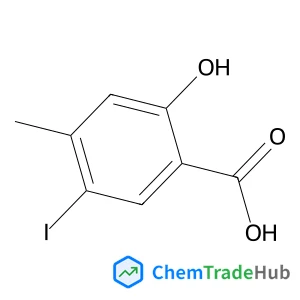
![{3-[Bis(4-hydroxyphenyl)methyl]-1-[2-(dimethylamino)ethyl]-1H-indol-2-yl}[4-(2-chlorophenyl)-1-piperazinyl]methanone structure](https://static.chemtradehub.com/structs/170/170365-25-0-e4d7.webp "{3-[Bis(4-hydroxyphenyl)methyl]-1-[2-(dimethylamino)ethyl]-1H-indol-2-yl}[4-(2-chlorophenyl)-1-piperazinyl]methanone structure")
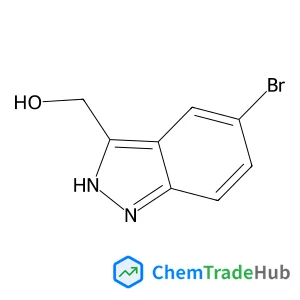
![2-[(E)-(2-Methoxyphenyl)diazenyl]-3-oxo-N-(2-oxo-2,3-dihydro-1H-benzimidazol-5-yl)butanamide structure](https://static.chemtradehub.com/structs/821/82199-12-0-f1d0.webp "2-[(E)-(2-Methoxyphenyl)diazenyl]-3-oxo-N-(2-oxo-2,3-dihydro-1H-benzimidazol-5-yl)butanamide structure")



