












Collision-induced gas-phase reactions of perhalogenated closo-dodecaborate clusters – a comparative study
Literature Information
Publication Date
2011-02-10
DOI
10.1039/C0CP02386H
Impact Factor
3.676
Authors
Jonas Warneke, Thomas Dülcks, Carsten Knapp, Detlef Gabel
View Original
Abstract
The gas phase reactivity of perhalogenated closo-dodecaborate clusters [B12X12]2− (X = F, Cl, Br, I) with N-tetraalkylated ammonium counter ions was investigated by electrospray ionization ion trap mass spectrometry (ESI-IT-MS). Collisions with the background gases introduced a broad variety of gas phase reactions. This study represents the first experimental approach to a new class of boron-rich boron clusters that are not accessible in the condensed phase. The anionic ion pair [B12X12 + N(CnH2n+1)4]− is generally found as the ion of highest mass. Its reaction sequence starts with an alkyl transfer from the ammonium ion to the dodecaborate cluster. Subsequently, the alkylated intermediate [B12X12 + CnH2n+1]− decomposes to give very reactive ions of the general formula [B12X11]−. These ions possess a free boron vertex and immediately bind to the residual gases N2 and H2O in the ion trap by formation of the corresponding adducts [B12X11 + N2]− and [B12X11 + H2O]−. Subsequent fragmentations of the water adduct repetitively substitute halogen atoms by hydroxyl groups. The fragmentation process of the free anion [B12X12]2− depends on the applied excitation energy and on the halogen substituent X. A radical dehalogenation of the B12 unit is observed for X = I, whereas for X = Cl or F the loss of small molecules (mainly BX3) dominates. The different reaction behavior is explained by the different electron affinity of the halogens and the strength of the boron–halogen-bonds. Surprisingly, isolation of the fragment ion [B12I9]− in the ion trap yields the highly stable [B24I18]2− dianion. This observation suggests a reaction between two negative ions in the gas phase.
Recommended Journals
Related Literature
A statistical description of the evolution of cloud condensation nuclei activity during the heterogeneous oxidation of squalane and bis(2-ethylhexyl) sebacate aerosol by hydroxyl radicals
Christopher W. Harmon, Christopher R. Ruehl, Christopher D. Cappa, Kevin R. Wilson
2013-05-02
Paper
DOI: 10.1039/C3CP50347J
Study on electrochemiluminescence spectra of ZnO flakes
Lei Wang, Qiaoli Yue, Haibo Li, Shuling Xu, Jifeng Liu
2013-04-26
Communication
DOI: 10.1039/C3CP51240A
Ambient reaction kinetics of atmospheric oxygenated organics with the OH radical: a computational methodology study
Jonas Elm, Solvejg Jørgensen, Merete Bilde, Kurt V. Mikkelsen
2013-04-17
Paper
DOI: 10.1039/C3CP50192B
Structural and electronic properties of Li8ZrO6 and its CO2 capture capabilities: an ab initio thermodynamic approach
Yuhua Duan
2013-04-18
Paper
DOI: 10.1039/C3CP51101D
Changing the shape of molecular ions: photoisomerization action spectroscopy in the gas phase
B. D. Adamson, N. J. A. Coughlan, R. E. Continetti, E. J. Bieske
2013-05-08
Paper
DOI: 10.1039/C3CP51393A
Theoretical prediction of p-type transparent conductivity in Zn-doped TiO2
Xiaoping Han
2013-04-15
Paper
DOI: 10.1039/C3CP44031A
In situ surface-enhanced Raman spectroscopic study of formic acid electrooxidation on spontaneously deposited platinum on gold
Ranjani Muralidharan, Michael McIntosh, Xiao Li
2013-04-18
Paper
DOI: 10.1039/C3CP51128F
Spontaneous sulfur dioxide activation by Group V metal (V, Nb, Ta) atoms in excess argon at cryogenic temperatures
Xing Liu, Xuefeng Wang, Qiang Wang, Lester Andrews
2013-04-22
Paper
DOI: 10.1039/C3CP51137E
You might also like
Compound Q&A
How is Ethyl 4-chlorothieno[2,3-b]pyridine-5-carboxylate (CAS: 59713-58-5) typically synthesized?
Ethyl 4-chlorothieno[2,3-b]pyridine-5-carboxylate (CAS: 59713-58-5) can be synth...
59713-58-5Ethyl 4-chlorothieno...
Compound Q&A
What regulatory guidelines apply to 5-Methyl-1H-indole-3-carbaldehyde (CAS: 52562-50-2)?
5-Methyl-1H-indole-3-carbaldehyde (CAS: 52562-50-2) is subject to various regula...
52562-50-25-Methyl-1H-indole-3...
Compound Q&A
What are the physical and chemical properties of (1,3-Dimethyl-2,4-dioxo-1,2,3,4-tetrahydro-5-pyrimidinyl)boronic acid (CAS: 223418-73-3)?
(1,3-Dimethyl-2,4-dioxo-1,2,3,4-tetrahydro-5-pyrimidinyl)boronic acid is a white...
223418-73-3(1,3-Dimethyl-2,4-di...
Compound Q&A
How should waste containing Sulfocostunolide A (CAS: 1016983-51-9) be handled?
Waste containing Sulfocostunolide A (CAS: 1016983-51-9) should be handled with c...
1016983-51-9Sulfocostunolide A
Compound Q&A
What precautions should be taken when handling Murraxocin (CAS: 88478-44-8)?
When handling Murraxocin (CAS: 88478-44-8), ensure proper personal protective eq...
88478-44-8Murraxocin
Compound Q&A
What are the physical and chemical properties of Formvar (CAS: 63148-64-1)?
Formvar (CAS: 63148-64-1) is an alkyd resin characterized by a high molecular we...
63148-64-1Formvar(R)
Compound Q&A
Is (S)-4-benzyl-2-((benzyloxy)methyl)morpholine (CAS: 205242-66-6) safe?
(S)-4-benzyl-2-((benzyloxy)methyl)morpholine is generally safe when handled with...
205242-66-6(S)-4-benzyl-2-((ben...
Compound Q&A
What industries use Methyl 1-(5-bromo-2-pyrimidinyl)cyclopropanecarboxylate (CAS: 1447607-69-3)?
Methyl 1-(5-bromo-2-pyrimidinyl)cyclopropanecarboxylate (CAS: 1447607-69-3) is p...
1447607-69-3Methyl 1-(5-bromo-2-...
Compound Q&A
Is 2-Methyl-1-phenyl-1-propanamine hydrochloride (CAS: 24290-47-9) safe?
2-Methyl-1-phenyl-1-propanamine hydrochloride (CAS: 24290-47-9) is generally con...
24290-47-92-Methyl-1-phenyl-1-...
Compound Q&A
How is 3-(4-Bromophenyl)-2-methylpropanoic acid (CAS: 66735-01-1) typically synthesized?
3-(4-Bromophenyl)-2-methylpropanoic acid is synthesized through a multi-step pro...
66735-01-13-(4-Bromophenyl)-2-...
Source Journal
Physical Chemistry Chemical Physics

CiteScore:
5.5
Self-citation Rate:
10.3%
Articles per Year:
3036
Physical Chemistry Chemical Physics (PCCP) is an international journal co-owned by 19 physical chemistry and physics societies from around the world. This journal publishes original, cutting-edge research in physical chemistry, chemical physics and biophysical chemistry. To be suitable for publication in PCCP, articles must include significant innovation and/or insight into physical chemistry; this is the most important criterion that reviewers and Editors will judge against when evaluating submissions. The journal has a broad scope and welcomes contributions spanning experiment, theory, computation and data science. Topical coverage includes spectroscopy, dynamics, kinetics, statistical mechanics, thermodynamics, electrochemistry, catalysis, surface science, quantum mechanics, quantum computing and machine learning. Interdisciplinary research areas such as polymers and soft matter, materials, nanoscience, energy, surfaces/interfaces, and biophysical chemistry are welcomed if they demonstrate significant innovation and/or insight into physical chemistry. Joined experimental/theoretical studies are particularly appreciated when complementary and based on up-to-date approaches.
Recommended Compounds
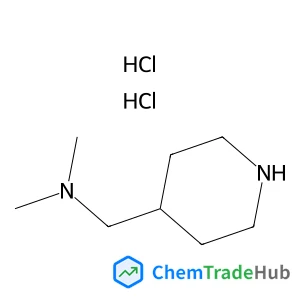
N,N-dimethyl(piperidin-4-yl)methanamine hydrochloride
CAS Number:
172281-72-0
Molecular Formula:
C8H20Cl2N2
![Sodium 6-amino-3-[(E)-{4-[(E)-(4-aminophenyl)diazenyl]-2-methoxy-5-methylphenyl}diazenyl]-4-hydroxy-2-naphthalenesulfonate structure](https://static.chemtradehub.com/structs/294/2945-96-2-092f.webp "Sodium 6-amino-3-[(E)-{4-[(E)-(4-aminophenyl)diazenyl]-2-methoxy-5-methylphenyl}diazenyl]-4-hydroxy-2-naphthalenesulfonate structure")
Sodium 6-amino-3-[(E)-{4-[(E)-(4-aminophenyl)diazenyl]-2-methoxy-5-methylphenyl}diazenyl]-4-hydroxy-2-naphthalenesulfonate
CAS Number:
2945-96-2
Molecular Formula:
C24H21N6NaO5S

Recommended Suppliers








Disclaimer
This page provides academic journal information for reference and research purposes only. We are not affiliated with any journal publishers and do not handle publication submissions. For publication-related inquiries, please contact the respective journal publishers directly.
If you notice any inaccuracies in the information displayed, please contact us at support@chemtradehub.com. We will promptly review and address your concerns.