












Influence of moisture content and temperature on the dielectric permittivity of zeolite NaY
Literature Information
Publication Date
2011-01-13
DOI
10.1039/C0CP02264K
Impact Factor
3.676
Authors
Markus Kraus, Frank-Dieter Kopinke, Ulf Roland
View Original
Abstract
The influence of moisture content and temperature on the dielectric permittivity (complex resistance) of the zeolite NaY was investigated for a fixed radio frequency (RF) of 13.56 MHz. Sealed glass tubes containing zeolite with defined moisture contents were simultaneously heated in a homogeneous high-frequency electromagnetic field. The dielectric loss factor, i.e. the imaginary part of the permittivity εr″, was calculated from the obtained heating rates. On the basis of the resulting values for various moisture contents and temperatures and utilizing the knowledge of elementary cation hopping processes occurring at low and high frequencies (LF and HF) from the literature, a new model was introduced for the description of dielectric radio-frequency heating of moist zeolites. Since adsorption of water is correlated with an enhancement of the activation energy of the cations on SII sites, cations in the zeolite NaY are moving from SII sites to unoccupied SIII sites when the water content is increasing. Thus, four different transfer processes for the cations have to be considered in total. On the basis of these assumptions, the resulting dielectric loss factor εr″ as a function of water content and temperature for a fixed frequency of 13.56 MHz was modelled. The experimental data are in good agreement with the values obtained from the model. Especially, the measured pronounced maximum of dielectric loss at temperatures below 300 °C and water contents below 4 wt.-% can be explained by the new model.
Related Literature
The strongest CO binding and the highest C–O stretching frequency
Ranajit Saha, Sudip Pan, Gernot Frenking, Pratim K. Chattaraj, Gabriel Merino
2016-12-14
Paper
DOI: 10.1039/C6CP06824C
Unravelling the early photochemical behavior of (8-substituted-7-hydroxyquinolinyl)methyl acetates through electronic structure theory and ultrafast transient absorption spectroscopy
Jan-Michael Mewes, Kyle T. Harris, David Lee Phillips, Andreas Dreuw
2016-11-30
Paper
DOI: 10.1039/C6CP05499D
Adsorption of CO on the rutile TiO2(110) surface: a dispersion-corrected density functional theory study
João P. Prates Ramalho, Francesc Illas, José R. B. Gomes
2016-12-20
Paper
DOI: 10.1039/C6CP06971A
Structural influence of proteins upon adsorption to MoS2 nanomaterials: comparison of MoS2 force field parameters
Zonglin Gu, Phil De Luna, Zaixing Yang
2016-12-15
Paper
DOI: 10.1039/C6CP05260F
Second-order nonlinear optical properties of bulk GeC polytypes, g-GeC and corresponding nanotubes: first-principles calculations
Dongshan Wei
2016-12-14
Paper
DOI: 10.1039/C6CP07573H
Oxidation, defunctionalization and catalyst life cycle of carbon nanotubes: a Raman spectroscopy view
Anton S. Ivanov, Konstantin I. Maslakov, Alexander V. Egorov, Zexiang Shen
2016-12-12
Paper
DOI: 10.1039/C6CP04657F
OH production from the photolysis of isoprene-derived peroxy radicals: cross-sections, quantum yields and atmospheric implications
Robert F. Hansen, Tom R. Lewis, Lee Graham
2016-12-12
Paper
DOI: 10.1039/C6CP06718B
Distant ultrafast energy transfer in a trimetallic {Ru–Ru–Cr} complex facilitated by hole delocalization
Alejandro Cadranel, Jaired E. Tate, Paola S. Oviedo, Shiori Yamazaki, José H. Hodak, Luis M. Baraldo, Valeria D. Kleiman
2016-12-20
Paper
DOI: 10.1039/C6CP06562G
What will freestanding borophene nanoribbons look like? An analysis of their possible structures, magnetism and transport properties
A. García-Fuente, J. Carrete, A. Vega, L. J. Gallego
2016-11-29
Paper
DOI: 10.1039/C6CP07432D
You might also like
Compound Q&A
Is 2-(2-chloroacetamido)-3-phenylpropanoic acid (CAS: 7765-11-9) safe?
2-(2-Chloroacetamido)-3-phenylpropanoic acid (CAS: 7765-11-9) is generally consi...
7765-11-92-(2-chloroacetamido...
Compound Q&A
Is 2-(Benzyloxy)-5-bromobenzoic acid (CAS: 62176-31-2) safe?
2-(Benzyloxy)-5-bromobenzoic acid can be handled safely if appropriate precautio...
62176-31-22-(Benzyloxy)-5-brom...
Compound Q&A
What is (4-Methyl-1,2,5-oxadiazol-3-yl)methanamine hydrochloride (CAS: 1159825-48-5)?
(4-Methyl-1,2,5-oxadiazol-3-yl)methanamine hydrochloride is a chemical compound ...
1159825-48-5(4-Methyl-1,2,5-oxad...
Compound Q&A
What is 2-(5-Hexylthiophen-2-yl)-4,4,5,5-tetramethyl-1,3,2-dioxaborolane (CAS: 917985-54-7)?
2-(5-Hexylthiophen-2-yl)-4,4,5,5-tetramethyl-1,3,2-dioxaborolane (CAS: 917985-54...
917985-54-72-(5-Hexylthiophen-2...
Compound Q&A
Are there alternatives to 4-(8-Methyl-9H-1,3-dioxolo[4,5-h][2,3]benzodiazepin-5-yl)benzenamine (CAS: 102771-26-6) in synthesis?
While 4-(8-Methyl-9H-1,3-dioxolo[4,5-h][2,3]benzodiazepin-5-yl)benzenamine (CAS:...
102771-26-64-(8-Methyl-9H-1,3-d...
Compound Q&A
What is the market or research trend for tert-butyl 3-hydroxy-4,5,7,8-tetrahydro-2H-pyrazolo[3,4-d]azepine-6-carboxylate (CAS: 851376-80-2)?
The market for tert-butyl 3-hydroxy-4,5,7,8-tetrahydro-2H-pyrazolo[3,4-d]azepine...
851376-80-2tert-butyl 3-hydroxy...
Compound Q&A
How should waste containing 3,5-Diamino-1H-pyrazole-4-carbonitrile (CAS: 6844-58-2) be handled?
Waste containing 3,5-Diamino-1H-pyrazole-4-carbonitrile (CAS: 6844-58-2) should ...
6844-58-23,5-Diamino-1H-pyraz...
Compound Q&A
How is (6-Fluoro-3-pyridinyl)boronic acid (CAS: 351019-18-6) typically synthesized?
(6-Fluoro-3-pyridinyl)boronic acid can be synthesized through the reaction of 6-...
351019-18-6(6-Fluoro-3-pyridiny...
Compound Q&A
What industries use Dibenzyl carbonimidoylbiscarbamate (CAS: 10065-79-9)?
Dibenzyl carbonimidoylbiscarbamate (CAS: 10065-79-9) finds applications in vario...
10065-79-9Dibenzyl carbonimido...
Compound Q&A
What is the market or research trend for (beta,beta,2,3,4,5,6-~2~H_7_)Phenylalanine (CAS: 74228-83-4)?
The market for (beta,beta,2,3,4,5,6-~2~H_7_)Phenylalanine (CAS: 74228-83-4) is g...
74228-83-4(beta,beta,2,3,4,5,6...
Source Journal
Physical Chemistry Chemical Physics

CiteScore:
5.5
Self-citation Rate:
10.3%
Articles per Year:
3036
Physical Chemistry Chemical Physics (PCCP) is an international journal co-owned by 19 physical chemistry and physics societies from around the world. This journal publishes original, cutting-edge research in physical chemistry, chemical physics and biophysical chemistry. To be suitable for publication in PCCP, articles must include significant innovation and/or insight into physical chemistry; this is the most important criterion that reviewers and Editors will judge against when evaluating submissions. The journal has a broad scope and welcomes contributions spanning experiment, theory, computation and data science. Topical coverage includes spectroscopy, dynamics, kinetics, statistical mechanics, thermodynamics, electrochemistry, catalysis, surface science, quantum mechanics, quantum computing and machine learning. Interdisciplinary research areas such as polymers and soft matter, materials, nanoscience, energy, surfaces/interfaces, and biophysical chemistry are welcomed if they demonstrate significant innovation and/or insight into physical chemistry. Joined experimental/theoretical studies are particularly appreciated when complementary and based on up-to-date approaches.
Recommended Compounds
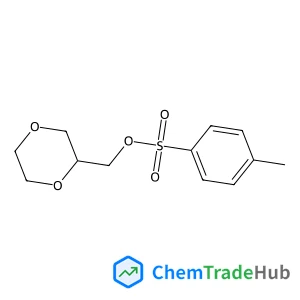
(S)-(1,4-Dioxan-2-yl)methyl 4-methylbenzenesulfonate
CAS Number:
917882-64-5
Molecular Formula:
C12H16O5S
Recommended Suppliers




Disclaimer
This page provides academic journal information for reference and research purposes only. We are not affiliated with any journal publishers and do not handle publication submissions. For publication-related inquiries, please contact the respective journal publishers directly.
If you notice any inaccuracies in the information displayed, please contact us at support@chemtradehub.com. We will promptly review and address your concerns.