












Determination of differential cross sections and kinetic energy release of co-products from central sliced images in photo-initiated dynamic processes
Literature Information
Publication Date
2011-02-07
DOI
10.1039/C0CP02158J
Impact Factor
3.676
Authors
Kuo-mei Chen, Yu-wei Chen
View Original
Abstract
For photo-initiated inelastic and reactive collisions, dynamic information can be extracted from central sliced images of state-selected Newton spheres of product species. An analysis framework has been established to determine differential cross sections and the kinetic energy release of co-products from experimental images. When one of the reactants exhibits a high recoil speed in a photo-initiated dynamic process, the present theory can be employed to analyze central sliced images from ion imaging or three-dimensional sliced fluorescence imaging experiments. It is demonstrated that the differential cross section of a scattering process can be determined from the central sliced image by a double Legendre moment analysis, for either a fixed or continuously distributed recoil speeds in the center-of-mass reference frame. Simultaneous equations which lead to the determination of the kinetic energy release of co-products can be established from the second-order Legendre moment of the experimental image, as soon as the differential cross section is extracted. The intensity distribution of the central sliced image, along with its outer and inner ring sizes, provide all the clues to decipher the differential cross section and the kinetic energy release of co-products.
Recommended Journals
Related Literature
Band structure engineering in a MoS2/PbI2 van der Waals heterostructure via an external electric field
Yaqiang Ma, Xu Zhao, Tianxing Wang, Wei Li, Shanshan Chang, Yi Li, Mingyu Zhao
2016-09-19
Paper
DOI: 10.1039/C6CP06046C
An atomistic mechanism study of GaN step-flow growth in vicinal m-plane orientations
Zhun Liu, Ru-Zhi Wang, Peter Zapol
2016-10-12
Paper
DOI: 10.1039/C6CP04479D
Understanding charge transport in non-doped pristine and surface passivated hematite (Fe2O3) nanorods under front and backside illumination in the context of light induced water splitting
Prince Saurabh Bassi, Li Xianglin, Yanan Fang, Joachim Say Chye Loo, Lydia Helena Wong
2016-10-10
Communication
DOI: 10.1039/C6CP05379C
Design, synthesis and DSSC performance of o-fluorine substituted phenylene spacer sensitizers: effect of TiO2 thickness variation
Telugu Bhim Raju, Jayraj V. Vaghasiya, Mohammad Adil Afroz, Saurabh S. Soni
2016-09-16
Paper
DOI: 10.1039/C6CP05641E
Tunability of the two-dimensional electron gas at the LaAlO3/SrTiO3 interface by strain-induced ferroelectricity
Wissam A. Saidi
2016-09-21
Paper
DOI: 10.1039/C6CP04769F
Exploring the mechanism of F282L mutation-caused constitutive activity of GPCR by a computational study
Nan Gao, Tao Liang, Yuan Yuan, Xiuchan Xiao, Yihuan Zhao, Yanzhi Guo, Menglong Li, Xuemei Pu
2016-09-16
Paper
DOI: 10.1039/C6CP03710K
The magnetic structure of β-cobalt hydroxide and the effect of spin-orientation
Diego Hunt, Gastón Garbarino, Valeria Ferrari, Matías Jobbagy, Damian A. Scherlis
2016-10-07
Paper
DOI: 10.1039/C6CP06006D
A new understanding of the photocatalytic mechanism of the direct Z-scheme g-C3N4/TiO2 heterostructure
Bei Cheng
2016-10-21
Paper
DOI: 10.1039/C6CP06147H
Ultrafast ion migration in hybrid perovskite polycrystalline thin films under light and suppression in single crystals
Qi Wang, Qingfeng Dong, Yanjun Fang, Jinsong Huang
2016-10-13
Paper
DOI: 10.1039/C6CP06496E
Catalytic aspects of metallophthalocyanines adsorbed on gold-electrode. Theoretical exploration of the binding nature role
Paulina Sierra-Rosales, Alvaro Muñoz-Castro, José Heráclito Zagal, Fernando Mendizábal
2016-10-04
Paper
DOI: 10.1039/C6CP06156G
You might also like
Compound Q&A
How is Ethyl 4-chlorothieno[2,3-b]pyridine-5-carboxylate (CAS: 59713-58-5) typically synthesized?
Ethyl 4-chlorothieno[2,3-b]pyridine-5-carboxylate (CAS: 59713-58-5) can be synth...
59713-58-5Ethyl 4-chlorothieno...
Compound Q&A
What regulatory guidelines apply to 5-Methyl-1H-indole-3-carbaldehyde (CAS: 52562-50-2)?
5-Methyl-1H-indole-3-carbaldehyde (CAS: 52562-50-2) is subject to various regula...
52562-50-25-Methyl-1H-indole-3...
Compound Q&A
What are the physical and chemical properties of (1,3-Dimethyl-2,4-dioxo-1,2,3,4-tetrahydro-5-pyrimidinyl)boronic acid (CAS: 223418-73-3)?
(1,3-Dimethyl-2,4-dioxo-1,2,3,4-tetrahydro-5-pyrimidinyl)boronic acid is a white...
223418-73-3(1,3-Dimethyl-2,4-di...
Compound Q&A
How should waste containing Sulfocostunolide A (CAS: 1016983-51-9) be handled?
Waste containing Sulfocostunolide A (CAS: 1016983-51-9) should be handled with c...
1016983-51-9Sulfocostunolide A
Compound Q&A
What precautions should be taken when handling Murraxocin (CAS: 88478-44-8)?
When handling Murraxocin (CAS: 88478-44-8), ensure proper personal protective eq...
88478-44-8Murraxocin
Compound Q&A
What are the physical and chemical properties of Formvar (CAS: 63148-64-1)?
Formvar (CAS: 63148-64-1) is an alkyd resin characterized by a high molecular we...
63148-64-1Formvar(R)
Compound Q&A
Is (S)-4-benzyl-2-((benzyloxy)methyl)morpholine (CAS: 205242-66-6) safe?
(S)-4-benzyl-2-((benzyloxy)methyl)morpholine is generally safe when handled with...
205242-66-6(S)-4-benzyl-2-((ben...
Compound Q&A
What industries use Methyl 1-(5-bromo-2-pyrimidinyl)cyclopropanecarboxylate (CAS: 1447607-69-3)?
Methyl 1-(5-bromo-2-pyrimidinyl)cyclopropanecarboxylate (CAS: 1447607-69-3) is p...
1447607-69-3Methyl 1-(5-bromo-2-...
Compound Q&A
Is 2-Methyl-1-phenyl-1-propanamine hydrochloride (CAS: 24290-47-9) safe?
2-Methyl-1-phenyl-1-propanamine hydrochloride (CAS: 24290-47-9) is generally con...
24290-47-92-Methyl-1-phenyl-1-...
Compound Q&A
How is 3-(4-Bromophenyl)-2-methylpropanoic acid (CAS: 66735-01-1) typically synthesized?
3-(4-Bromophenyl)-2-methylpropanoic acid is synthesized through a multi-step pro...
66735-01-13-(4-Bromophenyl)-2-...
Source Journal
Physical Chemistry Chemical Physics

CiteScore:
5.5
Self-citation Rate:
10.3%
Articles per Year:
3036
Physical Chemistry Chemical Physics (PCCP) is an international journal co-owned by 19 physical chemistry and physics societies from around the world. This journal publishes original, cutting-edge research in physical chemistry, chemical physics and biophysical chemistry. To be suitable for publication in PCCP, articles must include significant innovation and/or insight into physical chemistry; this is the most important criterion that reviewers and Editors will judge against when evaluating submissions. The journal has a broad scope and welcomes contributions spanning experiment, theory, computation and data science. Topical coverage includes spectroscopy, dynamics, kinetics, statistical mechanics, thermodynamics, electrochemistry, catalysis, surface science, quantum mechanics, quantum computing and machine learning. Interdisciplinary research areas such as polymers and soft matter, materials, nanoscience, energy, surfaces/interfaces, and biophysical chemistry are welcomed if they demonstrate significant innovation and/or insight into physical chemistry. Joined experimental/theoretical studies are particularly appreciated when complementary and based on up-to-date approaches.
Recommended Compounds
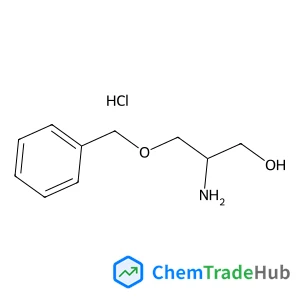
(R)-2-amino-3-(benzyloxy)propan-1-ol hydrochloride
CAS Number:
58577-95-0
Molecular Formula:
C10H16ClNO2
Recommended Suppliers




Disclaimer
This page provides academic journal information for reference and research purposes only. We are not affiliated with any journal publishers and do not handle publication submissions. For publication-related inquiries, please contact the respective journal publishers directly.
If you notice any inaccuracies in the information displayed, please contact us at support@chemtradehub.com. We will promptly review and address your concerns.