












On the nature of OH-stretching vibrations in hydrogen-bonded chains: Pump frequency dependent vibrational lifetime
Literature Information
Publication Date
2011-01-24
DOI
10.1039/C0CP02143A
Impact Factor
3.676
Authors
Stephan Knop, Thomas La Cour Jansen, Jörg Lindner, Peter Vöhringer
View Original
Abstract
Two-dimensional infrared spectroscopy was carried out on stereoselectively synthesized polyalcohols. Depending upon the stereochemical orientation of their hydroxyl groups, the polyols can either feature linear chains of hydrogen bonds that are stable for extended periods of time or they can display ultrafast dynamics of hydrogen-bond breakage and formation. In the former case, the OH-stretching vibrations and their transition dipoles are substantially coupled, hence prior to vibrational relaxation, the initial OH-stretching excitation is rapidly redistributed among the set of hydroxyl-groups constituting the hydrogen-bonded chain. This redistribution is responsible for an ultrafast loss of memory regarding the frequency of initial excitation and as a result, a pump-frequency independent vibrational lifetime is observed. In contrast, in the latter case, the coupling of the OH-groups and their transition dipoles is much weaker. Therefore, the OH-stretching excitation remains localized on the initially excited oscillator for the time scale of vibrational energy relaxation. As a result inhomogeneous relaxation dynamics with a pump-frequency-dependent lifetime are observed.
Related Literature
Theoretical investigation of gas-phase molecular complex formation between 2-hydroxy thiophenol and a water molecule
Debojit Kumar Deb, Biplab Sarkar
2016-12-20
Paper
DOI: 10.1039/C6CP08442G
Is energy transfer limiting multiphotochromism? answers from ab initio quantifications
Roberto Russo, Lorenzo Cupellini, Benedetta Mennucci
2016-12-19
Paper
DOI: 10.1039/C6CP07458H
The intrinsic stabilities and structures of alkali metal cationized guanine quadruplexes
M. Azargun, Y. Jami-Alahmadi, T. D. Fridgen
2016-11-25
Paper
DOI: 10.1039/C6CP07301H
Raman optical activity of tetra-alanine in the poly(l-proline) II type peptide conformation
Masakazu Furuta, Tomotsumi Fujisawa, Hiroyasu Urago, Takahiro Eguchi, Takahito Shingae, Satoshi Takahashi, Ewan W. Blanch, Masashi Unno
2016-12-16
Paper
DOI: 10.1039/C6CP07828A
Polarization loss in the organic ferroelectric trialkylbenzene-1,3,5-tricarboxamide (BTA)
A. V. Gorbunov, X. Meng, I. Urbanaviciute, T. Putzeys, M. Wübbenhorst, R. P. Sijbesma
2016-12-23
Paper
DOI: 10.1039/C6CP08015D
A density functional theory study of the carbon-coating effects on lithium iron borate battery electrodes
Simon Loftager, Juan María García-Lastra, Tejs Vegge
2016-12-08
Paper
DOI: 10.1039/C6CP06312H
Structural phase transitions of (Bi1−xSbx)2(Te1−ySey)3 compounds under high pressure and the influence of the atomic radius on the compression processes of tetradymites
Zhenhai Yu, Yong Wang, John Schneeloch, Chunyu Li, Ruidan Zhong, Zhiguo Liu, Genda Gu
2016-12-14
Paper
DOI: 10.1039/C6CP07324G
Uniform and perfectly linear current–voltage characteristics of nitrogen-doped armchair graphene nanoribbons for nanowires
Lingling Liu, Xiao-Fei Li, Qing Yan, Qin-Kun Li, Xiang-Hua Zhang, Mingsen Deng, Qi Qiu
2016-11-29
Communication
DOI: 10.1039/C6CP06640B
Charge ordering and scattering pre-peaks in ionic liquids and alcohols
2016-12-06
Paper
DOI: 10.1039/C6CP07834F
“Energy Relay Center” for doped mechanoluminescence materials: a case study on Cu-doped and Mn-doped CaZnOS
Bolong Huang, Dengfeng Peng, Caofeng Pan
2016-11-22
Paper
DOI: 10.1039/C6CP07472C
You might also like
Compound Q&A
Is 2-(2-chloroacetamido)-3-phenylpropanoic acid (CAS: 7765-11-9) safe?
2-(2-Chloroacetamido)-3-phenylpropanoic acid (CAS: 7765-11-9) is generally consi...
7765-11-92-(2-chloroacetamido...
Compound Q&A
Is 2-(Benzyloxy)-5-bromobenzoic acid (CAS: 62176-31-2) safe?
2-(Benzyloxy)-5-bromobenzoic acid can be handled safely if appropriate precautio...
62176-31-22-(Benzyloxy)-5-brom...
Compound Q&A
What is (4-Methyl-1,2,5-oxadiazol-3-yl)methanamine hydrochloride (CAS: 1159825-48-5)?
(4-Methyl-1,2,5-oxadiazol-3-yl)methanamine hydrochloride is a chemical compound ...
1159825-48-5(4-Methyl-1,2,5-oxad...
Compound Q&A
What is 2-(5-Hexylthiophen-2-yl)-4,4,5,5-tetramethyl-1,3,2-dioxaborolane (CAS: 917985-54-7)?
2-(5-Hexylthiophen-2-yl)-4,4,5,5-tetramethyl-1,3,2-dioxaborolane (CAS: 917985-54...
917985-54-72-(5-Hexylthiophen-2...
Compound Q&A
Are there alternatives to 4-(8-Methyl-9H-1,3-dioxolo[4,5-h][2,3]benzodiazepin-5-yl)benzenamine (CAS: 102771-26-6) in synthesis?
While 4-(8-Methyl-9H-1,3-dioxolo[4,5-h][2,3]benzodiazepin-5-yl)benzenamine (CAS:...
102771-26-64-(8-Methyl-9H-1,3-d...
Compound Q&A
What is the market or research trend for tert-butyl 3-hydroxy-4,5,7,8-tetrahydro-2H-pyrazolo[3,4-d]azepine-6-carboxylate (CAS: 851376-80-2)?
The market for tert-butyl 3-hydroxy-4,5,7,8-tetrahydro-2H-pyrazolo[3,4-d]azepine...
851376-80-2tert-butyl 3-hydroxy...
Compound Q&A
How should waste containing 3,5-Diamino-1H-pyrazole-4-carbonitrile (CAS: 6844-58-2) be handled?
Waste containing 3,5-Diamino-1H-pyrazole-4-carbonitrile (CAS: 6844-58-2) should ...
6844-58-23,5-Diamino-1H-pyraz...
Compound Q&A
How is (6-Fluoro-3-pyridinyl)boronic acid (CAS: 351019-18-6) typically synthesized?
(6-Fluoro-3-pyridinyl)boronic acid can be synthesized through the reaction of 6-...
351019-18-6(6-Fluoro-3-pyridiny...
Compound Q&A
What industries use Dibenzyl carbonimidoylbiscarbamate (CAS: 10065-79-9)?
Dibenzyl carbonimidoylbiscarbamate (CAS: 10065-79-9) finds applications in vario...
10065-79-9Dibenzyl carbonimido...
Compound Q&A
What is the market or research trend for (beta,beta,2,3,4,5,6-~2~H_7_)Phenylalanine (CAS: 74228-83-4)?
The market for (beta,beta,2,3,4,5,6-~2~H_7_)Phenylalanine (CAS: 74228-83-4) is g...
74228-83-4(beta,beta,2,3,4,5,6...
Source Journal
Physical Chemistry Chemical Physics

CiteScore:
5.5
Self-citation Rate:
10.3%
Articles per Year:
3036
Physical Chemistry Chemical Physics (PCCP) is an international journal co-owned by 19 physical chemistry and physics societies from around the world. This journal publishes original, cutting-edge research in physical chemistry, chemical physics and biophysical chemistry. To be suitable for publication in PCCP, articles must include significant innovation and/or insight into physical chemistry; this is the most important criterion that reviewers and Editors will judge against when evaluating submissions. The journal has a broad scope and welcomes contributions spanning experiment, theory, computation and data science. Topical coverage includes spectroscopy, dynamics, kinetics, statistical mechanics, thermodynamics, electrochemistry, catalysis, surface science, quantum mechanics, quantum computing and machine learning. Interdisciplinary research areas such as polymers and soft matter, materials, nanoscience, energy, surfaces/interfaces, and biophysical chemistry are welcomed if they demonstrate significant innovation and/or insight into physical chemistry. Joined experimental/theoretical studies are particularly appreciated when complementary and based on up-to-date approaches.
Recommended Compounds
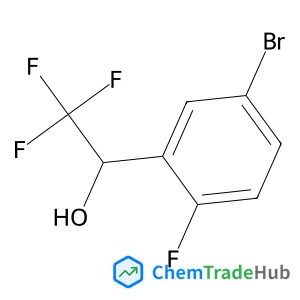
1-(5-Bromo-2-fluorophenyl)-2,2,2-trifluoroethanol
CAS Number:
1039827-16-1
Molecular Formula:
C8H5BrF4O
![{3-[Bis(4-hydroxyphenyl)methyl]-1-[2-(dimethylamino)ethyl]-1H-indol-2-yl}[4-(2-chlorophenyl)-1-piperazinyl]methanone structure](https://static.chemtradehub.com/structs/170/170365-25-0-e4d7.webp "{3-[Bis(4-hydroxyphenyl)methyl]-1-[2-(dimethylamino)ethyl]-1H-indol-2-yl}[4-(2-chlorophenyl)-1-piperazinyl]methanone structure")
{3-[Bis(4-hydroxyphenyl)methyl]-1-[2-(dimethylamino)ethyl]-1H-indol-2-yl}[4-(2-chlorophenyl)-1-piperazinyl]methanone
CAS Number:
170365-25-0
Molecular Formula:
C36H37ClN4O3

Recommended Suppliers





Disclaimer
This page provides academic journal information for reference and research purposes only. We are not affiliated with any journal publishers and do not handle publication submissions. For publication-related inquiries, please contact the respective journal publishers directly.
If you notice any inaccuracies in the information displayed, please contact us at support@chemtradehub.com. We will promptly review and address your concerns.