












TD-DFT simulations of K-edge resonant inelastic X-ray scattering within the restricted subspace approximation
Literature Information
Publication Date
2020-10-19
DOI
10.1039/D0CP04726K
Impact Factor
3.676
Authors
Vinícius Vaz da Cruz, Sebastian Eckert
View Original
Abstract
A scheme for simulations of resonant inelastic X-ray scattering (RIXS) cross-sections within time-dependent density functional theory (TD-DFT) applying the restricted subspace approximation (RSA) is presented. Therein both occupied core and valence Kohn–Sham orbitals are included in the donor-space, while the accepting virtual orbital space in the linear response TD-DFT equations is restricted to efficiently compute both the valence- and core-excited states of the many electron system. This yields a consistent description of all states contributing to the RIXS scattering process within a single calculation. The introduced orbital truncation allows to automatize the method and facilitates RIXS simulations for systems considerably larger than ones accessible with wave-function based methods. Using the nitrogen K-edge RIXS spectra of 2-thiopyridone and its deprotonated anion as a showcase, the method is benchmarked for different exchange–correlation functionals, the impact of the RSA is evaluated, and the effects of explicit solvation are discussed. Improvements compared to simulations in the frozen orbital approximation are also assessed. The general applicability of the framework is further tested by comparison to experimental data from the literature. The use of TD-DFT core-excited states to the calculation of vibrationally resolved RIXS spectra is also investigated by combining potential energy scans along relevant coordinates with wave packet simulations.
Related Literature
A ‘bottom up’, ab initio computational approach to understanding fundamental photophysical processes in nitrogen containing heterocycles, DNA bases and base pairs
Barbara Marchetti, Michael N. R. Ashfold, Wolfgang Domcke
2016-03-08
Perspective
DOI: 10.1039/C6CP00165C
Free energy of solvation of carbon nanotubes in pyridinium-based ionic liquids
Vitaly V. Chaban, Eudes Eterno Fileti
2016-06-29
Paper
DOI: 10.1039/C6CP03497G
Electronic structures of bare and terephthalic acid adsorbed TiO2(110)-(1 × 2) reconstructed surfaces: origin and reactivity of the band gap states
Wenhua Zhang, Liming Liu, Li Wan, Lingyun Liu, Liang Cao, Faqiang Xu
2015-07-02
Paper
DOI: 10.1039/C5CP01298H
Effects of halogen doping on nanocarbon catalysts synthesized by a solution plasma process for the oxygen reduction reaction
Yuta Wada, Satoshi Chiba, Sou Kumagai, Hoonseung Lee, Ai Serizawa, Oi Lun Li, Gasidit Panomsuwan
2016-07-08
Paper
DOI: 10.1039/C6CP03579E
Correction: Kinetics and mechanism of the reaction of perfluoro propyl vinyl ether (PPVE, C3F7OCHCH2) with OH: assessment of its fate in the atmosphere
D. Amedro, L. Vereecken, J. N. Crowley
2015-07-24
Correction
DOI: 10.1039/C5CP90133B
Ultra-fast single-file transport of a simple liquid beyond the collective behavior zone
Jiaye Su, Keda Yang, Decai Huang
2016-01-22
Communication
DOI: 10.1039/C5CP07253K
Complexes of a naphthalimide photoacid with organic bases, and their excited-state dynamics in polar aprotic organic solvents
Tatu Kumpulainen, Bert H. Bakker, Albert M. Brouwer
2015-07-17
Paper
DOI: 10.1039/C5CP02556G
Behaviour of NBD-head group labelled phosphatidylethanolamines in POPC bilayers: a molecular dynamics study
2015-05-22
Paper
DOI: 10.1039/C5CP01596K
Formation of supramolecular assemblies and liquid crystals by purine nucleobases and cyanuric acid in water: implications for the possible origins of RNA
B. J. Cafferty, S. C. Karunakaran, G. B. Schuster, N. V. Hud
2016-05-24
Communication
DOI: 10.1039/C6CP03047E
Bond angle variations in XH3 [X = N, P, As, Sb, Bi]: the critical role of Rydberg orbitals exposed using a diabatic state model
Ross H. McKenzie
2015-07-08
Paper
DOI: 10.1039/C5CP02237A
You might also like
Compound Q&A
What is 1-(2,4,6-Trifluorophenyl)ethanol (CAS: 1250113-83-7)?
1-(2,4,6-Trifluorophenyl)ethanol is an organic compound with the CAS number 1250...
1250113-83-71-(2,4,6-Trifluoroph...
Compound Q&A
Is 1-(2,4-Dimethoxybenzyl)-4-(hydroxymethyl)-2-pyrrolidinone (CAS: 919111-34-5) safe?
1-(2,4-Dimethoxybenzyl)-4-(hydroxymethyl)-2-pyrrolidinone (CAS: 919111-34-5) is ...
919111-34-51-(2,4-Dimethoxybenz...
Compound Q&A
What are the physical and chemical properties of (7S,15R)-6β,15-Diacetoxy-7α,20-epoxy-7-hydroxykaura-2,16-dien-1-one (CAS: 51419-51-3)?
(7S,15R)-6β,15-Diacetoxy-7α,20-epoxy-7-hydroxykaura-2,16-dien-1-one is a crystal...
51419-51-3(7S,15R)-6β,15-Diace...
Compound Q&A
What regulatory guidelines apply to rac-ethyl (1r,4r)-4-hydroxycyclohexane-1-carboxylate, trans (CAS: 3618-04-0)?
The compound rac-ethyl (1r,4r)-4-hydroxycyclohexane-1-carboxylate, trans (CAS: 3...
3618-04-0rac-ethyl (1r,4r)-4-...
Compound Q&A
What is the market or research trend for 2-(2,4-Difluorophenoxy)-3-nitropyridine (CAS: 175135-62-3)?
The market for 2-(2,4-Difluorophenoxy)-3-nitropyridine (CAS: 175135-62-3) is cur...
175135-62-32-(2,4-Difluoropheno...
Compound Q&A
What are the main uses of 6-Diazo-5-oxo-L-norleucine (CAS: 157-03-9)?
The main uses of 6-Diazo-5-oxo-L-norleucine (CAS: 157-03-9) include research in ...
157-03-96-Diazo-5-oxo-L-norl...
Compound Q&A
What precautions should be taken when handling 2-Aminoethyl-mono-amide-DOTA-tris(tBu ester) (CAS: 173308-19-5)?
When handling 2-Aminoethyl-mono-amide-DOTA-tris(tBu ester) (CAS: 173308-19-5), i...
173308-19-52-Aminoethyl-mono-am...
Compound Q&A
How is 5-Methylimidazo[1,2-a]pyridine-3-carbaldehyde (CAS: 178488-37-4) typically synthesized?
5-Methylimidazo[1,2-a]pyridine-3-carbaldehyde (CAS: 178488-37-4) can be synthesi...
178488-37-45-Methylimidazo[1,2-...
Compound Q&A
Are there alternatives to 2,4,6-Trihydroxyisophthalaldehyde (CAS: 4396-13-8) in synthesis?
There are alternative reagents that can be used in the synthesis of 2,4,6-Trihyd...
4396-13-82,4,6-Trihydroxyisop...
Compound Q&A
What is (2Z)-3-(5-Fluoro-1H-indol-3-yl)-2-sulfanylacrylic acid (CAS: 179461-52-0)?
(2Z)-3-(5-Fluoro-1H-indol-3-yl)-2-sulfanylacrylic acid is a chemical compound wi...
179461-52-0(2Z)-3-(5-Fluoro-1H-...
Source Journal
Physical Chemistry Chemical Physics

CiteScore:
5.5
Self-citation Rate:
10.3%
Articles per Year:
3036
Physical Chemistry Chemical Physics (PCCP) is an international journal co-owned by 19 physical chemistry and physics societies from around the world. This journal publishes original, cutting-edge research in physical chemistry, chemical physics and biophysical chemistry. To be suitable for publication in PCCP, articles must include significant innovation and/or insight into physical chemistry; this is the most important criterion that reviewers and Editors will judge against when evaluating submissions. The journal has a broad scope and welcomes contributions spanning experiment, theory, computation and data science. Topical coverage includes spectroscopy, dynamics, kinetics, statistical mechanics, thermodynamics, electrochemistry, catalysis, surface science, quantum mechanics, quantum computing and machine learning. Interdisciplinary research areas such as polymers and soft matter, materials, nanoscience, energy, surfaces/interfaces, and biophysical chemistry are welcomed if they demonstrate significant innovation and/or insight into physical chemistry. Joined experimental/theoretical studies are particularly appreciated when complementary and based on up-to-date approaches.
Recommended Compounds
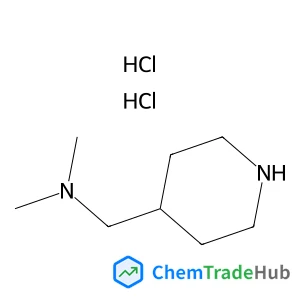
N,N-dimethyl(piperidin-4-yl)methanamine hydrochloride
CAS Number:
172281-72-0
Molecular Formula:
C8H20Cl2N2


Recommended Suppliers





Disclaimer
This page provides academic journal information for reference and research purposes only. We are not affiliated with any journal publishers and do not handle publication submissions. For publication-related inquiries, please contact the respective journal publishers directly.
If you notice any inaccuracies in the information displayed, please contact us at support@chemtradehub.com. We will promptly review and address your concerns.