












Vibrational markers of structural distortion in adeninenucleobases upon DNA damage
Literature Information
Publication Date
2011-01-05
DOI
10.1039/C0CP01731K
Impact Factor
3.676
Authors
Marudachalam Shanmugasundaram, Mrinalini Puranik
View Original
Abstract
Oxidation is one of the common causes of chemical damage of DNA. Among the oxidized nucleobases in DNA, 8-oxoadenine (8-oxoA) and 4,6-diamino-5-formamidoadenine (FaPyA) are two of the most commonly found lesions. Relatively little information has been published so far on these lesions compared to the more mutagenic modified purines like 8-oxoguanine. In this study, we investigate the structure and vibrational spectra of these two lesions using Density Functional Theory relative to the parent compound adenine. In addition, we have incorporated a solvent environment through the Polarizable Continuum Model (PCM), as well as explicit solvent model calculations to test for the best prediction of the vibrational wavenumbers of adenine. We find that, while the explicit solvent model predicts the structure of the lesions better with respect to published X-ray diffraction structures, they do not reproduce the vibrational wavenumbers as accurately. In comparison, PCM predicts the wavenumbers better with less of the typical overestimation seen in the absence of solvent effects. Intriguingly, uniform linear scaling of the ‘gas phase’ calculations provides the best agreement with published experimental spectra. Finally, we demonstrate that 8-oxoA and FaPyA have unique spectral features compared to adenine by characterizing the differences in their normal modes. We propose the use of their distinct spectra as site-specific Raman probes of systems such as base-specific local probing of a DNA strand and DNA–enzyme active site interactions where the substrate can be used as an in situprobe.
Related Literature
An unexpected bridge between chemical bonding indicators and electrical conductivity through the localization tensor
Ángel Martín Pendás, José Manuel Guevara-Vela, Daniel Menéndez Crespo, Aurora Costales, Evelio Francisco
2016-12-12
Paper
DOI: 10.1039/C6CP07617C
Second-order nonlinear optical properties of bulk GeC polytypes, g-GeC and corresponding nanotubes: first-principles calculations
Dongshan Wei
2016-12-14
Paper
DOI: 10.1039/C6CP07573H
Size-dependent one-photon- and two-photon-pumped amplified spontaneous emission from organometal halide CH3NH3PbBr3 perovskite cubic microcrystals
Zhen-Yu Zhang, Hai-Yu Wang, Yan-Xia Zhang, Kai-Jiao Li, Xue-Peng Zhan, Bing-Rong Gao, Qi-Dai Chen, Hong-Bo Sun
2016-12-12
Paper
DOI: 10.1039/C6CP07522C
Enhanced electrooxidation of glucose at nano-chitosan–NiOOH modified GC electrode: fuel blends and hydrocarbon impurities
Christina Roth
2016-12-22
Paper
DOI: 10.1039/C6CP08360A
Infrared characterisation of acetonitrile and propionitrile aerosols under Titan's atmospheric conditions
C. Ennis, R. Auchettl, M. Ruzi, E. G. Robertson
2017-01-12
Paper
DOI: 10.1039/C6CP08110J
Oxidation, defunctionalization and catalyst life cycle of carbon nanotubes: a Raman spectroscopy view
Anton S. Ivanov, Konstantin I. Maslakov, Alexander V. Egorov, Zexiang Shen
2016-12-12
Paper
DOI: 10.1039/C6CP04657F
On the ionophoric selectivity of nonactin and related macrotetrolide derivatives
Bruno Martínez-Haya, Juan Ramón Avilés-Moreno, Said Hamad, José Elguero
2016-12-06
Paper
DOI: 10.1039/C6CP05324F
The intrinsic stabilities and structures of alkali metal cationized guanine quadruplexes
M. Azargun, Y. Jami-Alahmadi, T. D. Fridgen
2016-11-25
Paper
DOI: 10.1039/C6CP07301H
Unravelling the early photochemical behavior of (8-substituted-7-hydroxyquinolinyl)methyl acetates through electronic structure theory and ultrafast transient absorption spectroscopy
Jan-Michael Mewes, Kyle T. Harris, David Lee Phillips, Andreas Dreuw
2016-11-30
Paper
DOI: 10.1039/C6CP05499D
Reactive collisions for NO(2Π) + N(4S) at temperatures relevant to the hypersonic flight regime
Otoniel Denis-Alpizar, Raymond J. Bemish
2016-12-15
Paper
DOI: 10.1039/C6CP07142B
You might also like
Compound Q&A
Is 2-(2-chloroacetamido)-3-phenylpropanoic acid (CAS: 7765-11-9) safe?
2-(2-Chloroacetamido)-3-phenylpropanoic acid (CAS: 7765-11-9) is generally consi...
7765-11-92-(2-chloroacetamido...
Compound Q&A
Is 2-(Benzyloxy)-5-bromobenzoic acid (CAS: 62176-31-2) safe?
2-(Benzyloxy)-5-bromobenzoic acid can be handled safely if appropriate precautio...
62176-31-22-(Benzyloxy)-5-brom...
Compound Q&A
What is (4-Methyl-1,2,5-oxadiazol-3-yl)methanamine hydrochloride (CAS: 1159825-48-5)?
(4-Methyl-1,2,5-oxadiazol-3-yl)methanamine hydrochloride is a chemical compound ...
1159825-48-5(4-Methyl-1,2,5-oxad...
Compound Q&A
What is 2-(5-Hexylthiophen-2-yl)-4,4,5,5-tetramethyl-1,3,2-dioxaborolane (CAS: 917985-54-7)?
2-(5-Hexylthiophen-2-yl)-4,4,5,5-tetramethyl-1,3,2-dioxaborolane (CAS: 917985-54...
917985-54-72-(5-Hexylthiophen-2...
Compound Q&A
Are there alternatives to 4-(8-Methyl-9H-1,3-dioxolo[4,5-h][2,3]benzodiazepin-5-yl)benzenamine (CAS: 102771-26-6) in synthesis?
While 4-(8-Methyl-9H-1,3-dioxolo[4,5-h][2,3]benzodiazepin-5-yl)benzenamine (CAS:...
102771-26-64-(8-Methyl-9H-1,3-d...
Compound Q&A
What is the market or research trend for tert-butyl 3-hydroxy-4,5,7,8-tetrahydro-2H-pyrazolo[3,4-d]azepine-6-carboxylate (CAS: 851376-80-2)?
The market for tert-butyl 3-hydroxy-4,5,7,8-tetrahydro-2H-pyrazolo[3,4-d]azepine...
851376-80-2tert-butyl 3-hydroxy...
Compound Q&A
How should waste containing 3,5-Diamino-1H-pyrazole-4-carbonitrile (CAS: 6844-58-2) be handled?
Waste containing 3,5-Diamino-1H-pyrazole-4-carbonitrile (CAS: 6844-58-2) should ...
6844-58-23,5-Diamino-1H-pyraz...
Compound Q&A
How is (6-Fluoro-3-pyridinyl)boronic acid (CAS: 351019-18-6) typically synthesized?
(6-Fluoro-3-pyridinyl)boronic acid can be synthesized through the reaction of 6-...
351019-18-6(6-Fluoro-3-pyridiny...
Compound Q&A
What industries use Dibenzyl carbonimidoylbiscarbamate (CAS: 10065-79-9)?
Dibenzyl carbonimidoylbiscarbamate (CAS: 10065-79-9) finds applications in vario...
10065-79-9Dibenzyl carbonimido...
Compound Q&A
What is the market or research trend for (beta,beta,2,3,4,5,6-~2~H_7_)Phenylalanine (CAS: 74228-83-4)?
The market for (beta,beta,2,3,4,5,6-~2~H_7_)Phenylalanine (CAS: 74228-83-4) is g...
74228-83-4(beta,beta,2,3,4,5,6...
Source Journal
Physical Chemistry Chemical Physics

CiteScore:
5.5
Self-citation Rate:
10.3%
Articles per Year:
3036
Physical Chemistry Chemical Physics (PCCP) is an international journal co-owned by 19 physical chemistry and physics societies from around the world. This journal publishes original, cutting-edge research in physical chemistry, chemical physics and biophysical chemistry. To be suitable for publication in PCCP, articles must include significant innovation and/or insight into physical chemistry; this is the most important criterion that reviewers and Editors will judge against when evaluating submissions. The journal has a broad scope and welcomes contributions spanning experiment, theory, computation and data science. Topical coverage includes spectroscopy, dynamics, kinetics, statistical mechanics, thermodynamics, electrochemistry, catalysis, surface science, quantum mechanics, quantum computing and machine learning. Interdisciplinary research areas such as polymers and soft matter, materials, nanoscience, energy, surfaces/interfaces, and biophysical chemistry are welcomed if they demonstrate significant innovation and/or insight into physical chemistry. Joined experimental/theoretical studies are particularly appreciated when complementary and based on up-to-date approaches.
Recommended Compounds
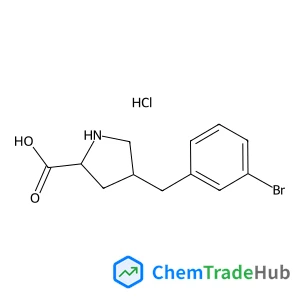
(2S,4R)-4-(3-Bromobenzyl)pyrrolidine-2-carboxylic acid hydrochloride
CAS Number:
1049734-10-2
Molecular Formula:
C12H15BrClNO2
Recommended Suppliers






Disclaimer
This page provides academic journal information for reference and research purposes only. We are not affiliated with any journal publishers and do not handle publication submissions. For publication-related inquiries, please contact the respective journal publishers directly.
If you notice any inaccuracies in the information displayed, please contact us at support@chemtradehub.com. We will promptly review and address your concerns.