












A comparative study of redox-active, ambipolar electrochromic triphenylamine-based polyimides prepared by electrochemical polymerization and conventional polycondensation methods
Literature Information
Publication Date
2017-12-05
DOI
10.1039/C7PY01897E
Impact Factor
5.582
Authors
Sheng-Huei Hsiao, Wei-Kai Liao, Guey-Sheng Liou
View Original
Abstract
N,N′-Bis(4-diphenylaminophenyl)pyromellitimide (TPA-PMDI) was synthesized from the condensation reaction of 4-aminotriphenylamine with pyromellitic dianhydride (PMDA). The triphenylamine-diimide TPA-PMDI could be electrochemically polymerized into ambipolar, redox-active polyimide films on the electrode surface in an electrolyte solution via the coupling reactions between triphenylamine radical cations. The electro-generated polyimide films (coded as PI-E) exhibit reversible redox processes and stable color changes upon electro-oxidation, changing from a colorless neutral form to orange-yellowish and blue oxidized states. The film could also display pale green and pink cathodic coloring upon electro-reduction. Electrochromic devices using the electropolymerized film as an active layer were also fabricated as preliminary investigations for electrochromic applications. For a comparative study, a structurally similar polyimide (PI-C) was prepared by a conventional two-step condensation from N,N′-bis(4-aminophenyl)-N,N′-diphenyl-4,4′-biphenyldiamine with PMDA, and its spectroscopic, electrochemical and electrochromic properties were compared with those of the electro-synthesized PI-E.
Related Literature
Halogen⋯halogen interactions in decahalo-closo-carboranes: CSD analysis and theoretical study
Maria de las Nieves Piña, Antonio Bauzá, Antonio Frontera
2020-02-21
Paper
DOI: 10.1039/D0CP00114G
Modelling the bulk properties of ambient pressure polymorphs of zirconia
2020-02-25
Paper
DOI: 10.1039/D0CP00032A
Photoemission from non-polar aromatic molecules in the gas and liquid phase
L. Longetti, M. Randulová, J. Ojeda, L. Mewes, L. Miseikis, J. Grilj, A. Sanchez-Gonzalez, T. Witting, T. Siegel, Z. Diveki, F. van Mourik, R. Chapman, C. Cacho, S. Yap, J. W. G. Tisch, E. Springate, J. P. Marangos, P. Slavíček, M. Chergui
2020-01-29
Paper
DOI: 10.1039/C9CP06799J
How flexible is the water molecule structure? Analysis of crystal structures and the potential energy surface
Milan R. Milovanović, Jelena M. Živković, Dragan B. Ninković, Ivana M. Stanković
2020-01-28
Paper
DOI: 10.1039/C9CP07042G
Spectroscopic evidence of a particular intermolecular interaction in iodomethane–ethanol mixtures: the cooperative effect of halogen bonding, hydrogen bonding, and the solvent effect
Fei Yao, Nan Gong, Wenhui Fang, Zhiwei Men
2020-02-06
Paper
DOI: 10.1039/C9CP05886A
Shapes of epitaxial gold nanocrystals on SrTiO3 substrates
Peiyu Chen, Krishnan Murugappan, Martin R. Castell
2020-02-05
Paper
DOI: 10.1039/C9CP06801E
Weak-field ligands enable inert early transition metal oxides to convert methane to methanol: the case of ZrO
Benjamin A. Jackson, Evangelos Miliordos
2020-03-05
Paper
DOI: 10.1039/C9CP06050B
An in situ exchange mechanism for dye molecules and cations at the nano-semiconductor film/electrolyte interface
Simin Tu
2020-01-28
Communication
DOI: 10.1039/C9CP06288B
You might also like
Compound Q&A
What precautions should be taken when handling lithium chloride hydrate (1:1:1) (CAS: 16712-20-2)?
When handling lithium chloride hydrate (1:1:1) (CAS: 16712-20-2), it is importan...
16712-20-2Lithium chloride hyd...
Compound Q&A
Is 4-(4H-1,2,4-Triazol-4-yl)piperidine (CAS: 690261-92-8) safe?
4-(4H-1,2,4-Triazol-4-yl)piperidine is generally considered safe for use in phar...
690261-92-84-(4H-1,2,4-Triazol-...
Compound Q&A
How should waste containing 1,3-Thiazole-2-carboxamide (CAS: 16733-85-0) be handled?
Waste containing 1,3-Thiazole-2-carboxamide (CAS: 16733-85-0) should be collecte...
16733-85-01,3-Thiazole-2-carbo...
Compound Q&A
What regulatory guidelines apply to 5-(Difluoromethyl)-2-fluorobenzonitrile (CAS: 934175-58-3)?
5-(Difluoromethyl)-2-fluorobenzonitrile (CAS: 934175-58-3) is subject to regulat...
934175-58-35-(Difluoromethyl)-2...
Compound Q&A
How is Methyl 3-acetamido-2-thiophenecarboxylate (CAS: 22288-79-5) typically synthesized?
Methyl 3-acetamido-2-thiophenecarboxylate can be synthesized by the reaction of ...
22288-79-5Methyl 3-acetamido-2...
Compound Q&A
What is 4-Isoquinolinecarbonitrile (CAS: 34846-65-6)?
4-Isoquinolinecarbonitrile is a chemical compound with the CAS number 34846-65-6...
34846-65-64-Isoquinolinecarbon...
Compound Q&A
How should Methyl 1H-1,2,3-triazole-4-carboxylate (CAS: 877309-59-6) be stored?
Store Methyl 1H-1,2,3-triazole-4-carboxylate (CAS: 877309-59-6) in a cool, dry p...
877309-59-6Methyl 1H-1,2,3-tria...
Compound Q&A
What regulatory guidelines apply to 6-Bromo[1,3]thiazolo[5,4-b]pyridin-2-amine (CAS: 1160791-13-8)?
6-Bromo[1,3]thiazolo[5,4-b]pyridin-2-amine (CAS: 1160791-13-8) is subject to the...
1160791-13-86-Bromo[1,3]thiazolo...
Compound Q&A
Is (2S,3S)-2-Ammonio-3-(3,4-dihydroxyphenyl)-3-hydroxypropanoate (CAS: 23651-95-8) safe?
(2S,3S)-2-Ammonio-3-(3,4-dihydroxyphenyl)-3-hydroxypropanoate (CAS: 23651-95-8) ...
23651-95-8(2S,3S)-2-Ammonio-3-...
Compound Q&A
What are the physical and chemical properties of 7-bromo-3-methyl-3,4-dihydroquinazolin-4-one (CAS: 1293987-84-4)?
7-Bromo-3-methyl-3,4-dihydroquinazolin-4-one is a solid with a crystalline form....
1293987-84-47-bromo-3-methyl-3,4...
Source Journal
Polymer Chemistry

CiteScore:
8.6
Self-citation Rate:
7.3%
Articles per Year:
457
Polymer Chemistry welcomes submissions in all areas of polymer science that have a strong focus on macromolecular chemistry. Manuscripts may cover a broad range of fields, yet no direct application focus is required.
Recommended Compounds
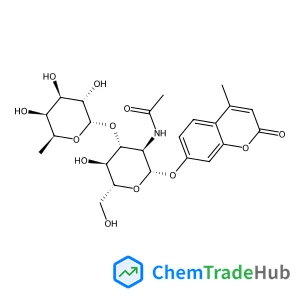
4-Methyl-2-oxo-2H-chromen-7-yl 2-acetamido-2-deoxy-3-O-(6-deoxy-alpha-L-galactopyranosyl)-beta-D-glucopyranoside
CAS Number:
383160-12-1
Molecular Formula:
C24H31NO12
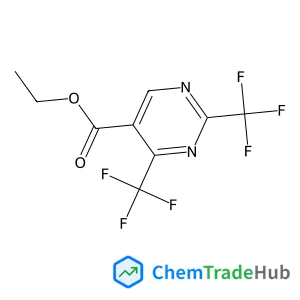
Ethyl 2,4-bis(trifluoromethyl)-5-pyrimidinecarboxylate
CAS Number:
188781-15-9
Molecular Formula:
C9H6F6N2O2
Recommended Suppliers



Disclaimer
This page provides academic journal information for reference and research purposes only. We are not affiliated with any journal publishers and do not handle publication submissions. For publication-related inquiries, please contact the respective journal publishers directly.
If you notice any inaccuracies in the information displayed, please contact us at support@chemtradehub.com. We will promptly review and address your concerns.