












Kinetic studies of atmospherically relevant silicon chemistry. Part III: Reactions of Si+ and SiO+ with O3, and Si+ with O2
Literature Information
Publication Date
2010-12-21
DOI
10.1039/C0CP01380C
Impact Factor
3.676
Authors
Juan C. Gómez Martín, John M. C. Plane
View Original
Abstract
Silicon ions are generated in the Earth's upper atmosphere by hyperthermal collisions of material ablated from incoming meteoroids with atmospheric molecules, and from charge transfer of silicon-bearing neutral species with major atmospheric ions. Reported Si+ number density vs. height profiles show a sharp decrease below 95 km, which has been commonly attributed to the fast reaction with H2O. Here we report rate coefficients and branching ratios of the reactions of Si+ and SiO+ with O3, measured using a flow tube with a laser ablation source and detection of ions by quadrupole mass spectrometry. The results obtained are (2σ uncertainty): k(Si+ + O3, 298 K) = (6.5 ± 2.1) × 10−10 cm3 molecule−1 s−1, with three product channels (branching ratios): SiO+ + O2 (0.52 ± 0.24), SiO + O2+ (0.48 ± 0.24), and SiO2+ + O (<0.1); k(SiO+ + O3, 298 K) = (6 ± 4) × 10−10 cm3 molecule−1 s−1, where the major products (branching ratio ≥ 0.95) are SiO2 + O2+. Reactions (1) and (2) therefore have the unusual ability to neutralise silicon directly, as well as forming molecular ions which can undergo dissociative recombination with electrons. These reactions, along with the recently reported reaction between Si+ and O2(1Δg), largely explain the disappearance of Si+ below 95 km in the atmosphere, relative to other major meteoric ions such as Fe+ and Mg+. The rate coefficient of the Si+ + O2 + He reaction was measured to be k(298 K) = (9.0±1.3) × 10−30 cm6 molecule−2 s−1, in agreement with previous measurements. The SiO2+ species produced from this reaction, which could be vibrationally excited, is observed to charge transfer at a relatively slow rate with O2, with a rate constant of k(298 K) = (1.5 ± 1.0) × 10−13 cm3 molecule−1 s−1.
Related Literature
Polarization loss in the organic ferroelectric trialkylbenzene-1,3,5-tricarboxamide (BTA)
A. V. Gorbunov, X. Meng, I. Urbanaviciute, T. Putzeys, M. Wübbenhorst, R. P. Sijbesma
2016-12-23
Paper
DOI: 10.1039/C6CP08015D
Internal dynamics in helical molecules studied by X-ray diffraction, NMR spectroscopy and DFT calculations
Martin Dračínský, Jan Storch, Vladimír Církva, Ivana Císařová, Jan Sýkora
2017-01-03
Paper
DOI: 10.1039/C6CP07552E
Structural influence of proteins upon adsorption to MoS2 nanomaterials: comparison of MoS2 force field parameters
Zonglin Gu, Phil De Luna, Zaixing Yang
2016-12-15
Paper
DOI: 10.1039/C6CP05260F
Modeling the active sites of Co-promoted MoS2 particles by DFT
Manuel Šarić, Jan Rossmeisl, Poul Georg Moses
2016-12-08
Paper
DOI: 10.1039/C6CP06881B
Uniform and perfectly linear current–voltage characteristics of nitrogen-doped armchair graphene nanoribbons for nanowires
Lingling Liu, Xiao-Fei Li, Qing Yan, Qin-Kun Li, Xiang-Hua Zhang, Mingsen Deng, Qi Qiu
2016-11-29
Communication
DOI: 10.1039/C6CP06640B
Negative thermal expansion in 2H CuScO2 originating from the cooperation of transverse thermal vibrations of Cu and O atoms
Qiang Sun
2016-12-12
Paper
DOI: 10.1039/C6CP07589D
Structural phase transitions of (Bi1−xSbx)2(Te1−ySey)3 compounds under high pressure and the influence of the atomic radius on the compression processes of tetradymites
Zhenhai Yu, Yong Wang, John Schneeloch, Chunyu Li, Ruidan Zhong, Zhiguo Liu, Genda Gu
2016-12-14
Paper
DOI: 10.1039/C6CP07324G
Effect of doping and chemical ordering on the optoelectronic properties of complex oxides: Fe2O3–V2O3 solid solutions and hetero-structures
Iffat H. Nayyar, Sara E. Chamberlin, Tiffany C. Kaspar, Niranjan Govind, Scott A. Chambers, Peter V. Sushko
2016-12-07
Paper
DOI: 10.1039/C6CP06087K
New insight into the roles of oxygen vacancies in hematite for solar water splitting
Xin Zhao, Jianyong Feng, Shi Chen, Yizhong Huang, Tze Chien Sum, Zhong Chen
2016-10-27
Paper
DOI: 10.1039/C6CP06410H
You might also like
Compound Q&A
Is 2-(2-chloroacetamido)-3-phenylpropanoic acid (CAS: 7765-11-9) safe?
2-(2-Chloroacetamido)-3-phenylpropanoic acid (CAS: 7765-11-9) is generally consi...
7765-11-92-(2-chloroacetamido...
Compound Q&A
Is 2-(Benzyloxy)-5-bromobenzoic acid (CAS: 62176-31-2) safe?
2-(Benzyloxy)-5-bromobenzoic acid can be handled safely if appropriate precautio...
62176-31-22-(Benzyloxy)-5-brom...
Compound Q&A
What is (4-Methyl-1,2,5-oxadiazol-3-yl)methanamine hydrochloride (CAS: 1159825-48-5)?
(4-Methyl-1,2,5-oxadiazol-3-yl)methanamine hydrochloride is a chemical compound ...
1159825-48-5(4-Methyl-1,2,5-oxad...
Compound Q&A
What is 2-(5-Hexylthiophen-2-yl)-4,4,5,5-tetramethyl-1,3,2-dioxaborolane (CAS: 917985-54-7)?
2-(5-Hexylthiophen-2-yl)-4,4,5,5-tetramethyl-1,3,2-dioxaborolane (CAS: 917985-54...
917985-54-72-(5-Hexylthiophen-2...
Compound Q&A
Are there alternatives to 4-(8-Methyl-9H-1,3-dioxolo[4,5-h][2,3]benzodiazepin-5-yl)benzenamine (CAS: 102771-26-6) in synthesis?
While 4-(8-Methyl-9H-1,3-dioxolo[4,5-h][2,3]benzodiazepin-5-yl)benzenamine (CAS:...
102771-26-64-(8-Methyl-9H-1,3-d...
Compound Q&A
What is the market or research trend for tert-butyl 3-hydroxy-4,5,7,8-tetrahydro-2H-pyrazolo[3,4-d]azepine-6-carboxylate (CAS: 851376-80-2)?
The market for tert-butyl 3-hydroxy-4,5,7,8-tetrahydro-2H-pyrazolo[3,4-d]azepine...
851376-80-2tert-butyl 3-hydroxy...
Compound Q&A
How should waste containing 3,5-Diamino-1H-pyrazole-4-carbonitrile (CAS: 6844-58-2) be handled?
Waste containing 3,5-Diamino-1H-pyrazole-4-carbonitrile (CAS: 6844-58-2) should ...
6844-58-23,5-Diamino-1H-pyraz...
Compound Q&A
How is (6-Fluoro-3-pyridinyl)boronic acid (CAS: 351019-18-6) typically synthesized?
(6-Fluoro-3-pyridinyl)boronic acid can be synthesized through the reaction of 6-...
351019-18-6(6-Fluoro-3-pyridiny...
Compound Q&A
What industries use Dibenzyl carbonimidoylbiscarbamate (CAS: 10065-79-9)?
Dibenzyl carbonimidoylbiscarbamate (CAS: 10065-79-9) finds applications in vario...
10065-79-9Dibenzyl carbonimido...
Compound Q&A
What is the market or research trend for (beta,beta,2,3,4,5,6-~2~H_7_)Phenylalanine (CAS: 74228-83-4)?
The market for (beta,beta,2,3,4,5,6-~2~H_7_)Phenylalanine (CAS: 74228-83-4) is g...
74228-83-4(beta,beta,2,3,4,5,6...
Source Journal
Physical Chemistry Chemical Physics

CiteScore:
5.5
Self-citation Rate:
10.3%
Articles per Year:
3036
Physical Chemistry Chemical Physics (PCCP) is an international journal co-owned by 19 physical chemistry and physics societies from around the world. This journal publishes original, cutting-edge research in physical chemistry, chemical physics and biophysical chemistry. To be suitable for publication in PCCP, articles must include significant innovation and/or insight into physical chemistry; this is the most important criterion that reviewers and Editors will judge against when evaluating submissions. The journal has a broad scope and welcomes contributions spanning experiment, theory, computation and data science. Topical coverage includes spectroscopy, dynamics, kinetics, statistical mechanics, thermodynamics, electrochemistry, catalysis, surface science, quantum mechanics, quantum computing and machine learning. Interdisciplinary research areas such as polymers and soft matter, materials, nanoscience, energy, surfaces/interfaces, and biophysical chemistry are welcomed if they demonstrate significant innovation and/or insight into physical chemistry. Joined experimental/theoretical studies are particularly appreciated when complementary and based on up-to-date approaches.
Recommended Compounds
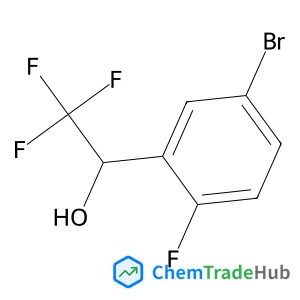
1-(5-Bromo-2-fluorophenyl)-2,2,2-trifluoroethanol
CAS Number:
1039827-16-1
Molecular Formula:
C8H5BrF4O
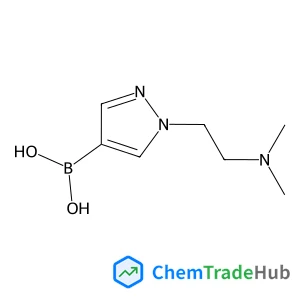
(1-(2-(Dimethylamino)ethyl)-1H-pyrazol-4-yl)boronic acid
CAS Number:
1086063-73-1
Molecular Formula:
C7H14BN3O2
Recommended Suppliers





Disclaimer
This page provides academic journal information for reference and research purposes only. We are not affiliated with any journal publishers and do not handle publication submissions. For publication-related inquiries, please contact the respective journal publishers directly.
If you notice any inaccuracies in the information displayed, please contact us at support@chemtradehub.com. We will promptly review and address your concerns.