












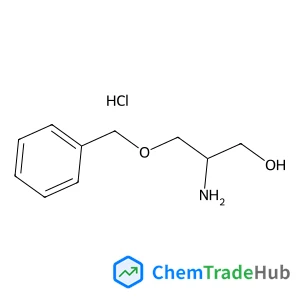
(R)-2-amino-3-(benzyloxy)propan-1-ol hydrochloride
CAS Number:
58577-95-0
Molecular Formula:
C10H16ClNO2
Jun Dai, Zhenyu Li, Jinlong Yang
Based on first-principles equation-of-state and lattice dynamics calculations, a new boron allotrope with K4 structure is proposed, which gives the first example of a three-dimensional all sp2 network.
Tanja van Mourik, David M. Benoit, Sarah L. Price, David C. Clary
DOI: 10.1039/A909183A
Denis J. Robinson, Lucinda Davies, Neil McGuire, Darren F. Lee, Paul McMorn, David J. Willock, Graeme W. Watson, Philip C. Bulman Page, Donald Bethell
DOI: 10.1039/A907605K
Yu Dai, Xiaojin Zhang
DOI: 10.1039/C7PY01815K
Jingpei Huo, Qianjun Deng, Ting Fan, Guozhang He, Xiaohong Hu, Xiaxiao Hong, Hong Chen, Shihe Luo, Zhaoyang Wang, Dongchu Chen
DOI: 10.1039/C7PY01396E
Antonio Laganà, Alessandro Bolloni, Stefano Crocchianti
DOI: 10.1039/A908781H
Pablo Wessig, Tanja Schulze, Alexandra Pfennig, Steffen M. Weidner, Sascha Prentzel, Helmut Schlaad
DOI: 10.1039/C7PY01569K
Ethyl 4-chlorothieno[2,3-b]pyridine-5-carboxylate (CAS: 59713-58-5) can be synth...
5-Methyl-1H-indole-3-carbaldehyde (CAS: 52562-50-2) is subject to various regula...
(1,3-Dimethyl-2,4-dioxo-1,2,3,4-tetrahydro-5-pyrimidinyl)boronic acid is a white...
Waste containing Sulfocostunolide A (CAS: 1016983-51-9) should be handled with c...
When handling Murraxocin (CAS: 88478-44-8), ensure proper personal protective eq...
Formvar (CAS: 63148-64-1) is an alkyd resin characterized by a high molecular we...
(S)-4-benzyl-2-((benzyloxy)methyl)morpholine is generally safe when handled with...
Methyl 1-(5-bromo-2-pyrimidinyl)cyclopropanecarboxylate (CAS: 1447607-69-3) is p...
2-Methyl-1-phenyl-1-propanamine hydrochloride (CAS: 24290-47-9) is generally con...
3-(4-Bromophenyl)-2-methylpropanoic acid is synthesized through a multi-step pro...

Physical Chemistry Chemical Physics (PCCP) is an international journal co-owned by 19 physical chemistry and physics societies from around the world. This journal publishes original, cutting-edge research in physical chemistry, chemical physics and biophysical chemistry. To be suitable for publication in PCCP, articles must include significant innovation and/or insight into physical chemistry; this is the most important criterion that reviewers and Editors will judge against when evaluating submissions. The journal has a broad scope and welcomes contributions spanning experiment, theory, computation and data science. Topical coverage includes spectroscopy, dynamics, kinetics, statistical mechanics, thermodynamics, electrochemistry, catalysis, surface science, quantum mechanics, quantum computing and machine learning. Interdisciplinary research areas such as polymers and soft matter, materials, nanoscience, energy, surfaces/interfaces, and biophysical chemistry are welcomed if they demonstrate significant innovation and/or insight into physical chemistry. Joined experimental/theoretical studies are particularly appreciated when complementary and based on up-to-date approaches.
![9H-Fluoren-9-ylmethyl [(2S)-1-hydroxy-3-(1H-indol-3-yl)-2-propanyl]carbamate structure](https://static.chemtradehub.com/structs/153/153815-60-2-a67d.webp "9H-Fluoren-9-ylmethyl [(2S)-1-hydroxy-3-(1H-indol-3-yl)-2-propanyl]carbamate structure")
![9,9'-Spirobi[fluoren]-2-amine structure](https://static.chemtradehub.com/structs/118/118951-68-1-0d14.webp "9,9'-Spirobi[fluoren]-2-amine structure")





