












Molecular dynamics simulation of surface segregation in a (110) B2-NiAl thin film
Literature Information
Publication Date
2010-11-15
DOI
10.1039/C0CP00376J
Impact Factor
3.676
Authors
Elena V. Levchenko, Alexander V. Evteev, Rafal Kozubski, Irina V. Belova, Graeme E. Murch
View Original
Abstract
Surface segregation in (110) B2-NiAl film approximately 3 nm thick is investigated by using molecular dynamics simulation with a reliable embedded-atom potential. The simulation is performed for the stoichiometric composition at a temperature of 1500 K, just below the melting temperature of the film model. It is found that the (110) surface is structurally stable but develops adatoms, vacancies and antisites. The coverage of an adatom layer is estimated to be ∼0.07 ML (monatomic layers) and it contains on average ∼95% of Al atoms. The top (surface) and second (subsurface) layers of the (110) surface is the most enriched in Ni relative to the bulk composition. These layers contain on average ∼51% of Ni atoms. The Ni fraction in the third and forth layers of the film is estimated as ∼50.5%. The deeper layers have essentially the bulk composition. Vacancies in the film model are found only on the Ni sublattice. The vacancy concentration on the Ni sublattice in the top layer is ∼7.5%. The second layer almost does not contain vacancies. The next layers have essentially the constant bulk vacancy composition which can be estimated as ∼1.3–1.4%.
Related Literature
Synthesis, characterization and FET properties of novel dithiazolylbenzothiadiazole derivatives
Md. Akhtaruzzaman, Naoto Kamata, Jun-ichi Nishida, Shinji Ando, Hirokazu Tada, Masaaki Tomura, Yoshiro Yamashita
2005-05-24
Communication
DOI: 10.1039/B503814F
NaOH-catalyzed crossed Claisen condensation between ketenesilylacetals and methyl esters
Akira Iida, Kenta Takai, Tomohito Okabayashi, Tomonori Misaki, Yoo Tanabe
2005-05-20
Communication
DOI: 10.1039/B504750A
The influence of sterics on the formation of polar 1-D hydrogen-bonded networks
Adam J. Preston, Judith C. Gallucci, Jon R. Parquette
2005-05-25
Communication
DOI: 10.1039/B414470H
A metal nanoparticle-based supramolecular approach for aqueous biphasic reactions
Shilpa C. Mhadgut, Kumaranand Palaniappan, Muralidhara Thimmaiah, Stephen A. Hackney, Béla Török, Jian Liu
2005-05-24
Communication
DOI: 10.1039/B502181B
A high-voltage dye-sensitized photocapacitor of a three-electrode system
Takurou N. Murakami, Norimichi Kawashima, Tsutomu Miyasaka
2005-06-09
Communication
DOI: 10.1039/B503122B
The Hildebrand solubility parameters, cohesive energy densities and internal energies of 1-alkyl-3-methylimidazolium-based room temperature ionic liquids
Sang Hyun Lee, Sun Bok Lee
2005-06-09
Communication
DOI: 10.1039/B503740A
Synthesis and cellular uptake of cell delivering PNA–peptide conjugates
Juan J. Díaz-Mochón, Laurent Bialy, Jon Watson, Rosario M. Sánchez-Martín, Mark Bradley
2005-06-01
Communication
DOI: 10.1039/B503777H
Supramolecular electronics; nanowires from self-assembled π-conjugated systems
Albertus P. H. J. Schenning, E. W. Meijer
2005-04-13
Feature Article
DOI: 10.1039/B501804H
Rhodium/diene-catalyzed asymmetric 1,4-addition of arylboronic acids to α,β-unsaturated Weinreb amides
Ryo Shintani, Takahiro Kimura, Tamio Hayashi
2005-05-18
Communication
DOI: 10.1039/B502921J
Poly(ionic liquid)s: a new material with enhanced and fast CO2 absorption
Huadong Tang, Weilin Sun, Henry Plancher, Maciej Radosz, Youqing Shen
2005-05-27
Communication
DOI: 10.1039/B501940K
You might also like
Compound Q&A
How should 2-Methylbenzene-1,4-diamine dihydrochloride (CAS: 615-45-2) be stored?
2-Methylbenzene-1,4-diamine dihydrochloride (CAS: 615-45-2) should be stored in ...
615-45-22-Methylbenzene-1,4-...
Compound Q&A
Is (1S,4S)-2,5-Diazabicyclo[2.2.1]heptane dihydrobromide (CAS: 132747-20-7) safe?
(1S,4S)-2,5-Diazabicyclo[2.2.1]heptane dihydrobromide is generally considered sa...
132747-20-7(1S,4S)-2,5-Diazabic...
Compound Q&A
What industries use (6-Chloropyridazin-3-YL)methanamine (CAS: 871826-15-2)?
(6-Chloropyridazin-3-YL)methanamine finds applications in the pharmaceutical ind...
871826-15-2(6-Chloropyridazin-3...
Compound Q&A
What are the main uses of 2-Fluoro-3-methylphenol (CAS: 77772-72-6)?
2-Fluoro-3-methylphenol is primarily used in the synthesis of pharmaceuticals, p...
77772-72-62-Fluoro-3-methylphe...
Compound Q&A
What precautions should be taken when handling 3-Methoxy-4-nitrobenzonitrile (CAS: 177476-75-4)?
When handling 3-Methoxy-4-nitrobenzonitrile, it is important to wear appropriate...
177476-75-43-Methoxy-4-nitroben...
Compound Q&A
What precautions should be taken when handling 1,3-Oxazolo[4,5-b]pyridine-2(3H)-thione (CAS: 211949-57-4)?
When handling 1,3-Oxazolo[4,5-b]pyridine-2(3H)-thione (CAS: 211949-57-4), it is ...
211949-57-4[1,3]Oxazolo[4,5-b]p...
Compound Q&A
What regulatory guidelines apply to 4-Ethynylbenzamide (CAS: 90347-86-7)?
4-Ethynylbenzamide (CAS: 90347-86-7) falls under various regulatory guidelines i...
90347-86-74-Ethynylbenzamide
Compound Q&A
What are the main uses of 3-(2-Ethylphenyl)-2-thioxo-4-imidazolidinone (CAS: 186822-57-1)?
3-(2-Ethylphenyl)-2-thioxo-4-imidazolidinone is primarily used as an intermediat...
186822-57-13-(2-Ethylphenyl)-2-...
Compound Q&A
What is (2-Fluoro-6-methoxyphenyl)acetic acid (CAS: 500912-19-6)?
(2-Fluoro-6-methoxyphenyl)acetic acid, also known as 4-fluoro-3-methoxybenzoic a...
500912-19-6(2-Fluoro-6-methoxyp...
Compound Q&A
What is the market or research trend for 2-[4-(Hydroxymethyl)phenoxy]ethanol (CAS: 102196-18-9)?
Market trends for 2-[4-(Hydroxymethyl)phenoxy]ethanol (CAS: 102196-18-9) indicat...
102196-18-92-[4-(Hydroxymethyl)...
Source Journal
Physical Chemistry Chemical Physics

CiteScore:
5.5
Self-citation Rate:
10.3%
Articles per Year:
3036
Physical Chemistry Chemical Physics (PCCP) is an international journal co-owned by 19 physical chemistry and physics societies from around the world. This journal publishes original, cutting-edge research in physical chemistry, chemical physics and biophysical chemistry. To be suitable for publication in PCCP, articles must include significant innovation and/or insight into physical chemistry; this is the most important criterion that reviewers and Editors will judge against when evaluating submissions. The journal has a broad scope and welcomes contributions spanning experiment, theory, computation and data science. Topical coverage includes spectroscopy, dynamics, kinetics, statistical mechanics, thermodynamics, electrochemistry, catalysis, surface science, quantum mechanics, quantum computing and machine learning. Interdisciplinary research areas such as polymers and soft matter, materials, nanoscience, energy, surfaces/interfaces, and biophysical chemistry are welcomed if they demonstrate significant innovation and/or insight into physical chemistry. Joined experimental/theoretical studies are particularly appreciated when complementary and based on up-to-date approaches.
Recommended Compounds
![(3R,4aR,7aS,9aR,10S,11R,13aR,13bS,15aS,15bR)-3,11-Dihydroxy-10-(hydroxymethyl)-4,4,7a,10,13a,15b-hexamethyl-1,2,3,4,4a,7,7a,8,9,9a,10,11,12,13,13a,13b,14,15,15a,15b-icosahydro-5H-naphtho[2',1':4,5]cyc
lohepta[1,2-a]naphthalen-5-one structure](https://static.chemtradehub.com/structs/538/53800-21-8-9f18.webp "(3R,4aR,7aS,9aR,10S,11R,13aR,13bS,15aS,15bR)-3,11-Dihydroxy-10-(hydroxymethyl)-4,4,7a,10,13a,15b-hexamethyl-1,2,3,4,4a,7,7a,8,9,9a,10,11,12,13,13a,13b,14,15,15a,15b-icosahydro-5H-naphtho[2',1':4,5]cyc
lohepta[1,2-a]naphthalen-5-one structure")
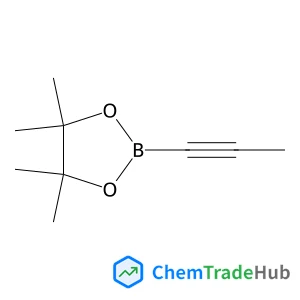
4,4,5,5-Tetramethyl-2-(1-propyn-1-YL)-1,3,2-dioxaborolane
CAS Number:
347389-75-7
Molecular Formula:
C9H15BO2

Methyl 2-amino-4-(4-chlorophenyl)-5-pyrimidinecarboxylate
CAS Number:
1133115-56-6
Molecular Formula:
C12H10ClN3O2
Recommended Suppliers






Disclaimer
This page provides academic journal information for reference and research purposes only. We are not affiliated with any journal publishers and do not handle publication submissions. For publication-related inquiries, please contact the respective journal publishers directly.
If you notice any inaccuracies in the information displayed, please contact us at support@chemtradehub.com. We will promptly review and address your concerns.