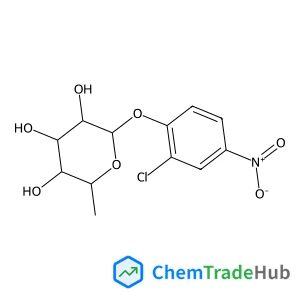
2-Chloro-4-nitrophenyl 6-deoxy-alpha-L-galactopyranoside
CAS Number:
157843-41-9
Molecular Formula:
C12H14ClNO7
Josep Manel Ricart, Gianfranco Pacchioni
The adsorption and dissociation of an O2 molecule on gas-phase gold clusters of size varying from 5 to 79 atoms have been investigated by means of first principles density functional theory calculations. The adsorption energies and dissociation barriers have been determined for neutral, positively and negatively charged gold clusters in order to analyze in a systematic way the role of the charge on the cluster reactivity. While there is beneficial effect on O2 activation of an extra electron on the small gold clusters (Au5 and Au13), the effect is absent for positively charged clusters. The effect of the charge vanishes rapidly by increasing the cluster size and is not visible for clusters containing about 40 atoms or more. Au38 appears to be the most reactive among the clusters considered and strong oscillations in adsorption energies and dissociation barriers are found even for clusters containing several tens of atoms like Au38, Au55, and Au79.
Vankayala Kiran, Kancharlapalli Srinivasu, Srinivasan Sampath
DOI: 10.1039/C3CP50731A
Edlira Suljoti, Kai F. Hodeck, Kathrin M. Lange, Mikhail A. Soldatov
DOI: 10.1039/C3CP50686J
Xiangchao Ma, Ying Dai, Meng Guo, Yingtao Zhu, Baibiao Huang
DOI: 10.1039/C3CP44519D
S. Sasanka Kumar, Manoj Komath, Manoj Raama Varma, M. K. Jayaraj, K. Rajeev Kumar
DOI: 10.1039/C3CP42648C
Ane K. di Gennaro, Leonid Gurevich, Esben Skovsen, Michael T. Overgaard, Peter Fojan
DOI: 10.1039/C3CP50742D
Jean-François Greisch, Michael E. Harding, Mattias Kordel
DOI: 10.1039/C3CP44362K
Jonathan Keating, Gopinathan Sankar, Timothy I. Hyde, Shinji Kohara, Koji Ohara
DOI: 10.1039/C3CP50600B
Faiz Ullah Shah, Mamoun Taher
DOI: 10.1039/C3CP51132D
When handling 2-Chloro-1,2-bis(4-methylphenyl)ethanone (CAS: 71193-32-3), it is ...
4-Ethoxy-3-(5-methyl-4-oxo-7-propyl-1,4-dihydroimidazo[5,1-f][1,2,4]triazin-2-yl...
Methyl 3-Oxo-4-Androsten-17-Carboxylate (CAS: 2681-55-2) should be stored in a c...
(R)-3-Amino-4-(3-hexylphenylamino)-4-oxobutylphosphonic acid is primarily used i...
2-Methyl-2-propanyl 3-amino-3-carbamoyl-1-azetidinecarboxylate (CAS: 1254120-14-...
There are alternative reagents that can be used in synthesis instead of (E)-4-(t...
[2-(3-Chlorophenyl)-1,3-thiazol-4-yl]methanol (CAS: 121202-20-8) is a crystallin...
The market and research trends for Methyl (2S)-[(4S)-2,2-dimethyl-1,3-dioxolan-4...
The market for 1-Bromo-2-isocyanatoethane (CAS: 42865-19-0) is driven by its use...
4-Nitro-D-phenylalanine hydrochloride (CAS: 147065-06-3) is primarily used in re...

Physical Chemistry Chemical Physics (PCCP) is an international journal co-owned by 19 physical chemistry and physics societies from around the world. This journal publishes original, cutting-edge research in physical chemistry, chemical physics and biophysical chemistry. To be suitable for publication in PCCP, articles must include significant innovation and/or insight into physical chemistry; this is the most important criterion that reviewers and Editors will judge against when evaluating submissions. The journal has a broad scope and welcomes contributions spanning experiment, theory, computation and data science. Topical coverage includes spectroscopy, dynamics, kinetics, statistical mechanics, thermodynamics, electrochemistry, catalysis, surface science, quantum mechanics, quantum computing and machine learning. Interdisciplinary research areas such as polymers and soft matter, materials, nanoscience, energy, surfaces/interfaces, and biophysical chemistry are welcomed if they demonstrate significant innovation and/or insight into physical chemistry. Joined experimental/theoretical studies are particularly appreciated when complementary and based on up-to-date approaches.